The Bone Injury Comeback Playbook
EARLY BLACK FRIDAY
15% off your LEVER with code MANTZBF
Shop now →
Code valid through November 2026.
In the year after breaking the American marathon record, Conner Mantz had two stress fractures in his sacrum, missed the Boston Marathon and spent about 170 days off running. By his own count, he was injured more in that one year than in high school, college and his early pro career combined.
Then he came back the right way. This guide uses Conner's comeback to walk through how bone stress injuries happen, what a smart return to running looks like, and where body-weight support fits, whether you have a LEVER or not.
2
Stress fractures
sacrum, left then right
~22
Weeks out
about 12, then about 10
~15%
Body weight off
on his LEVER runs
2
LEVER runs
every week now
Want the full story? Read Part 2 of the Conner Mantz series or watch the film.
1What a Bone Stress Injury Actually Is
Bone is always remodeling. Every run creates tiny amounts of damage, and your body repairs it. A bone stress injury happens when the damage builds up faster than your body can repair it.
Early
Stress reaction
Bone is irritated and swelling shows on MRI, but there's no fracture line yet.
Later
Stress fracture
A fracture line appears. Healing takes longer and needs more time off.
Where it happens matters too. Bones like the sacrum and pelvis are mostly spongy, trabecular bone. Injuries there are often linked to bone health and fueling, and they tend to take longer to heal than shin or foot injuries.
Learn moreWhy sacral stress injuries get missedConner was misdiagnosed both times. That's common with the sacrum, because the pain looks a lot like other problems.•Deep, one-sided pain in the low back or buttock•Often mistaken for low back, SI joint or glute pain•Worse with running, and later with walking or standing•MRI is the best test. An early scan can still miss it, so follow-up imaging matters if pain keeps buildingSee a doctor urgently if pain keeps getting worse, hurts when you walk or hop, or wakes you at night.
"...the misdiagnosis didn't help because I was like trying to run or I'd run on it because I'm like, well, the doctor said I'll be fine."CONNER MANTZ
2Why It Happened to Conner
Bone stress injuries usually come from a mix of things, not one bad run. Conner's story hits several of the big ones:
1Load jumped too fastHe felt so fresh after Chicago that he was back to 90 to 100 miles a week within three weeks.
2Feeling fine, but not recovered"...even if you feel recovered post-marathon, that your body still ran a marathon..."
3Running on itEarly scans said he was fine, so he kept running. Once, he ran 10 or 11 miles on the fracture.
4Dropping support too soon"I was like, well, I probably don't need this anymore. Which is kind of like a really silly mistake."
Learn moreThe usual risk factorsMost bone stress injuries come from training load and bone health together:•Training load: sudden jumps in mileage or intensity, too little recovery•Energy: not eating enough for the training you do (low energy availability)•Bone health: low vitamin D or calcium, low bone density•History: a past bone stress injury raises your risk of another
3The 4 Phases of a Bone Injury Comeback
Every injury and every runner is different, and your doctor or physio should guide your plan. But most bone injury comebacks follow the same four phases. Here's each one, with and without body-weight support, and what Conner did.
PHASE 1Protect and healGoal: let the bone heal and fix what caused it
WHAT IT LOOKS LIKE•Stop running and anything that hurts•Crutches if walking is painful•Low-impact fitness that's pain-free•Look at fueling, sleep, vitamin D and calcium
WITHOUT LEVERPool running, cycling or swimming, as long as it's pain-free. Keep total volume sensible.
WITH LEVERUsually not yet. LEVER comes in once you're cleared to start loading the bone again.
READY FOR THE NEXT STEP WHEN✓Walking is pain-free✓No tenderness on the bone✓Your clinician clears you
What Conner didHe swam up to 3 hours a day, and it slowed his healing. A PT finally had him take a week of doing zero: "I think that kind of flipped things."
PHASE 2Load before you runGoal: rebuild strength and get the bone used to load again
WHAT IT LOOKS LIKE•Longer pain-free walks, building to about 30 minutes•Strength work for hips, glutes, calves and core•Gentle impact like hopping, once a clinician okays it
WITHOUT LEVERWalking, strength work and low-level hops. Progress slowly.
WITH LEVERShort, easy runs with more body weight off can bridge walking and running.
READY FOR THE NEXT STEP WHEN✓30 minutes of brisk walking is pain-free✓Single-leg hops are pain-free✓No pain the next day
What Conner didHis team started him slower the second time and kept everything pain-free before progressing.
PHASE 3Graded return to runGoal: run again without the bone reacting
WHAT IT LOOKS LIKE•Walk/jog intervals at an easy pace, with rest days between•Then 30 minutes of continuous easy running•Pace builds up slowly over weeks
WITHOUT LEVERUse the walk/jog progression below on flat, soft surfaces.
WITH LEVERStart running with more body weight off, then give weight back step by step while time and pace build.
READY FOR THE NEXT STEP WHEN✓No pain during the run✓No pain after the run✓No pain the next day
What Conner didMost of his second return happened on LEVER before he ran much on the ground. "It was just kind of like the lever was what we did."
PHASE 4Rebuild and stay healthyGoal: get back to full training and don't get hurt again
WHAT IT LOOKS LIKE•Build volume first, then add intensity•Workouts come back gradually•Keep recovery days easy
WITHOUT LEVERBuild mileage gradually, keep easy days easy and hold back on back-to-back hard days.
WITH LEVERKeep 1 to 2 runs a week on LEVER to add miles with less pounding.
READY FOR THE NEXT STEP WHEN✓Full training feels good for several weeks✓Honest check before racing: are you ready?
What Conner didHis coach made it 2 LEVER runs a week, with about 15% body weight off. "So he's had me do two runs a week on the LEVER, to help me recover a little more." (via RunBlogRun)
Phase 3 tool
A sample walk/jog progression
A common graded plan used after bone stress injuries. Each step is repeated 3 times with a rest day between sessions. Only move on if you're pain-free during, after and the next day. If pain shows up, stop, rest a day and go back a step.
Stage 1: Walk/jog intervalsEasy pace, about 50% slower than usual · tap to open
Start30 min walk
Step 19 min walk / 1 min jog, x3
Step 28 min walk / 2 min jog, x3
Step 37 min walk / 3 min jog, x3
Step 46 min walk / 4 min jog, x3
Step 54 min walk / 6 min jog, x3
Step 62 min walk / 8 min jog, x3
Stage 2: Continuous easy running30 minutes, getting faster · tap to open
Pace50%, then 60%, 70%, 80% and 90% of usual pace
Then30 min at your normal easy pace
RuleRest day between runs
Stage 3: Back-to-back daysOnly when it's going well · tap to open
Pattern2 days on, 1 day off
Session30 min at normal pace
Stage 4: Back to trainingVolume, then intensity · tap to open
BuildMileage first, workouts later
WatchAny pain during, after or the next day
Using LEVER in Stage 1 and 2How body-weight support changes it · tap to open
IdeaDo the same steps, starting with more body weight off
ProgressGive weight back as each step stays pain-free
ThenMove the same runs outside at full body weight
RuleSame pain rules as running outside
Adapted from Warden et al.'s graded return-to-run program (via BJSM). Your clinician may adjust it for you.
Come back like Conner
Run sooner. With less load.
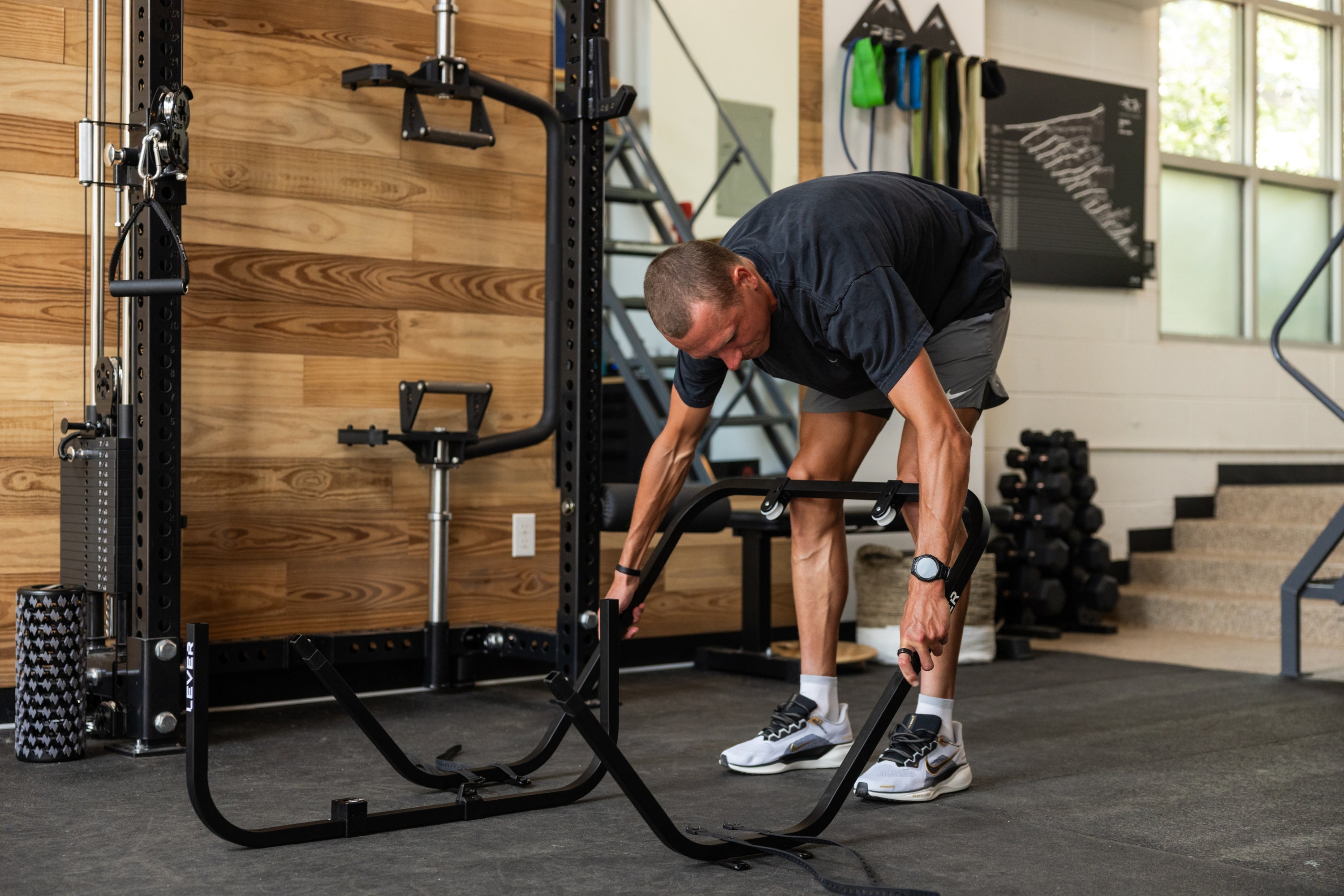
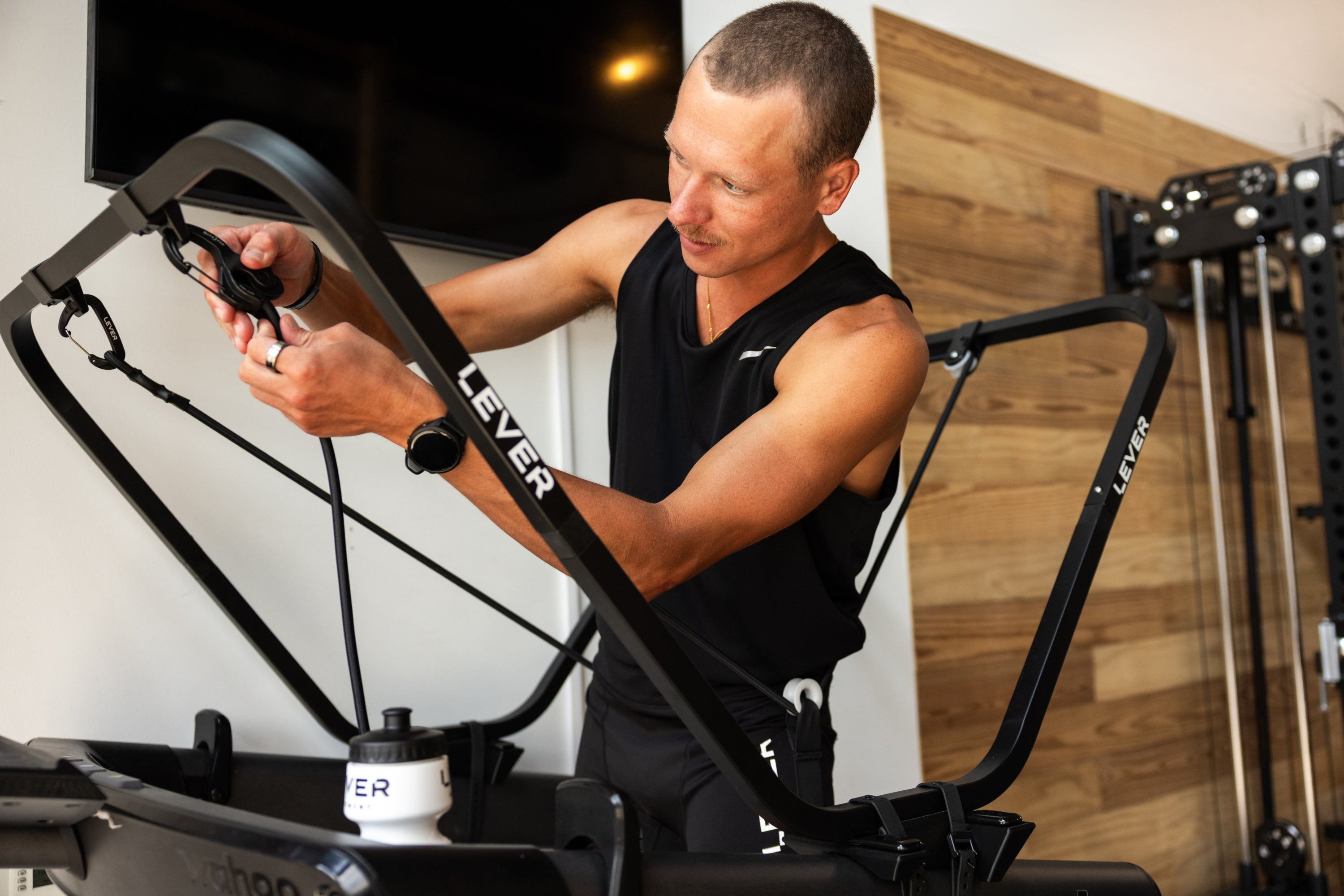
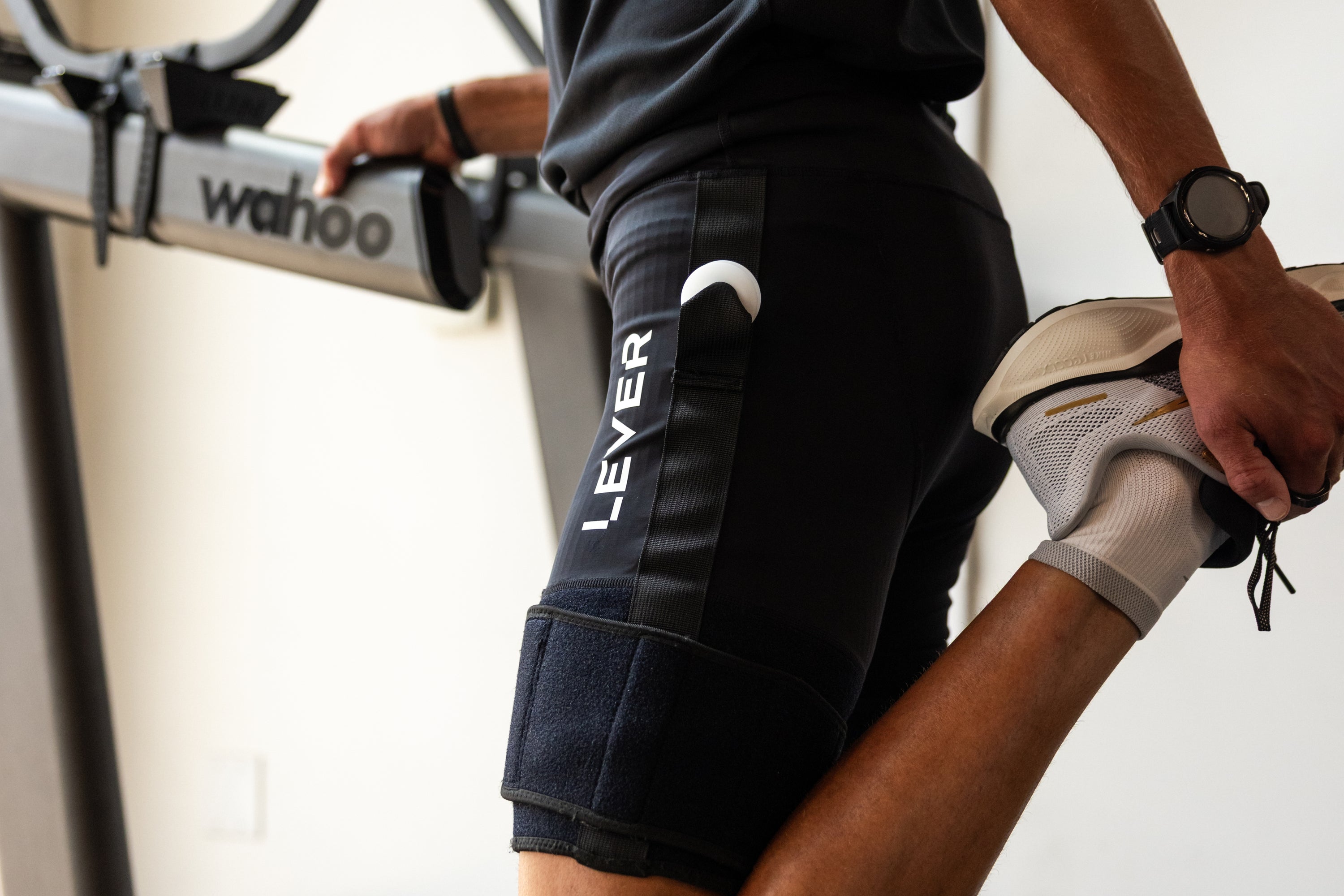
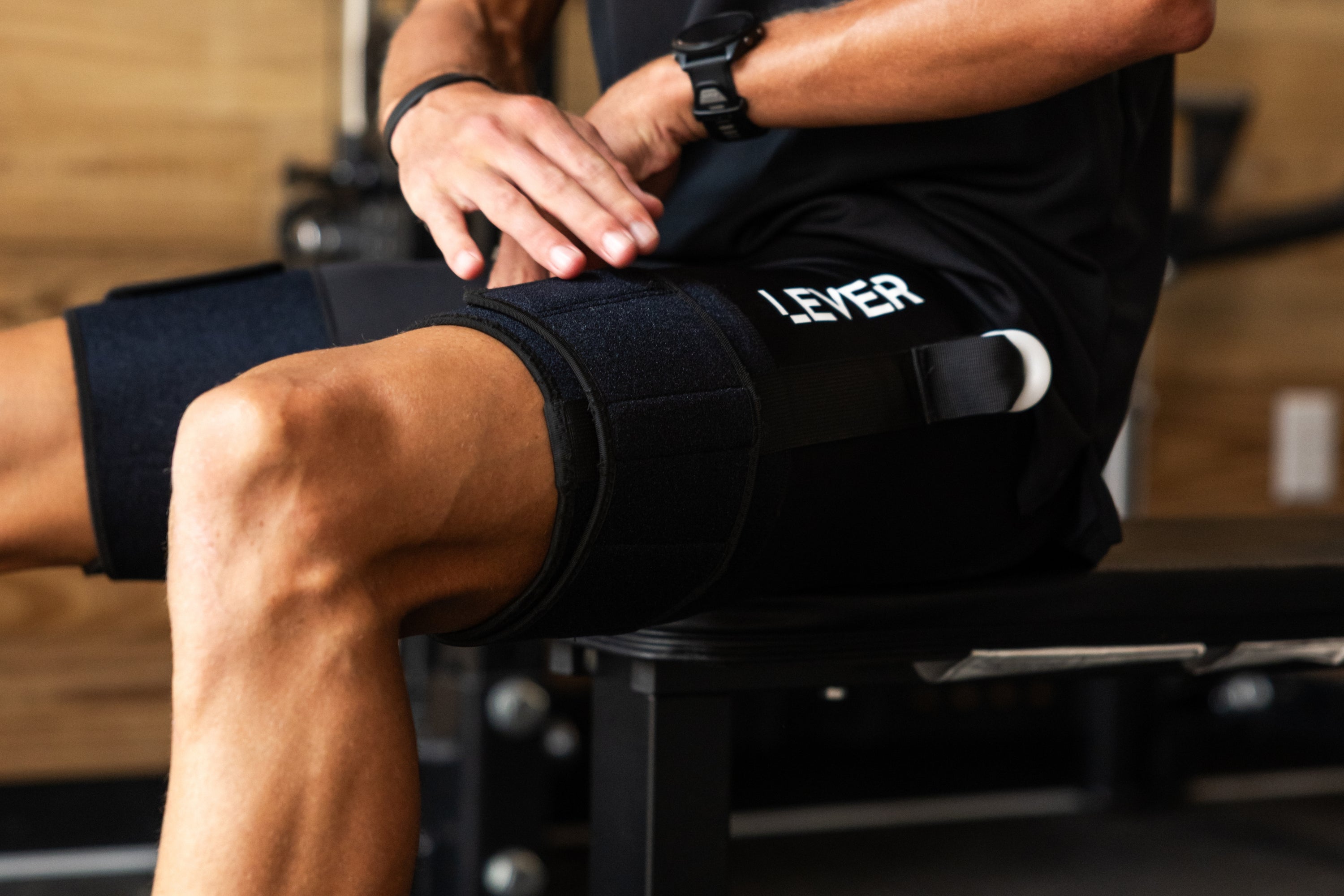
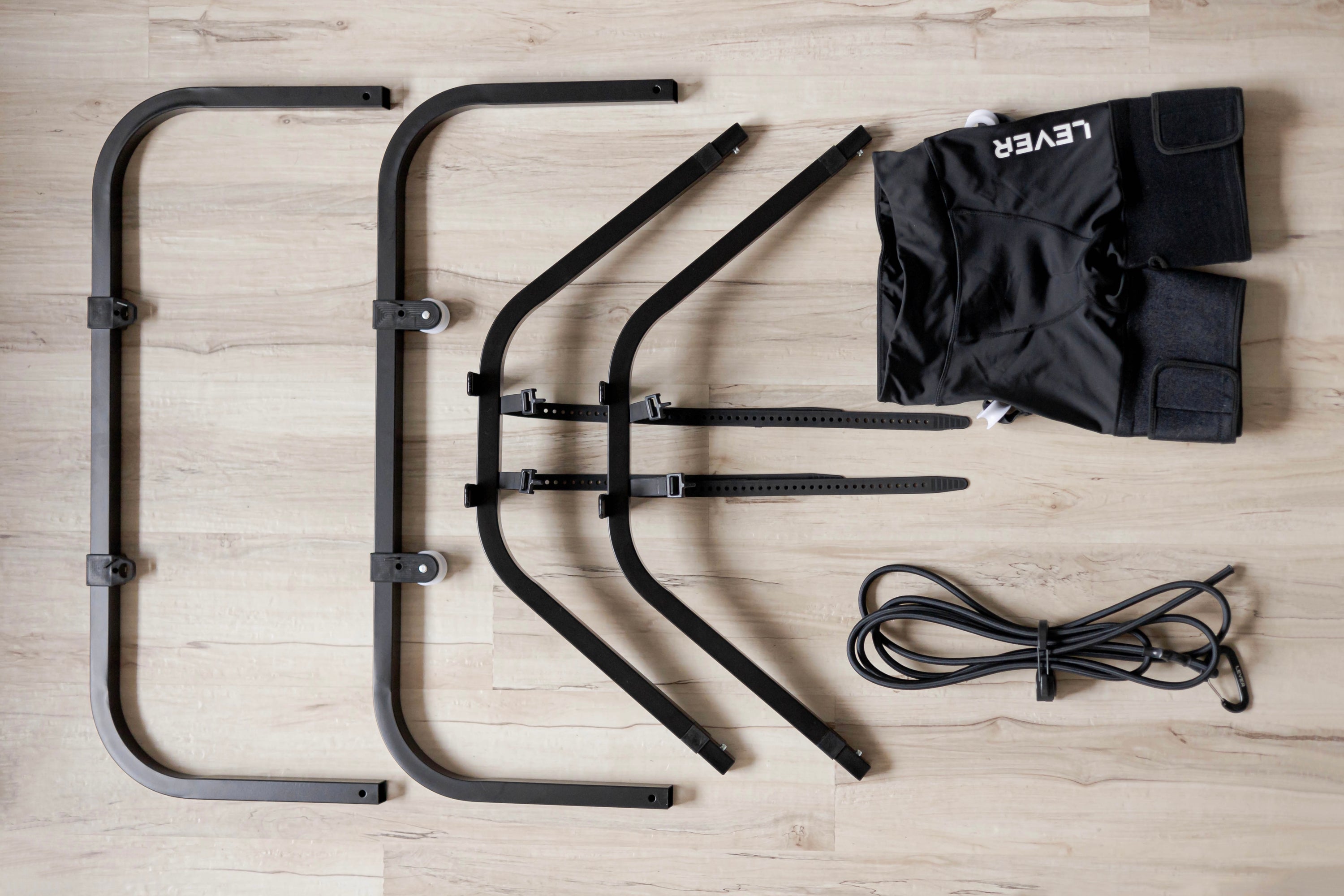
LEVER takes up to 45 lb off your body weight on the treadmill you already own, so you can rebuild at a load your body can handle. Early Black Friday: use code MANTZBF for 15% off.
Shop LEVER UP+ Scale
4How Conner Uses LEVER Now
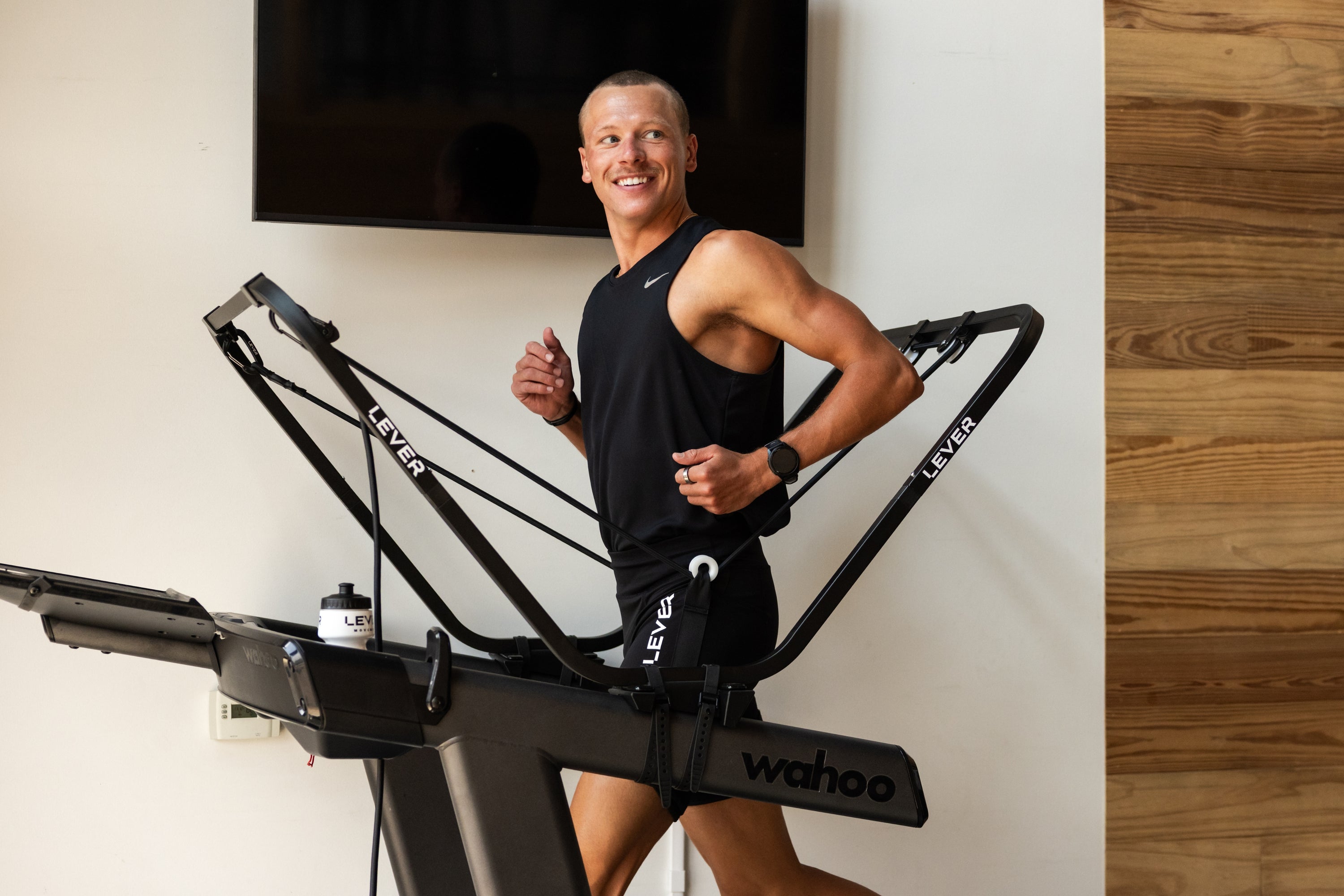
After the second injury, Conner and his coach, Ed Eyestone, agreed something had to change. LEVER went from a rehab tool to a permanent part of his week.
"Initially I started on the LEVER attachment."CONNER MANTZ, VIA RUNBLOGRUN
How often
2 runs a week
Done as doubles once his mileage is high.
How much
About 15% off
Enough to cut the load while keeping a natural stride.
What it looks like
Easy 5-mile doubles
Around 6:00 pace, at home: "it's only 30 minutes."
"...what's the way to get the fastest running in without beating up the body..."CONNER MANTZ
It's paid off. He came back to run 31:19 for 7 miles at Falmouth, 60:08 at the World Half Marathon Championships as the top American, and a 4:20 last mile in his final workout before New York.
Early Black Friday: 15% off your LEVER with code
MANTZBF.
Shop now →Code valid through November 2026.
5What Every Runner Can Take From This
Rest is part of the plan
More cross-training isn't always better. Bone needs time and energy to heal.
Trust pain over scans
If pain keeps building, get rechecked, even if an early scan was clear.
Follow the pain rules
No pain during, after or the next day. Then move on.
Keep your support
Don't drop the tools that got you back the moment you feel healthy.
"...it's taught me patience... just be patient and let the injury like heal itself."CONNER MANTZ
Quick answers
Can I run through a stress reaction?
No. Running on a bone that's already reacting can turn a stress reaction into a fracture and add weeks or months to your recovery. Stop and get it checked.
Do I need body-weight support to come back?
No. Plenty of runners come back with walking, cross-training and a graded walk/jog plan. Body-weight support lets you start running at a lower load and add miles with less impact, which many runners find helpful.
How much weight should I take off?
It depends on your injury and how it responds. Many runners start with more support and reduce it as runs stay pain-free. Your physio can set your starting point. For context, Conner uses about 15% off for his healthy-training runs now.
How long until I'm back to full training?
Often a few months, not weeks. Sacral and pelvic injuries can take longer. Conner was out about 12 weeks the first time and about 10 weeks the second, and it took until mid-summer to feel like himself.
General information, not medical advice. Work with your doctor or physio on your own injury and return-to-run plan.
Watch the film

See his comeback, his final workout and how LEVER fits his week. Watch on YouTube →
More miles. Faster recovery. Fewer setbacks.
Shop LEVER