Save 20% on your LEVER purchase.
SAVE 20% ON A LEVER SYSTEMUse code LEVERMILES
Valid on LEVER system purchases only. Excludes rentals and other products. Valild Until September 1st 2026
Of all running injuries, stress fractures are among the most important to understand and the most dangerous to ignore. Unlike soft tissue injuries that can often be managed with modified training, stress fractures involve actual bone damage that requires careful management. The good news is that with the right approach, most runners recover fully and return to training stronger than before.
A stress fracture is a small crack or severe bruising within a bone caused by repetitive mechanical loading that exceeds the bone's capacity to remodel and repair itself. Unlike acute fractures caused by a single traumatic event, stress fractures develop gradually over time through accumulated microdamage. They sit at the severe end of a bone stress injury (BSI) continuum that begins with a stress reaction, progresses to a stress fracture, and if unmanaged, can result in a complete cortical break.
In runners, the bones most commonly affected are the tibia (accounting for approximately 50% of stress fractures in runners), metatarsals, navicular, fibula, femur, and pelvis. High-risk sites including the navicular, femoral neck, and anterior cortex of the tibia require significantly more conservative management than low-risk sites such as the fibula or metatarsal shaft.
Stress fractures account for up to 10% of all orthopaedic injuries and up to 20% of injuries seen in sports medicine clinics. Among runners specifically, they are consistently identified as one of the most frequently reported running-related musculoskeletal injuries. Female athletes have a greater incidence of stress fractures than males in both military and athletic populations (Wentz et al., 2011).
Stress fractures develop when repetitive mechanical loading produces microdamage in bone faster than the bone's remodeling process can repair it. Bone is a dynamic tissue that constantly undergoes resorption and new formation in response to mechanical stress. When loading is progressive and recovery is adequate, bone adapts and becomes stronger. When loading spikes faster than remodeling can keep pace, microdamage accumulates and a stress fracture can result.
Understanding the risk classification of stress fractures is essential for runners:
|
Low-Risk Sites
Generally manageable
Fibula, metatarsal shaft (2nd-4th), calcaneus, medial tibia. These sites have good blood supply and lower risk of displacement or non-union. Typically managed with relative rest and graded return to activity.
|
High-Risk Sites
Require specialist care
Femoral neck, navicular, anterior tibial cortex, 5th metatarsal base, sesamoids. These sites carry risk of complete fracture or non-union. Often require non-weight-bearing and specialist review.
|
- Sharp, focal pain at a specific point on the bone rather than diffuse aching
- Pain that worsens progressively during a run rather than easing with warmup
- Pain present during walking, at rest, or at night
- Visible swelling or tenderness directly over a bone
- Positive hop test: pain reproduced by hopping on the affected leg
- Pain that does not ease significantly between training sessions
Any runner with suspected stress fracture symptoms should seek clinical assessment and imaging before continuing to run. MRI is the most sensitive diagnostic tool and can identify bone stress injuries before they appear on X-ray. Do not attempt to run through suspected stress fracture symptoms without medical clearance.
Stress fractures in runners are multifactorial. They arise from the intersection of mechanical loading, bone health, and recovery capacity. They typically emerge when multiple contributing factors converge simultaneously.
One of the most important and underrecognized contributors to stress fractures in runners is low energy availability, described clinically as Relative Energy Deficiency in Sport (RED-S). RED-S refers to a syndrome of impaired physiological functioning caused by relative energy deficiency, including impairments of metabolic rate, menstrual function, bone health, immunity, protein synthesis and cardiovascular health (Mountjoy et al., 2018). When a runner consistently consumes insufficient calories to meet the demands of training, bone remodeling is compromised and stress fracture risk rises substantially. Bone health is so significantly disrupted by low energy availability that stress fractures cannot be managed adequately without addressing those underlying deficiencies (Tenforde et al., 2023).
From a mechanical standpoint, running biomechanics also play a significant role. Research has identified that lower step rate, greater vertical ground reaction force, and certain gait characteristics are associated with higher bone stress injury risk. Runners who land with a longer stride and lower cadence generate higher peak impact forces, increasing the mechanical stress on load-bearing bones with each foot contact (Kliethermes et al., 2021).
"Stress fractures are not just a training load problem. They are often a bone health problem. Addressing energy availability, nutrition, and hormonal health is as important as managing the mechanical loading side of the equation."
This question has a clear answer: it depends entirely on the location and severity of the fracture, and must be guided by clinical assessment. Unlike soft tissue injuries where modified running is often appropriate, stress fractures involve actual bone damage. Running through a stress fracture without appropriate management risks progression to a complete fracture, non-union, or the need for surgical intervention.
The goal of stress fracture management is not to eliminate all physical activity. It is to eliminate the specific loading stimulus causing ongoing bone damage, while maintaining as much fitness as possible through alternative training.
|
Stop running immediately if:
|
Reduced loading may be OK if:
|
Every stress fracture management plan must be individually guided by a sports medicine physician or orthopaedic specialist. Do not self-manage a suspected or confirmed stress fracture without clinical guidance.
Stress fracture management is more complex than other running injuries because it involves both mechanical and systemic factors. An effective treatment plan must address both sides of the equation.
"Stress fractures cannot be fully managed without addressing their underlying drivers. For many runners this means examining energy availability, nutrition, hormonal health, and training load simultaneously, not just reducing mileage and waiting."
Adapted from IOC consensus on RED-S and bone stress injury management
For runners managing low-risk stress fractures, or in the later stages of recovering from higher-risk injuries once cleared for weight-bearing activity by a clinician, body-weight support (BWS) treadmill systems offer a uniquely valuable tool. The fundamental challenge with stress fracture return-to-run is that the transition from no running to full-weight running must be managed in very small, controlled increments. Any sudden jump in bone loading risks re-injury.
BWS systems address this directly. By reducing effective body weight during running, they proportionally reduce the ground reaction force per foot contact, allowing bone loading to be titrated with precision that is otherwise impossible to achieve. A runner transitioning back from a tibial stress fracture can begin running at 20-30% body-weight support and progress in small increments toward full weight bearing over several weeks.
This approach is particularly important for stress fractures because it preserves real running mechanics throughout recovery. Pool running and cycling, while valuable for fitness maintenance, do not replicate the neuromuscular demands of running. BWS treadmill running allows the athlete to maintain running-specific movement patterns at a bone loading level appropriate to their current healing stage.
|
🏃
Real running mechanics
Running-specific neuromuscular patterns preserved throughout, unlike pool running or cycling
|
❤️
Fitness maintained
Aerobic fitness preserved when full-weight running is contraindicated by fracture status
|
|
|
⚡
Bone loading controlled
Ground reaction force per stride reduced proportionally to body-weight support level
|
📈
Precise progression
Support level reduced in measured increments as healing progresses and symptoms allow
|
|
It is important to emphasize that BWS running for stress fractures should only be initiated after clinical clearance for weight-bearing activity from a sports medicine physician or orthopaedic specialist. Used at the right stage of rehabilitation, it offers a level of loading precision that is uniquely well-suited to the demands of stress fracture return-to-run.
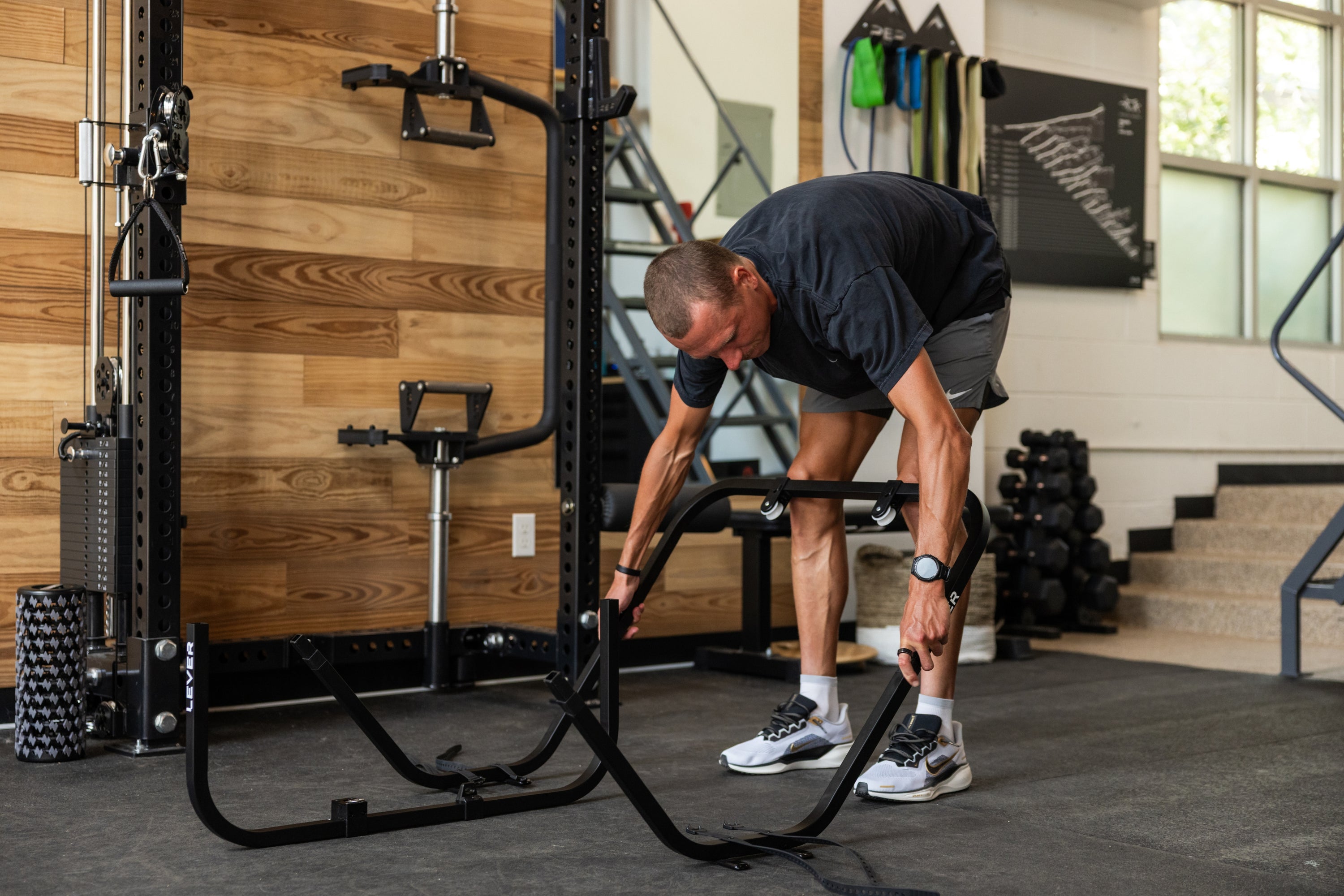
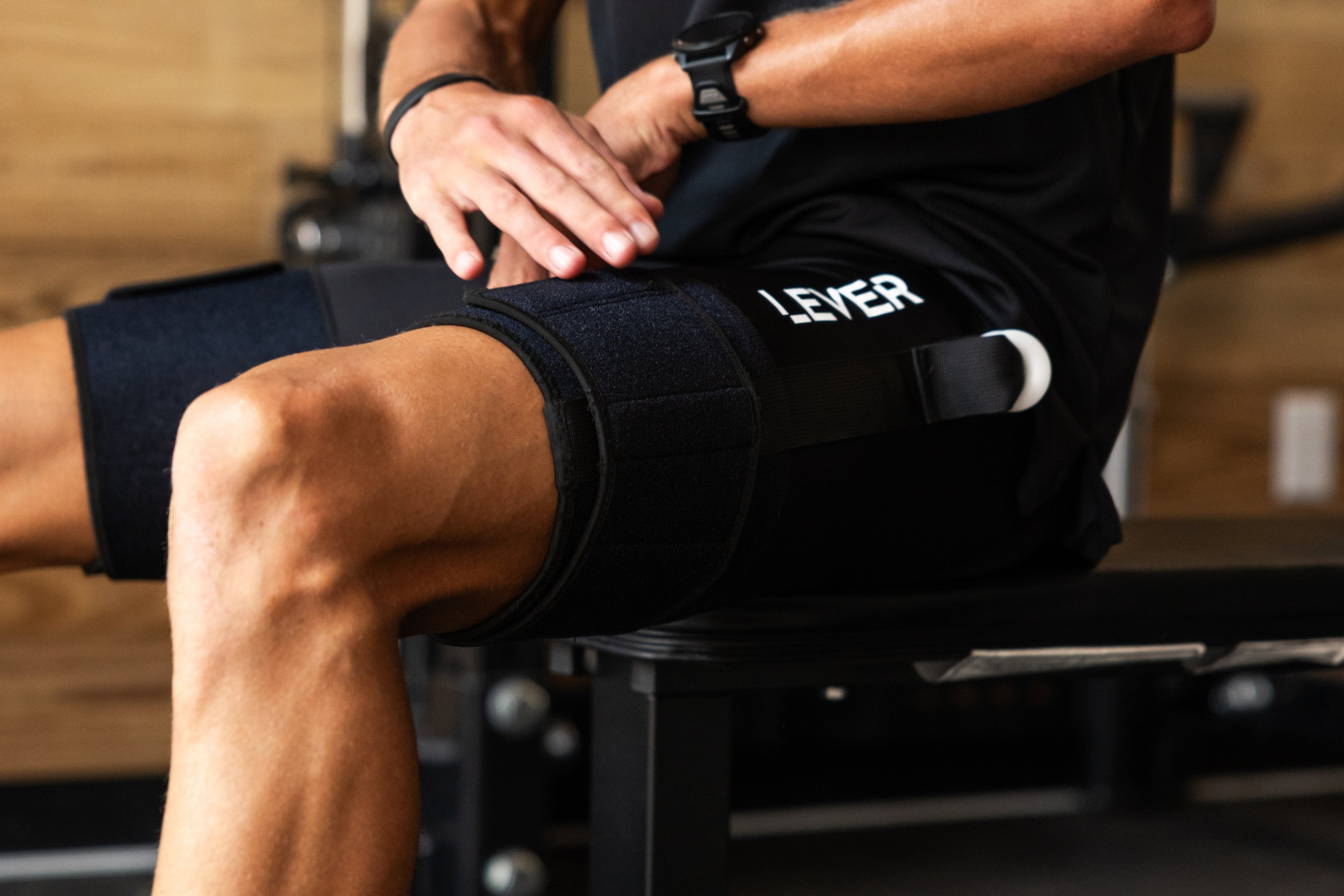
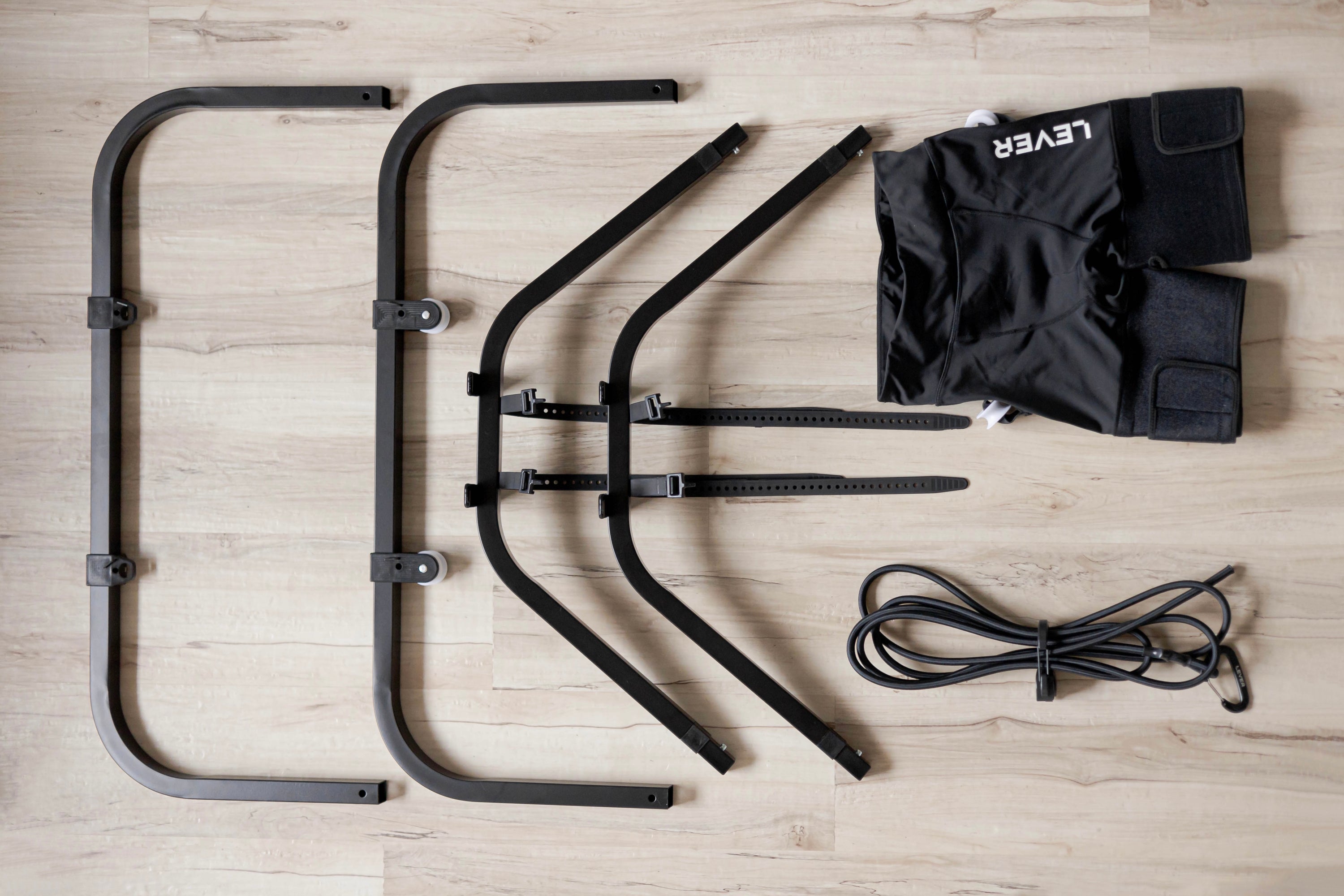
LEVER is a body-weight support system designed for treadmill running that allows precise control over how much load goes through the legs during training. For runners returning from a stress fracture, once cleared for weight-bearing activity by their clinician, LEVER can create a structured and measurable bridge between no running and full-weight running.
A typical stress fracture return-to-run with LEVER might begin at 20-30% body-weight support once clinical clearance is received. For a 70 kg runner, this means experiencing the ground reaction force equivalent of a 49-56 kg person per stride, allowing the healing bone to be progressively reloaded without risking re-injury.
Start at 20-30% support provides a significant reduction in bone loading per stride while still allowing actual running mechanics to be practiced and maintained.
Progress in small increments reduce support by 5% at a time, guided by symptoms and clinical milestones, creating a measured pathway toward full weight-bearing running.
Preserve running mechanics natural cadence, foot strike, and running gait maintained throughout. Unlike pool running, this is actual running with full neuromuscular specificity.
Maintain aerobic fitness cardiovascular demand preserved at reduced support levels, significantly reducing the deconditioning that typically occurs during mandatory rest from running.
Reduce recurrence risk the gradual, controlled nature of BWS progression avoids the sudden loading spikes that are the most common cause of stress fracture recurrence during return-to-run.
Used at the right stage of rehabilitation and with appropriate clinical oversight, LEVER provides a level of precision in bone loading management that is uniquely suited to the demands of stress fracture recovery.
The following is a sample framework for a runner returning from a low-risk stress fracture who has been cleared for weight-bearing activity by their clinician and is pain-free during walking. This is not appropriate for high-risk fracture sites. All progressions must be individually guided by a sports medicine physician or physiotherapist.
|
🦴
Get imaging first
Any suspected stress fracture must be clinically assessed and imaged before making return-to-run decisions. Fracture site determines management.
|
⚠️
High vs low risk matters
Not all stress fractures are managed the same way. High-risk sites require non-weight-bearing and specialist care. Low-risk sites may allow earlier return to modified activity.
|
|
|
🍎
Address the whole picture
Energy availability, calcium, vitamin D, hormonal health, and sleep all affect bone remodeling. Treating only the mechanical side without addressing systemic factors leads to recurrence.
|
🏊
Maintain fitness during rest
Pool running, swimming, and cycling allow cardiovascular fitness to be maintained during mandatory rest. Do not accept complete inactivity.
|
|
|
🎯
BWS enables precise return-to-run
For low-risk fractures once cleared for weight-bearing, body-weight support running allows bone loading to be reintroduced in small, controlled increments.
|
✅
Full recovery is the norm
With appropriate management, most runners recover fully from stress fractures and return to their previous training levels. Patience and proper progression are the keys.
|
|
A stress fracture is not the end of your running career. It is a signal that your bone's adaptive capacity has been exceeded, and that your approach to training load, nutrition, and recovery needs attention.
Get the right diagnosis, address the whole picture, progress carefully, and use every available tool to return to running as safely and completely as possible.
References
Dempster J, et al. (2021). The prevalence of lower extremity injuries in running and associated risk factors: a systematic review. Phys Act Health. doi:10.5334/paah.109
Kliethermes SA, et al. (2021). Lower step rate is associated with a higher risk of bone stress injury in collegiate cross-country runners. Br J Sports Med. doi:10.1136/bjsports-2020-102946
Mountjoy M, et al. (2018). IOC consensus statement on relative energy deficiency in sport (RED-S): 2018 update. Br J Sports Med. doi:10.1136/bjsports-2018-099193
Rizzone KH, et al. (2017). The epidemiology of stress fractures in collegiate student-athletes, 2004-2005 through 2013-2014 academic years. J Athl Train. doi:10.4085/1062-6050-52.8.01
Tenforde AS, et al. (2023). Relative energy deficiency in sport and bone stress injuries. Clin Sports Med. doi:10.1016/j.csm.2022.11.002
Warden SJ, et al. (2015). Risk factors associated with lower extremity stress fractures in runners: a systematic review with meta-analysis. Br J Sports Med. doi:10.1136/bjsports-2014-094517
Wentz L, et al. (2011). Females have a greater incidence of stress fractures than males in both military and athletic populations: a systematic review. Mil Med. doi:10.7205/milmed-d-10-00322