Why Doing More Too Soon Often Derails an Entire Season
As the first race of the season approaches, motivation is high.
Workouts start to feel sharper. Fitness seems to return quickly. Paces that felt difficult a few weeks ago suddenly feel manageable. It’s natural to want to take advantage of that momentum. And this is precisely when the most common mistake occurs.
It’s not skipping workouts.
It’s not a lack of discipline.
It’s introducing race specific intensity before the body is ready to tolerate the load.
From the outside, this looks like smart training. From a physiological perspective, it often sets the stage for early-season fatigue, stagnation, or injury.
Why This Happens Every Year
One of the most consistent findings in endurance science is that different systems adapt at different rates.
Cardiovascular fitness improves relatively quickly. Within weeks, heart rate responses improve, oxygen delivery becomes more efficient, and running feels easier at faster paces.
Connective tissues such as tendons, fascia, and bone adapt much more slowly. Research shows that tendon and bone adaptation requires prolonged, progressive loading over months, not weeks (Magnusson et al., 2008; Turner, 1998).
This creates a mismatch early in the season. Runners feel aerobically ready to push harder, but their tissues are not yet prepared to absorb the repeated mechanical stress of faster, race-specific running. In simple terms, the engine is ready before the chassis is.

Fitness and Load Tolerance Are Not the Same Thing
Fitness is about how well your cardiovascular and metabolic systems perform.
Load tolerance is about how well your body handles:
-
Repeated impact
-
High ground reaction forces
-
Fast stretch-shortening cycles
-
Accumulated tissue stress
Early in the season, fitness often outpaces load tolerance. When training decisions are made purely on how strong or fast you feel, mechanical stress accumulates faster than the body can adapt.
This is why early season injuries often appear “out of nowhere.”
Why Speed Changes the Cost of Each Step
As running speed increases, mechanical demands increase disproportionately.
Faster running leads to higher peak ground reaction forces, shorter ground contact times, and greater tendon loading rates (Weyand et al., 2000; Nigg et al., 2015). Even relatively short race-pace sessions can place more mechanical stress on tissues than much longer easy runs.
When this type of loading is introduced too early, before tissues have adapted, injury risk rises even if total mileage appears reasonable.
This is why early-season training errors are often intensity-related rather than volume-related.

The Nervous System Often Shows Fatigue First
Before pain or injury appears, many runners notice something more subtle.
Stride feels less smooth. Cadence drops. Running feels harder to control.
These changes are often signs of neuromuscular fatigue, not cardiovascular limitation. Research shows that fatigue alters motor unit recruitment and coordination, which leads to changes in movement patterns and increased tissue stress (Enoka & Duchateau, 2016; Girard et al., 2011).
Early in the season, this type of fatigue is an important warning sign that load is exceeding current tolerance, even if workouts are still being completed.
Why Easy Running Still Matters, but Isn’t Enough
Even easy running produces ground reaction forces two to three times body weight with every step (Novacheck, 1998). Over the course of a run, that means thousands of loading cycles through the same tissues.
This is why simply slowing down does not always fully offset rising training stress, especially when intensity is increasing elsewhere in the week.
Early-season training success depends not just on running easy, but on managing the mechanical cost of training as a whole.
The Cumulative Fatigue Problem
Most runners do not derail their season with a single workout.
They do it by allowing fatigue to accumulate without fully clearing.
When each session begins before the body has finished repairing the previous one, small deficits add up. Movement quality degrades. Running economy worsens. Coordination declines. Eventually, pain or injury forces a reset.
This pattern is well documented in endurance athletes, where inadequate recovery and rapid load progression are key contributors to overuse injuries (Hreljac, 2004; Halson, 2014).
Where the LEVER System Fits In
This is where managing mechanical load becomes especially valuable.
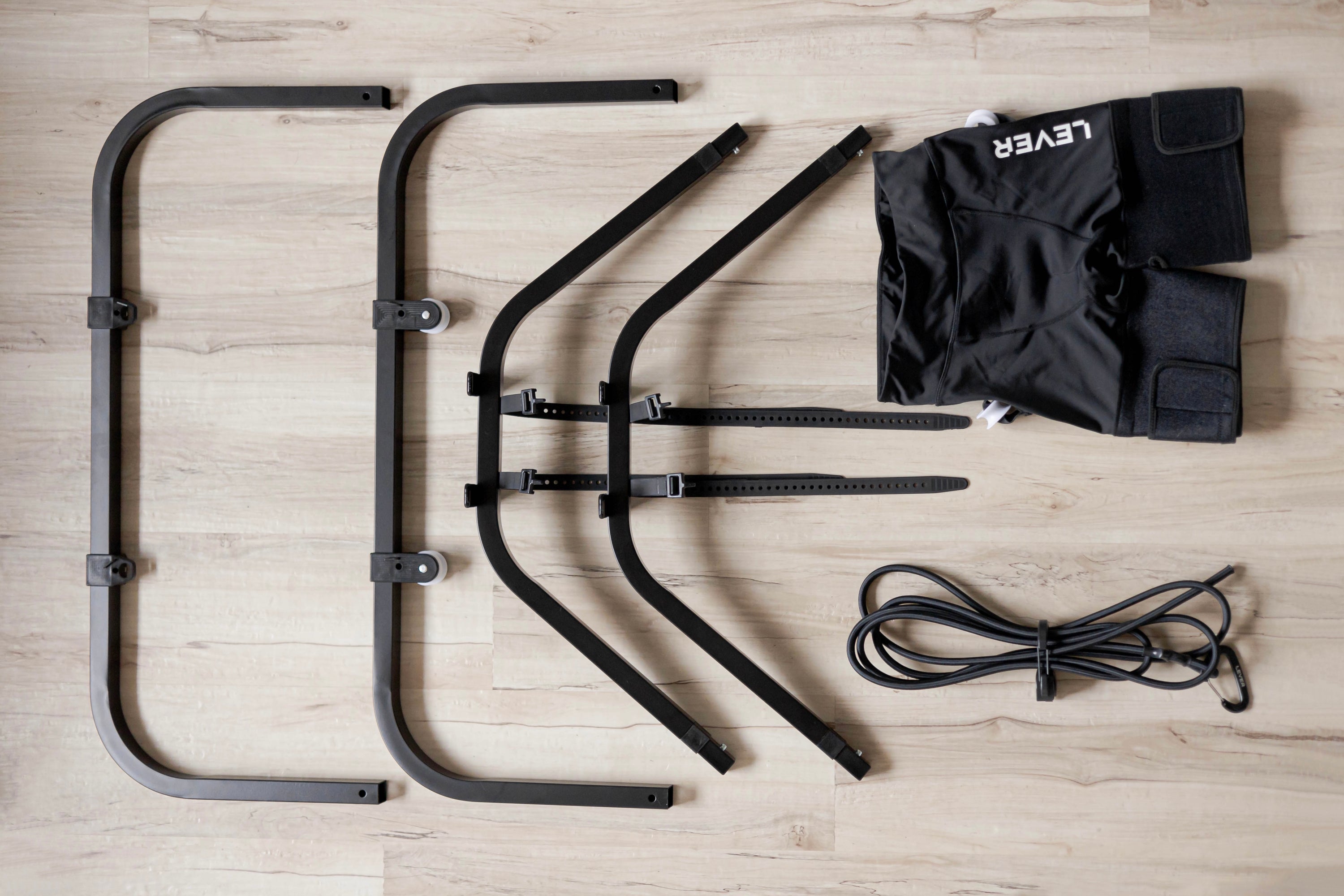
The LEVER Movement system provides vertical body-weight support during treadmill running, reducing effective body weight while preserving normal stride mechanics, cadence, and running-specific coordination.
From a physiological standpoint, this allows runners to:
-
Maintain aerobic stimulus
-
Preserve neuromuscular rhythm
-
Gradually reintroduce faster or longer running
-
Reduce peak impact forces during higher-stress phases
Research on body-weight-supported running shows that reducing effective body weight lowers mechanical stress while maintaining running mechanics and cardiovascular demand (Grabowski & Kram, 2008; Raffalt et al., 2013).
In early-season training, this can help bridge the gap between rapidly improving fitness and slower-adapting tissues.

A Smarter Approach to Pre-Race Training
Successful early-season training is not about how hard you can train in February.
It’s about whether you are still training consistently in March and April.
Runners who arrive at their first race healthy tend to:
-
Delay full race-specific intensity slightly
-
Protect easy days so recovery actually occurs
-
Progress mechanical load gradually
-
Use tools that reduce unnecessary tissue stress
This approach does not slow progress. It protects it.
The Big Picture
Most runners don’t ruin their season by undertraining. They ruin it by training like it’s mid-season before their bodies are ready for mid-season demands.
Avoiding the most common pre-race mistake is less about doing less, and more about doing the right things at the right time.
Train Smart Early. Race Strong Later.
The goal of early-season training is not peak performance. It’s uninterrupted progress. That’s how strong seasons are built.