Save 20% on your LEVER purchase.
SAVE 20% ON A LEVER SYSTEMUse code LEVERMILES
Valid on LEVER system purchases only. Excludes rentals and other products. Valild Until September 1st 2026
Training + Recovery — LEVER Movement
Sam Tanner Trained Through Achilles Rehab Without Missing a Stride
A professional middle-distance runner on load management, body-weight-supported running, and what he calls the world record on a Techno Gym.
The traditional advice for an Achilles injury is rest. But for elite athletes, weeks off the track don't just cost fitness they cost confidence, rhythm, and race readiness. Sam Tanner found a different way through.
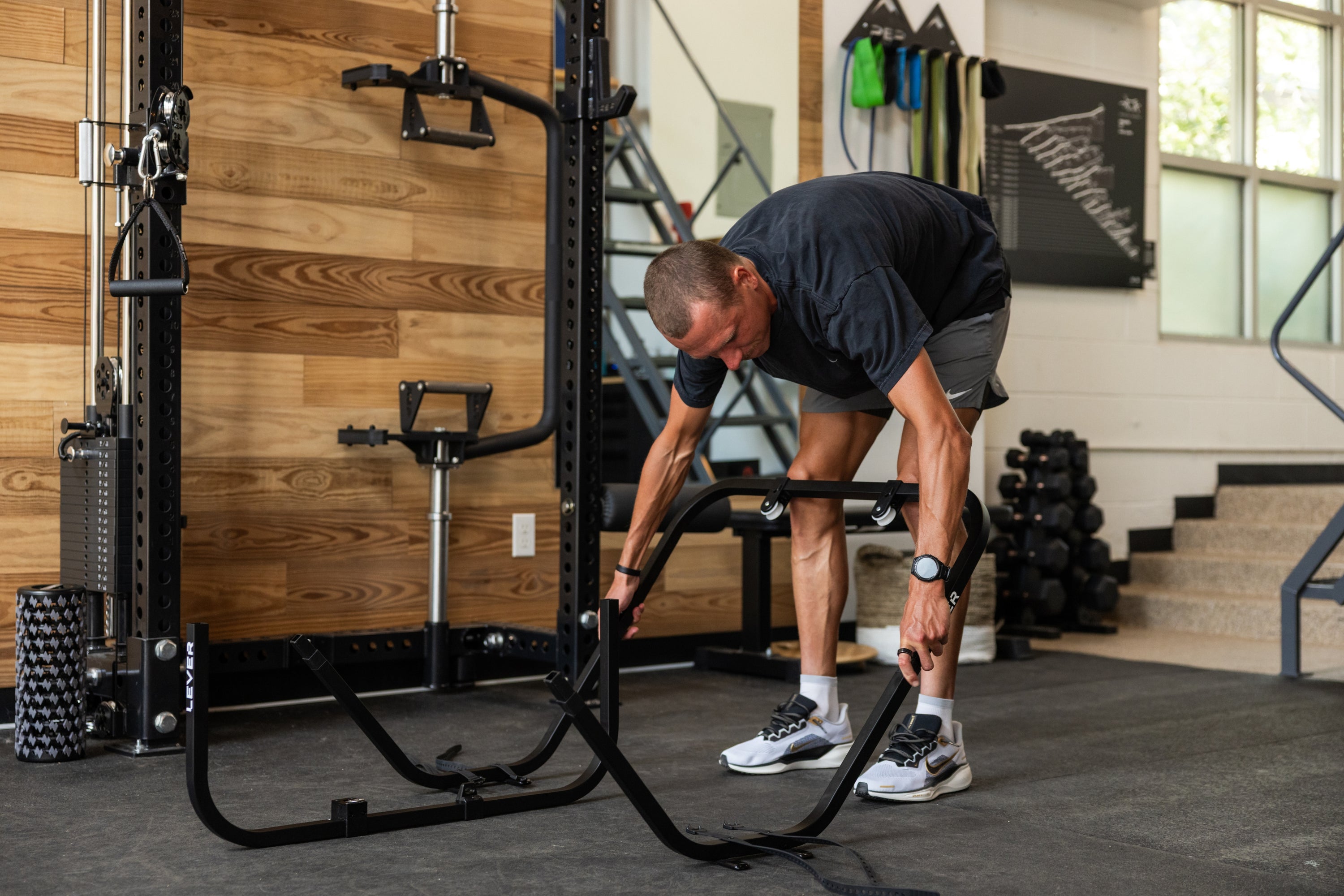
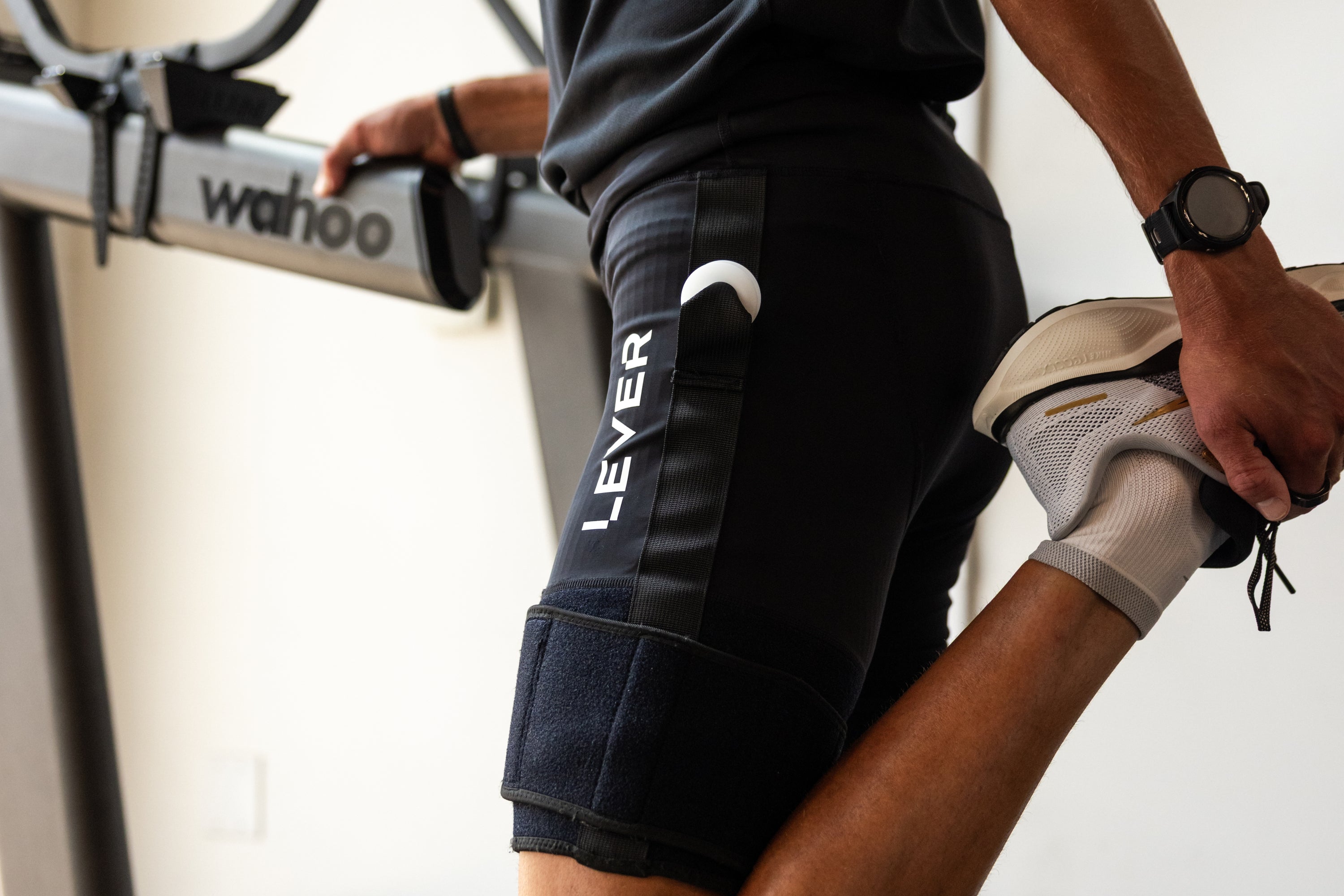
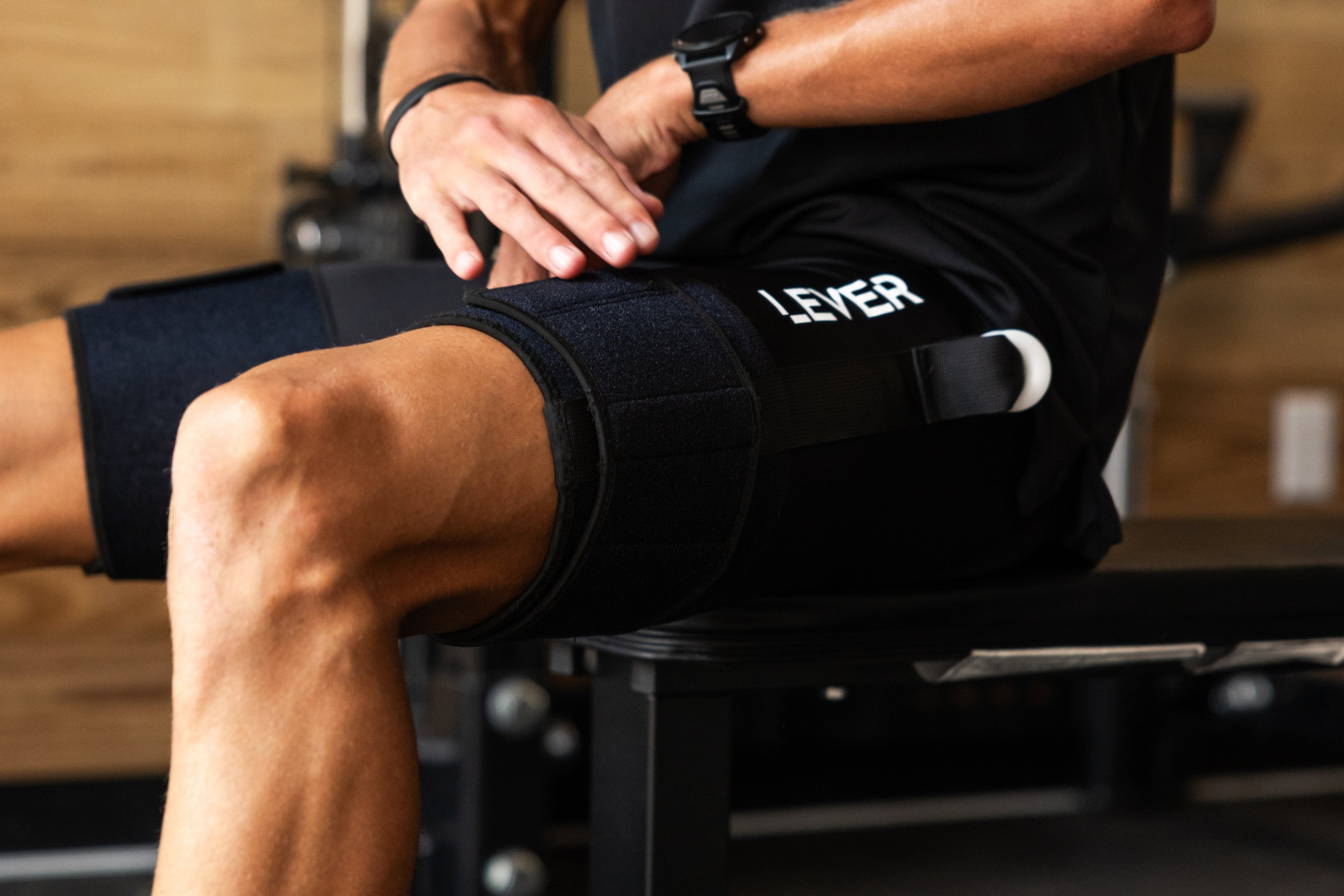
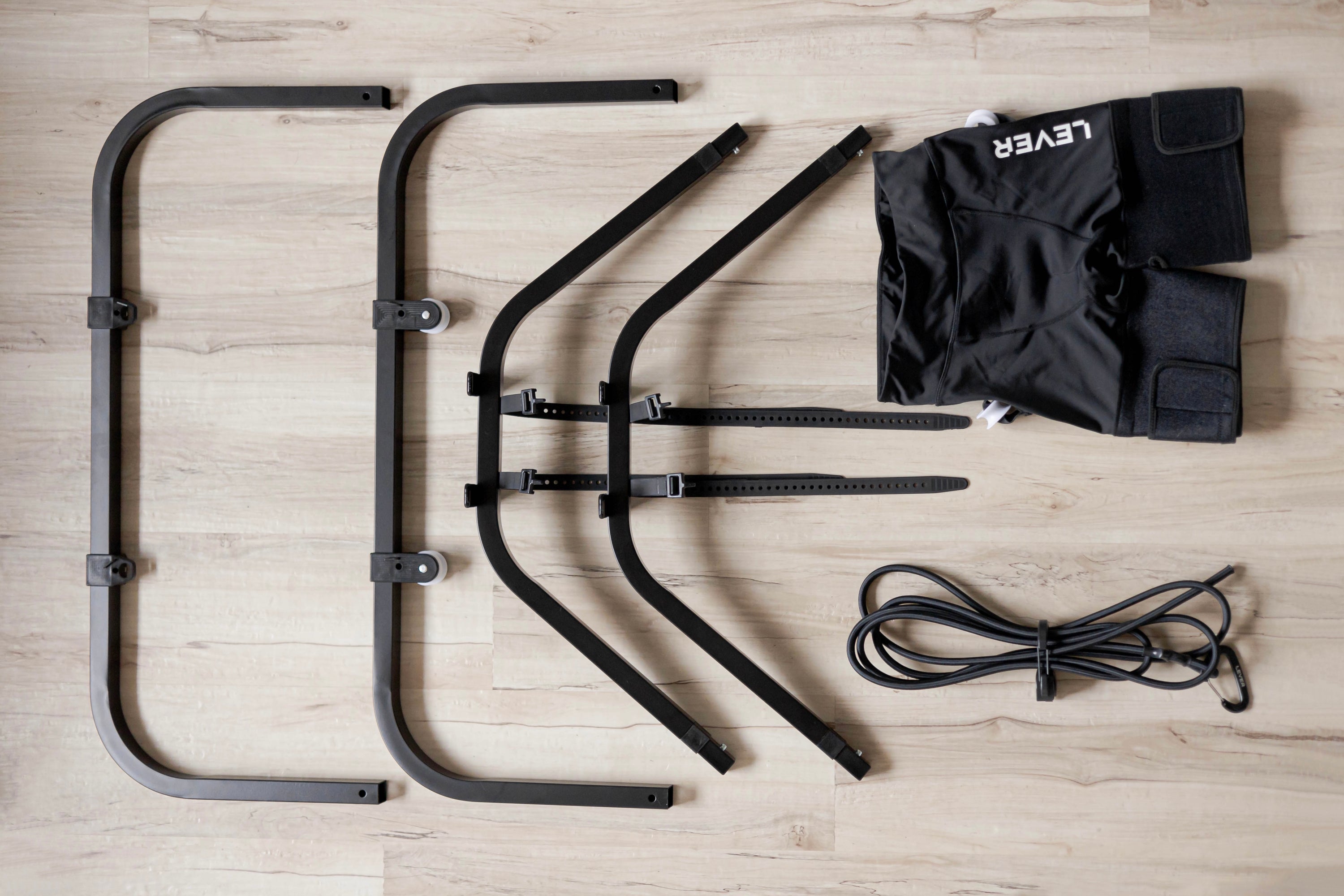
When Sam Tanner first got his hands on a LEVER system, it wasn't glamorous. A set of neoprene-style pants, a pulley frame that clips onto a treadmill, and a Bluetooth scale reading out how many pounds of body weight he'd dialed off. No pressurized bubble. No six-figure machine bolted to a clinic floor. Just a compact kit that had made it all the way from the US to New Zealand.
His first reaction was mostly relief that it wasn't the old setup he'd tried before. "The rugby sevens guys had one of those older systems," he recalled. "The pants came up to my armpits. Full moose knuckling it. Not a good look."
The LEVER was different.
What LEVER actually does
Before getting into how Sam used it, it helps to understand what body-weight-supported running is and what it isn't.
The most well-known system is the AlterG anti-gravity treadmill, which uses an airtight enclosure to reduce the pressure around a runner's lower body. It works, but it costs tens of thousands of dollars, takes up significant clinic space, and the pressurized environment can subtly alter how a runner moves affecting shoulder position, hip mechanics, and overall gait.
How LEVER works
A harness, not a bubble
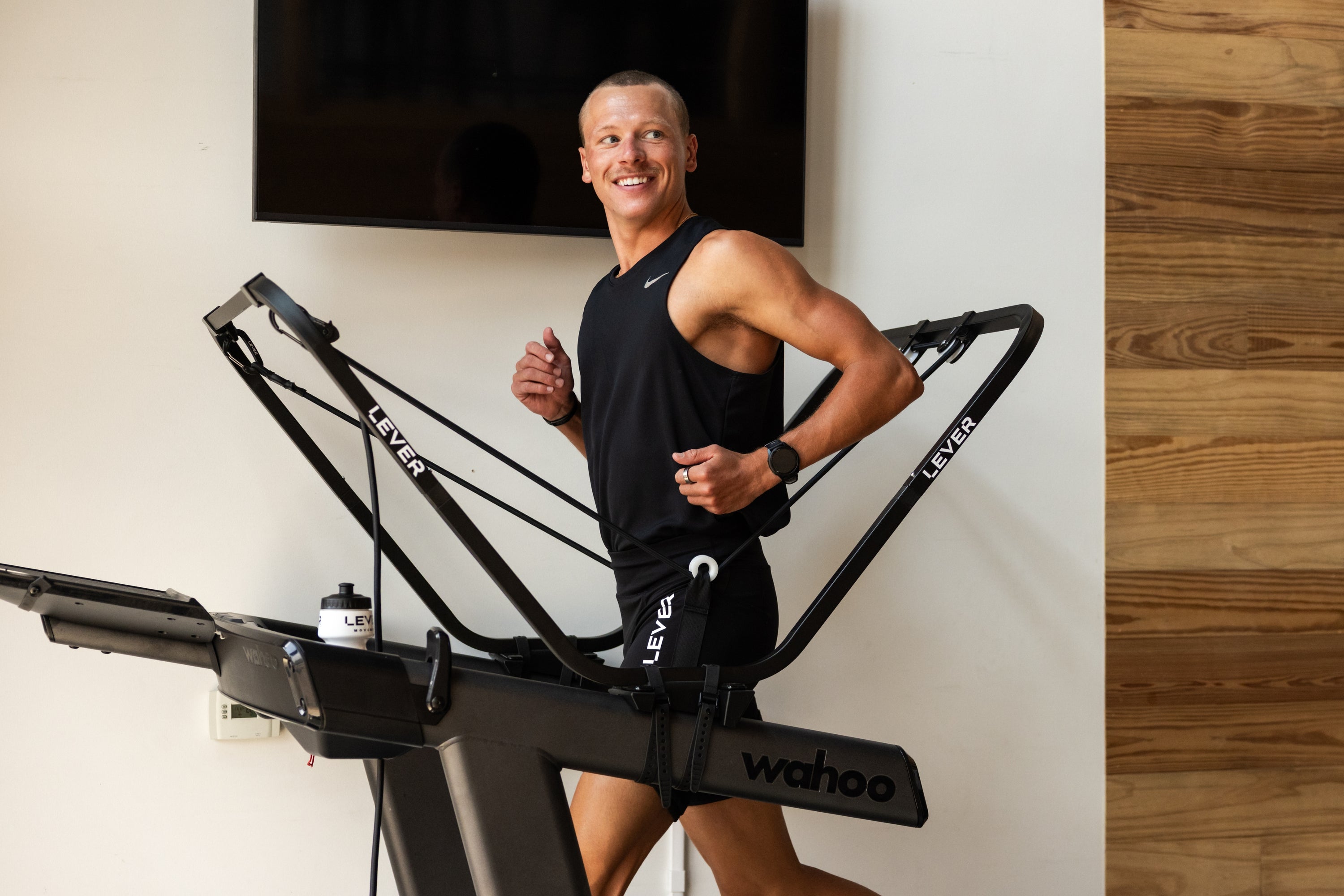
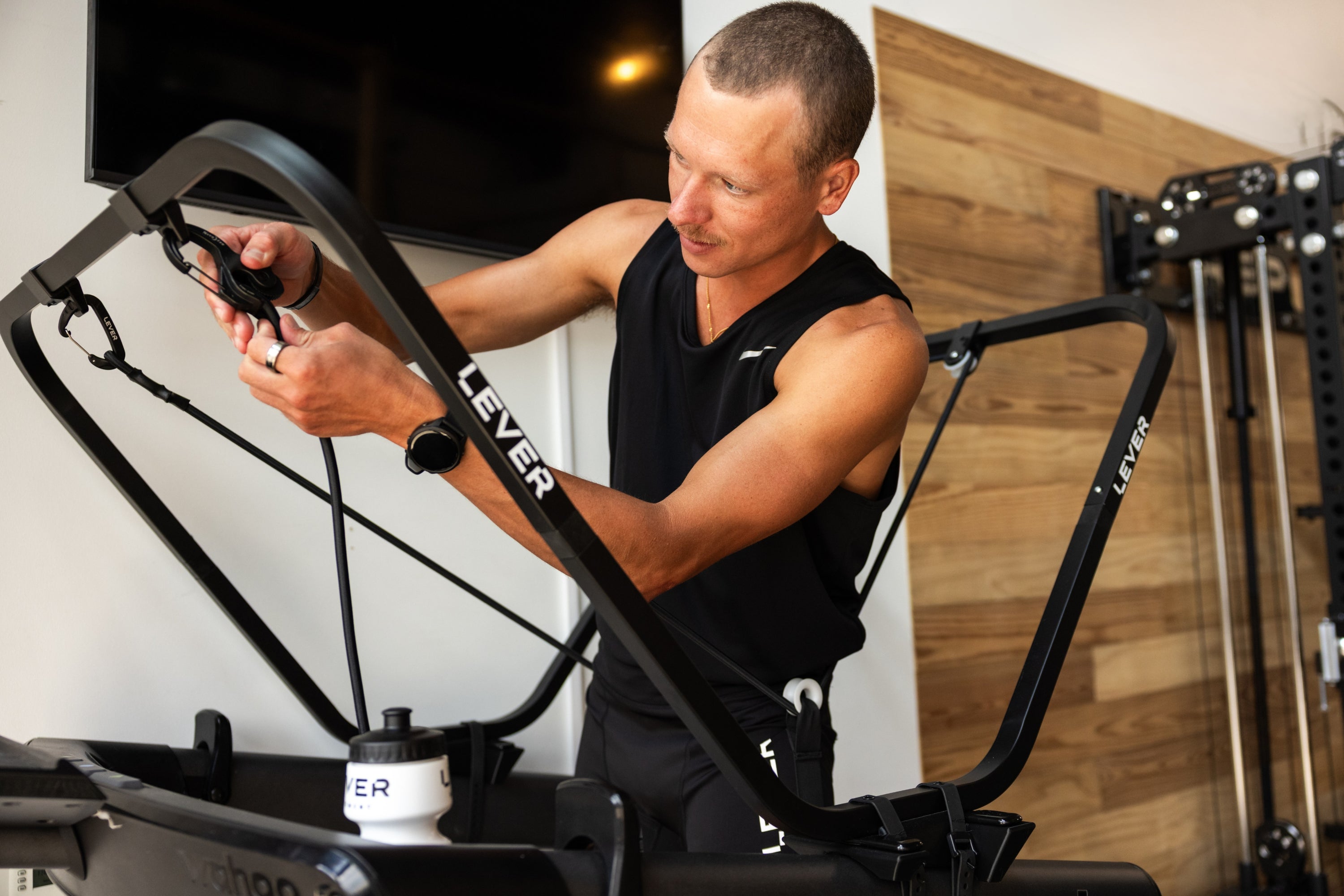
LEVER uses a lightweight harness with adjustable pulleys that attach to a frame on any standard treadmill. The pulleys apply upward force, reducing effective body weight by up to 45 lbs. Because it's an open system, running mechanics stay natural the runner moves freely, adjusts posture normally, and feels no pressure from a sealed chamber.
The pulleys are also adjustable for hip width. Narrow stance, wide stance runners can dial in where the lift force sits relative to their body. And a small Bluetooth scale on the frame shows exactly how much weight is being removed in real time, feeding into LEVER's app for session tracking.
"The best part about LEVER is that it doesn't affect your running mechanics at all. No bubble affecting your gait or your shoulders. You can adjust where the pulleys sit depending on how wide or narrow you run."
— Sam Tanner
Why load management matters for Achilles injuries
The counterintuitive truth about Achilles tendinopathy is that complete rest often makes things worse. Tendons need load to adapt. Too much stress breaks them down; too little means they never get stronger.
Sam learned this firsthand. His instinct early in recovery was to protect the calf don't stress it, let it settle. But the rehabilitation approach that actually moved the needle involved deliberately loading the tendon through isometric holds and heavy eccentric exercises.
"It was almost like reverse psychology," he said. "I had to train the tendon to manage load better and strengthen it back up. Doing those isometric holds was a game changer."
But isometrics are one part of the picture. The other part is running itself. For a professional middle-distance runner, not running isn't just inconvenient it's a training deficit that compounds over weeks. Running-specific neuromuscular patterns, cadence, rhythm, and leg turnover all degrade without consistent stimulus.
LEVER let Sam keep running while reducing the mechanical load on the Achilles. By dialing down effective body weight, the tendon experienced less peak force with each foot strike enough to stay within a safe loading range while the rest of the movement pattern stayed completely intact.
Mechanics preserved
No gait changes from a pressurized chamber or altered environment
Load is precise
Real-time Bluetooth readout shows exact weight reduction per session
Goes anywhere
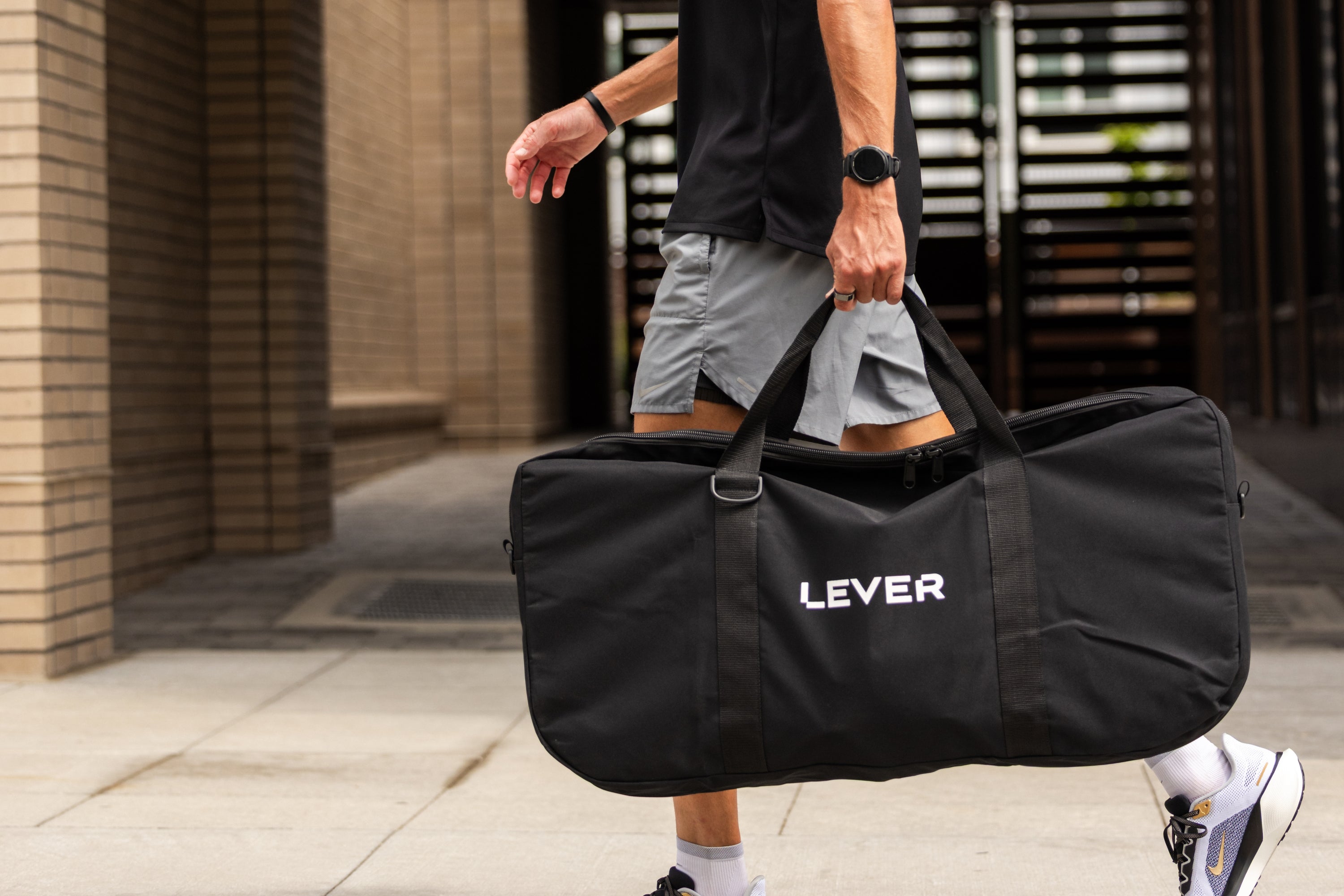
LEVER GO packs into a travel bag — Sam has taken it to Europe multiple times
High-speed capable
Supports max-effort sprints — Sam hit the Techno Gym's 32 km/h ceiling (45 seconds for a 400m)
From rehab tool to performance tool
What Sam didn't expect was what happened after the Achilles started settling down.
He started pushing harder on the LEVER. Not cautiously hard. Sprint efforts. High-speed intervals. He found that reducing body weight didn't just make running safer during injury; it unlocked a training stimulus he couldn't easily replicate otherwise.
"I found that I can actually go really, really hard on it," he said. "You can do max efforts without putting a lot of stress on the tendon. I could do sprint work at a level I wouldn't have attempted with full body weight."
He hit the Techno Gym's speed ceiling at 32 km/h (45 second 400m or 3:01 mile pace) and ran it for a minute straight. He's fairly confident no one has done that particular thing on a LEVER before. "KZA came past and said, 'You're not even sprinting.' I said, 'I'm still tucked, mate.'"
By the time he packed for the Paris Olympic build-up, LEVER was in the bag not as a backup plan, but as a deliberate training tool. He used it for double runs throughout the European training camp.
"I took it to Europe as more of a precaution, but also as a training tool not just for rehab, but for actual training adaptations. I found the ability to go really hard on it, do sprint work, and manage load on the tendon at the same time."
— Sam Tanner
The bigger shift in thinking
What Sam's experience points to is a broader shift in how athletes and coaches are thinking about load management. The binary you're either training or you're injured is increasingly outdated. Tools like LEVER create a middle lane: high-quality mechanical stimulus, reduced tissue stress, maintained fitness and running economy.
For runners dealing with Achilles issues, bone stress injuries, or knee pain, that middle lane can be the difference between a season-ending setback and a carefully managed detour. For healthy athletes, it's a way to add volume or intensity without proportionally increasing injury risk.
Sam put it most plainly: "It was the first time in my life I thought ah, this is how the Kenyans run a two-hour marathon."
He was joking. Mostly. But the underlying point is backed by research. Studies on body-weight-supported running have shown that reducing load during training can meaningfully improve running economy, help athletes maintain cardiovascular fitness during injury, and lower cumulative stress on bones, tendons, and joints over time. For runners who train at high volume, that reduction in tissue stress isn't a compromise it's a smarter way to accumulate work without the injury risk that typically comes with it.
Sam Tanner is a professional middle-distance runner based in New Zealand. He competes at the international level and uses the LEVER GO as part of both his injury management and performance training.