Community Stories · Running With Dystonia
"You're the Most Similar Person I've Talked To": Kara Goucher Meets a Runner Living Her Same Rare Diagnosis
When a 25-year-old nurse reached out to LEVER about training with runner's dystonia, we knew exactly who she needed to talk to. What followed was one of the most honest conversations about the condition we've ever heard: two runners, decades apart in their careers, describing nearly identical experiences almost word for word.
What Is Runner's Dystonia?
Runner's dystonia is a rare, task-specific neurological movement disorder. During the repetitive motion of running, the brain sends faulty signals that cause involuntary muscle contractions, often in one leg or foot. A runner's leg might twist inward, toes might claw or catch, and the sensation of the foot striking the ground can disappear entirely, even though the leg works normally at rest.
Because it's task-specific, it's a cousin of writer's cramp and the hand dystonias that affect musicians. It only shows up during the activity the brain has repeated thousands of times. There's currently no cure. Management usually involves some combination of neurological physical therapy, Botox injections, and medication, and it looks different for every single person.
It's also lonely. Most runners have never heard of it. Many doctors haven't either. Which is why, when Jenna Webb reached out to us about using LEVER for her dystonia, we set up a call with the most visible runner's dystonia patient in the world: Kara Goucher.
Meet Jenna: A Nurse Whose Run Changed in a Single Step
Jenna is a 25-year-old maternity nurse who has run since middle school. After college, running became her decompression: solo treadmill workouts at home, easy miles with friends, a way to reset after overnight shifts.
In December 2024, her treadmill malfunctioned and surged to full speed mid-run. She fell hard. The bone bruises healed. Something else didn't.
"I would go for a run and my leg would twist in this weird way. And the more I would try to run, the more crooked I would feel in my day-to-day life. A friend at work watched me walk down the hallway and said, 'What are you doing with your leg?'"
— Jenna Webb
What followed will sound familiar to anyone with this condition. An orthopedic doctor suspected a torn labrum. An arthrogram found nothing. Months of traditional physical therapy targeted her back. Nothing changed. Finally, a referral sent her an hour from home to an office she didn't expect: a neurologist. He watched her run on a treadmill, reviewed the videos her friends had filmed from behind, and named it immediately. Dystonia.
When Jenna went home and searched the condition, the first result was a Runner's World article about Kara Goucher.
"It was both upsetting and relieving to find that article. If someone asks me about it, I can say, I'm just like her, she has this too. I never want to not be believed, because it is neurological."
— Jenna Webb
Meet Kara: An Olympian Rewriting What Running Means
Kara Goucher needs little introduction. Two-time Olympian, World Championship silver medalist at 10,000 meters, podium finisher at the Boston and New York City Marathons, and now an NBC broadcaster and co-host of the Nobody Asked Us podcast. She was diagnosed with runner's dystonia in 2021 after her own frightening stretch of unexplained falls and slipping sensations, which also traced back to a fall on her treadmill in December.
The parallels between the two stories stopped both of them mid-conversation. Same month of onset. Same leg. Same inward twist. Same feeling that no doctor could name at first.
| Two Runners, One Condition | Kara | Jenna |
|---|---|---|
| Symptoms began | After a December treadmill fall | After a December treadmill fall |
| Affected side | Left leg | Left leg |
| The sensation | "Like running on freshly Zamboni'd ice" | "Like I was crooked, or slipping" |
| Best surface | Gravel trails, for the sensory feedback | Gravel, out-and-back, minimal turns |
| Hard running | All hard sessions on LEVER | Long runs and intervals on LEVER |
"I feel like I'm running on freshly Zamboni'd ice. Even though my foot's landing and pushing off, I'm not getting that sensation, ever. Everybody's situation is so different, but your story is ridiculously similar to mine. You're the most similar person I've talked to."
— Kara Goucher
Why They Both Run on LEVER
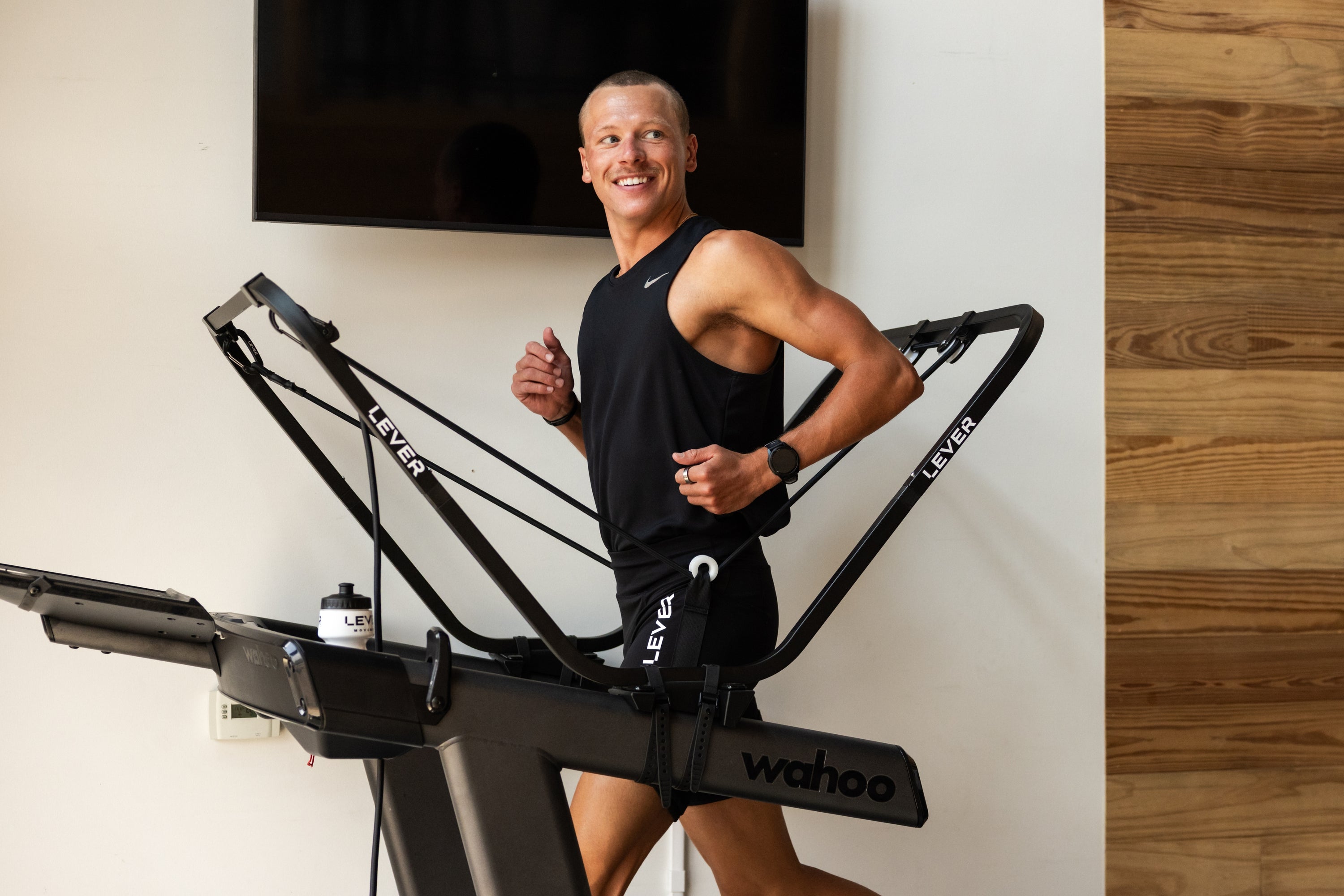
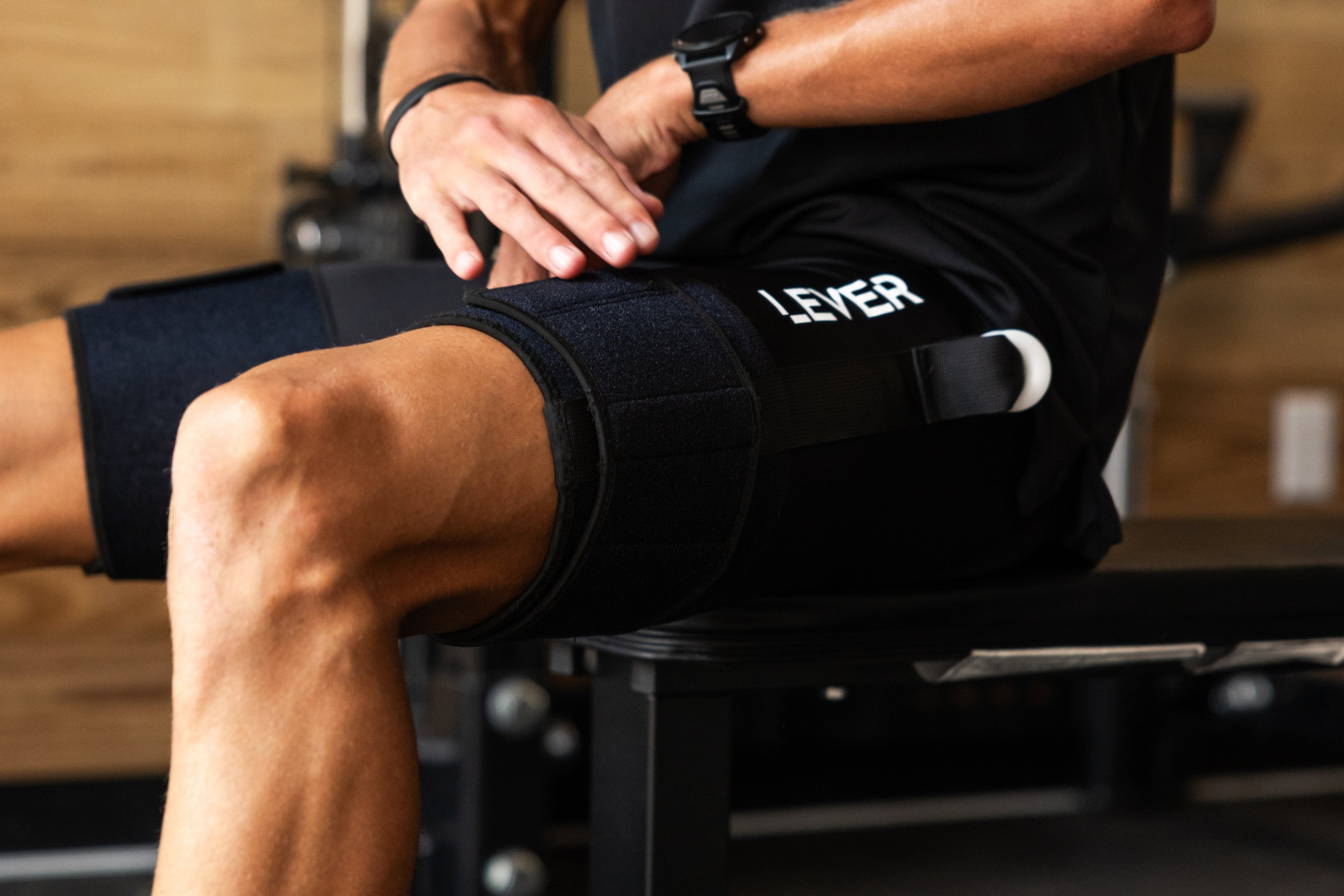
For both runners, LEVER isn't a treatment. It's an environment. With dystonia, every step outdoors demands conscious attention: don't catch the toe, don't trip, don't fall. Running with body weight support changes that equation in two ways: it reduces the load on the affected leg, and the harness provides a physical sense of security that quiets the fear.
Jenna started slowly. After being thrown from a treadmill, just stepping back on one took courage. She began by walking in the system, then alternating walk and run intervals. Now she regularly runs seven to eight miles on it.
"Most of the time my steps are successful and I don't feel the dystonia as much. It eases that anxiety of every step, like don't fall, don't fall. I know that something extra is holding me."
— Jenna Webb
Kara's routine is built around the same principle. Depending on the season and her symptoms, she runs on LEVER anywhere from two to five days a week. But one rule never changes: every hard session happens in the system.
"Anytime I try to do anything hard, I do it on the LEVER because it's more controlled. I'll still catch my toe here and there, but it's holding me enough that I recover. It takes away that thinking about my next step. I do little pickups and repeats and just try to remind my body that it used to run fast."
— Kara Goucher
It's also her reset button. When a heavy stretch of work or travel triggers a flare, like the weeks after broadcasting overseas when even walking felt uncomfortable, she moves entirely onto LEVER until things settle, skipping long runs and hard outdoor efforts rather than skipping running altogether.
Run Supported
A Safer, More Controlled Place to Run
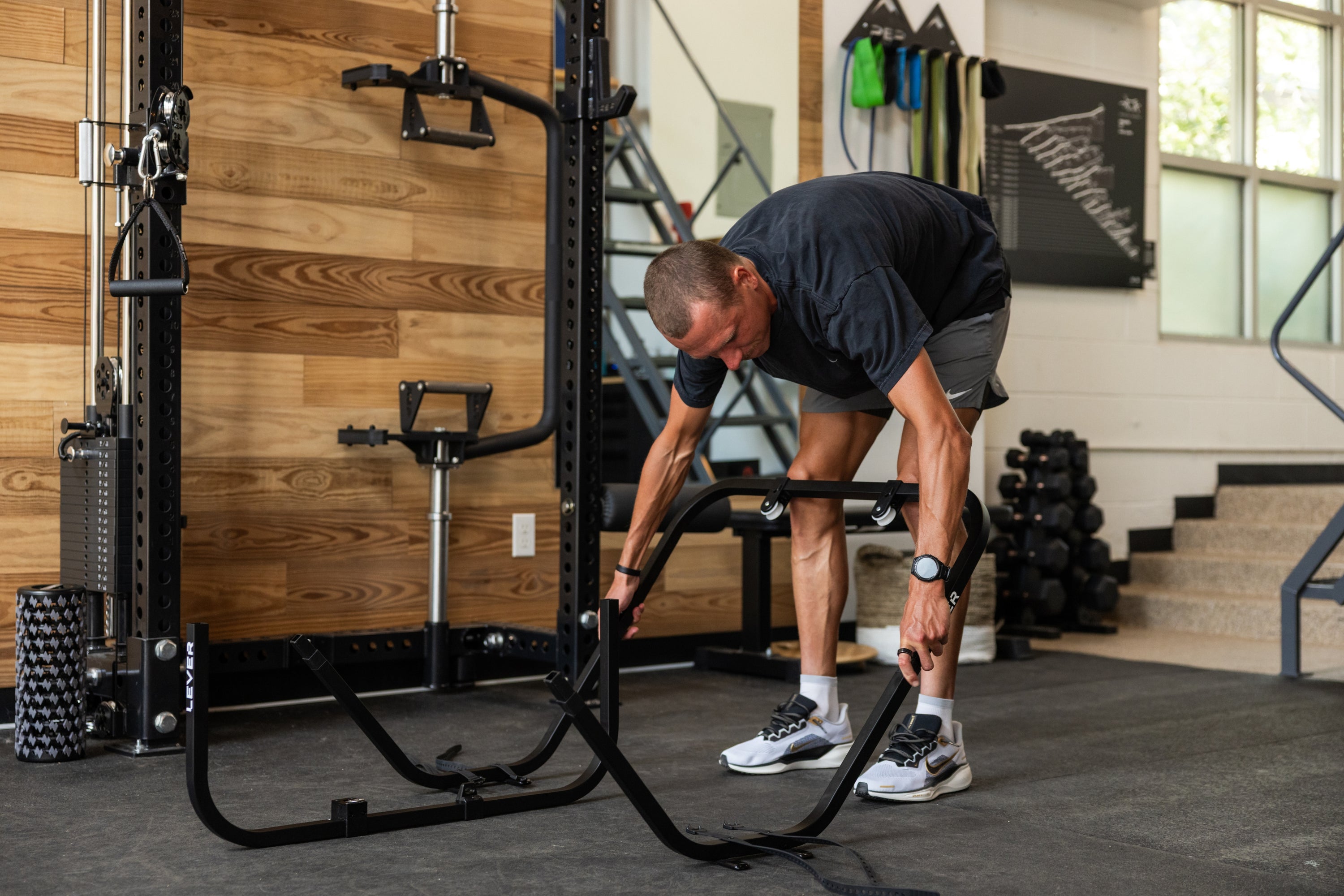
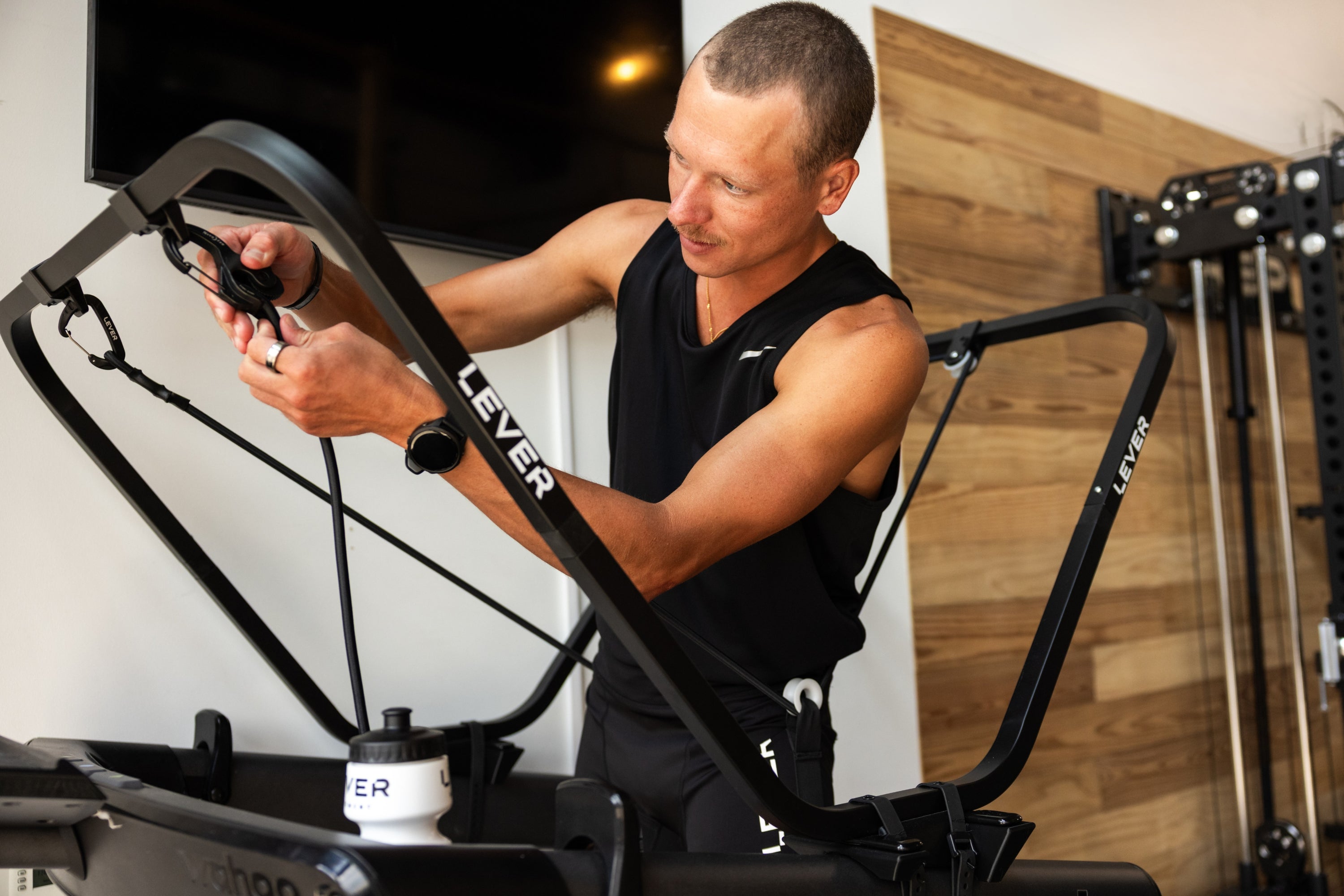
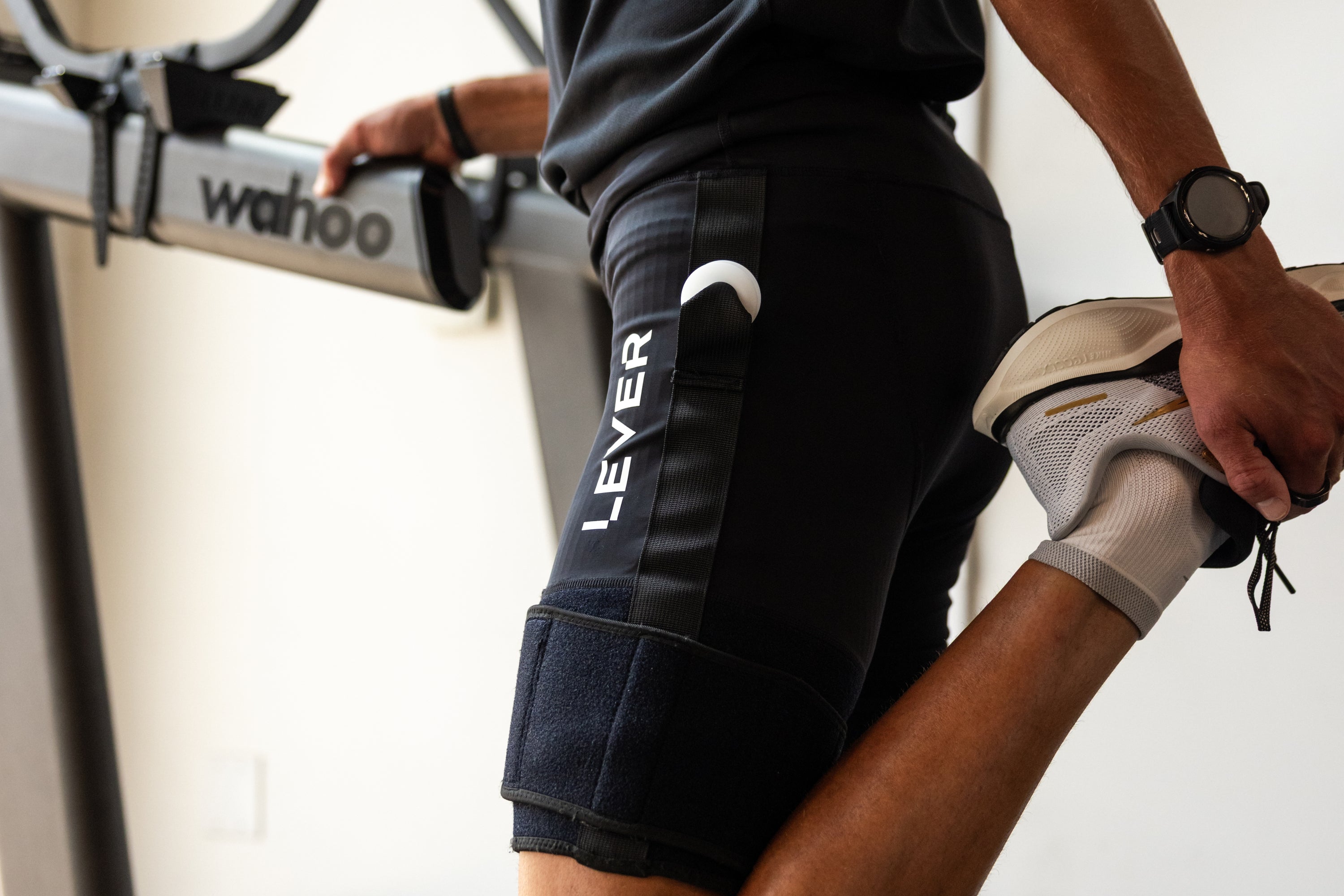
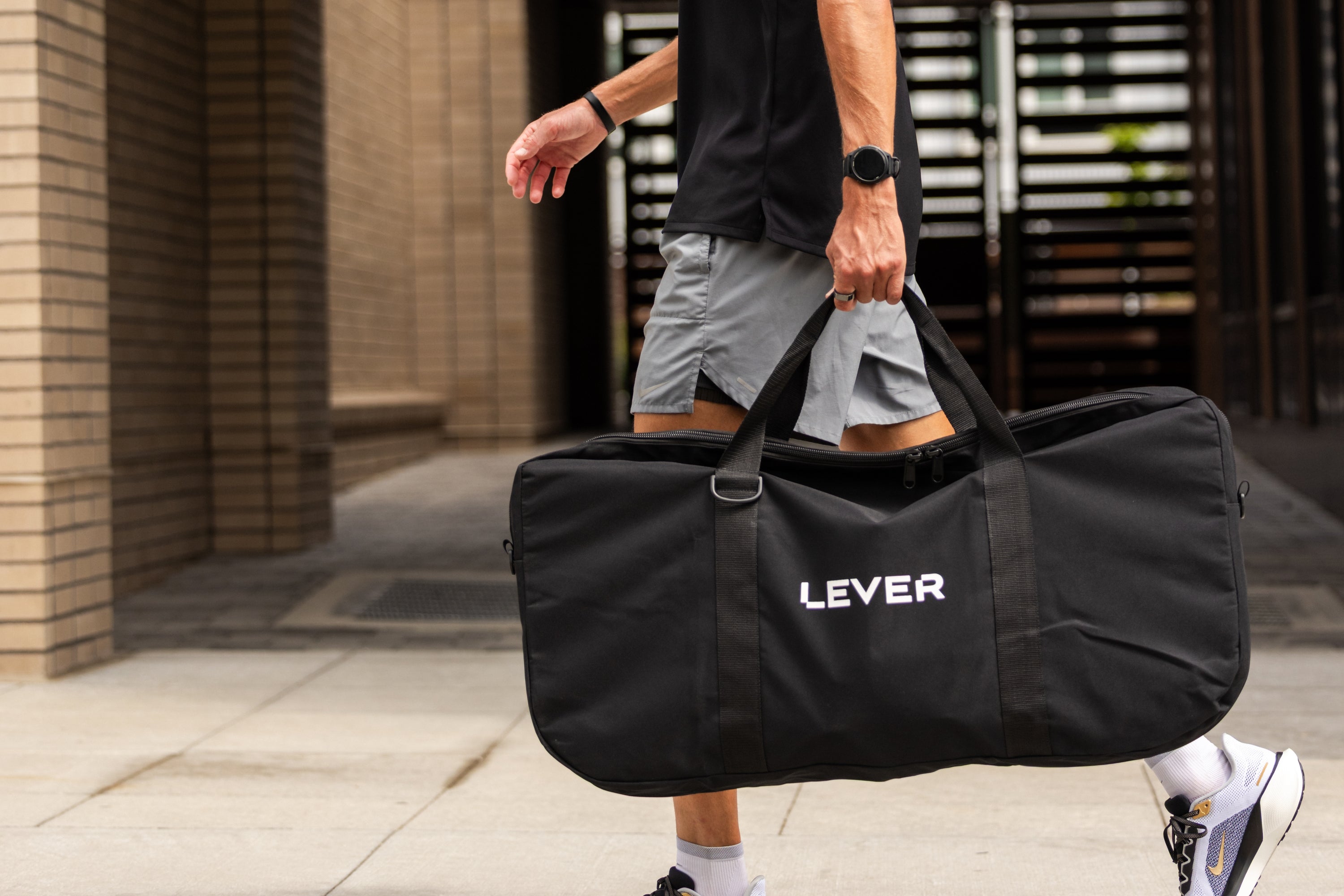
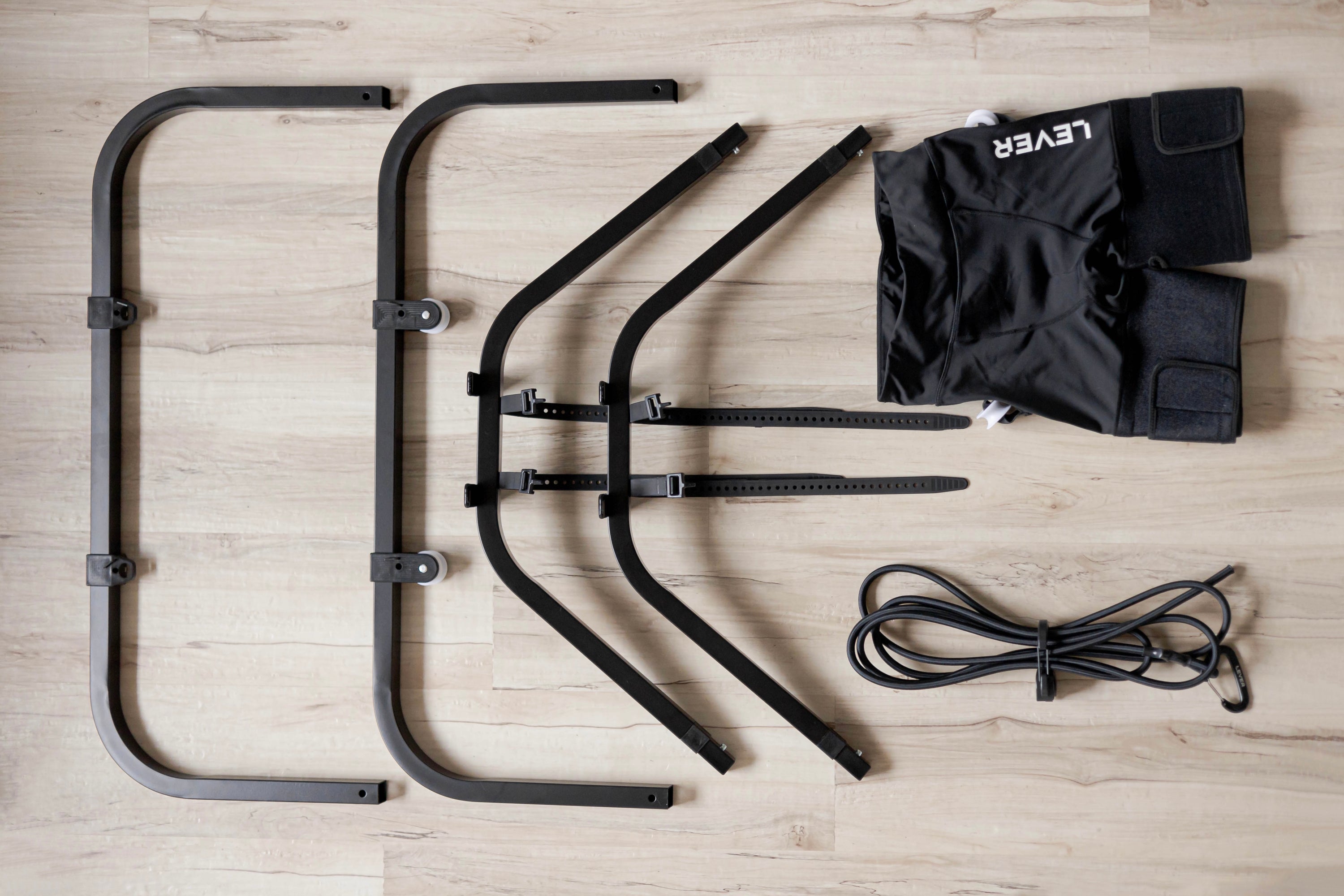
The LEVER system attaches to the treadmill you already have and reduces up to 45 lbs of body weight, giving you a secure, supported environment to keep running on your terms.
Shop LEVER SystemsWhat Else Has Helped Them
Both runners were quick to say the same thing: there is no fix, only a toolbox, and everyone's toolbox looks different. A few of the things they compared notes on:
Neurological physical therapy. Both see neuro PTs, and both got the same confused look in the waiting room. Jenna is her therapist's first-ever runner's dystonia patient; his other clients are mostly stroke patients and musicians.
Visualization and video feedback. Jenna's PT noticed she could only mentally picture the right half of her body while running. Now he plays live video of her running from behind while she's on the treadmill, and watching her left leg helps her take clean steps.
Sensory tricks. Kara has used mirror therapy, kinesio tape running from her foot up her leg for awareness, and even a fidget spinner while running to give her brain something else to process.
Working with specialists on medication. Kara has explored several medication options with her doctors over the years, some of which have meaningfully reduced her symptoms. It's an ongoing, individual process of trial and adjustment with her medical team, not a one-time fix.
Knowing your triggers. Stress, poor sleep, heavy work stretches, and mentally demanding days make symptoms worse for both of them. Jenna, who works overnight shifts, feels it most after three nights in a row.
"A neurologist I worked with told me: the minute you stop running, it's over. Keep doing it even if it looks weird, even if it doesn't feel right. And when you catch a good day, go for it."
— Kara Goucher
The Part That Matters Most: Not Being Alone
Dystonia is under-researched, underfunded, and widely misunderstood. Kara put it bluntly: when people hear about it, they either think of musicians or they think you made it up. For a condition that's invisible at rest and hard to explain in motion, finding one person who truly gets it changes everything.
"All my friends run, but they run normally. They'll say, 'That stinks, just push through it.' It's really helpful to hear from someone who actually understands."
— Jenna Webb
The call ended with an exchange of emails and an open door. "Reach out anytime," Kara told her. "Even if you're just frustrated."
Two runners separated by a generation, connected by the same rare condition and the same stubborn refusal to give up the sport they love. Both still running. Both still finding a way.
This article shares personal experiences and is for informational purposes only. It is not medical advice. Dystonia presents differently for everyone; if you're experiencing unexplained movement symptoms, please work with a qualified medical provider such as a neurologist or movement disorder specialist.