For most of us, the path to the Ironman World Championship starts with a dream. For Livia, it started with a pair of tiny skis.
She raced her first event at three years old, won a gold medal, and cried her way through it looking for her mom. Since then, movement has basically defined her life running with her parents, bouncing between sports like figure skating and volleyball, and eventually discovering triathlon while studying abroad.
“I’ve always liked to set high goals,” she says. “I skipped all the steps. I was like, I have to do a marathon.”
That tendency to go all-in made her strong but it also made her vulnerable. Nagging pain turned into a stress fracture in her foot in 2017 and later a stress reaction in the same area. Those setbacks eventually led her to triathlon… and to LEVER.
Today, Livia is one of the most consistent age-group runners in Kona, posting some of the fastest marathon splits in the field even when her lead-up has been anything but perfect.
This is how she got there.
Finding Triathlon and a Coach Who Believed in Her
Livia’s jump into triathlon wasn’t about chasing a world title. It was about staying active when her body couldn’t tolerate pure running.
Living in Berlin for an exchange semester, she was used to moving everywhere on foot or by bike. Suddenly, life in the U.S. meant more time in the car and more restless energy. Running came back, then the injuries followed, and eventually she added swimming and cycling to offload her knees.
Triathlon clicked.
She was immediately competitive, even without structured training. That’s when she decided to stop “winging it” and brought on coach Bennie Ritzel in 2018.
“I knew I wanted to do an Ironman,” she says. “Having had a stress fracture the year before, I felt I needed someone to look over what I was doing.”
With Bennie, she qualified for Kona in 2019 as one of the youngest athletes in her age group. The island hooked her instantly. She promised herself she’d be back this time more experienced, more prepared, and ready to really compete at the front.
Zwift Academy, Big Equipment… and the First Big Run Scare
In 2023, Livia joined the Zwift Academy Tri Team, opening doors to top-tier equipment, coaching, and a new community of high-performance women.
Two things from that experience stand out to her:
-
World-class equipment – bikes, race wheels, suits, and all the little details that add up. “The material made a huge difference,” she says. “It’s stuff I would never have been able to afford as a student.”
-
A team and a community – racing no longer meant showing up alone. “It felt more like home,” she explains. “You’re not just there nervous about your race. You’re surrounded by people, and that motivates you.”
But the closer Kona 2023 loomed, the more her old fear crept in: another foot injury.
She started feeling something in her foot that reminded her of the stress fracture that once sidelined her. An MRI confirmed a stress reaction not a full fracture yet, but a red flag.
That’s where LEVER entered the story.
Kona 2023: A Stress Reaction, No Outdoor Runs, and a 3:09 Marathon
With a stress reaction confirmed early in the season, Livia and her coach did what most athletes dread: they stopped running. For weeks.
She still needed to qualify for Kona, so they targeted Ironman Switzerland. Bennie told her she needed just three “long runs” in the build nothing crazy, mostly around 20 km, and even those were controlled.
Race day in Switzerland was brutally hot around 36°C after a cool 16°C week in Berlin. On tired legs and minimal run training, she still managed the second-fastest run on the day and secured her Kona slot… even though she crossed the finish line vowing never to do another Ironman.
But qualifying was only half the battle. They still had to build to Kona without breaking her foot.
That’s when LEVER became non-negotiable.
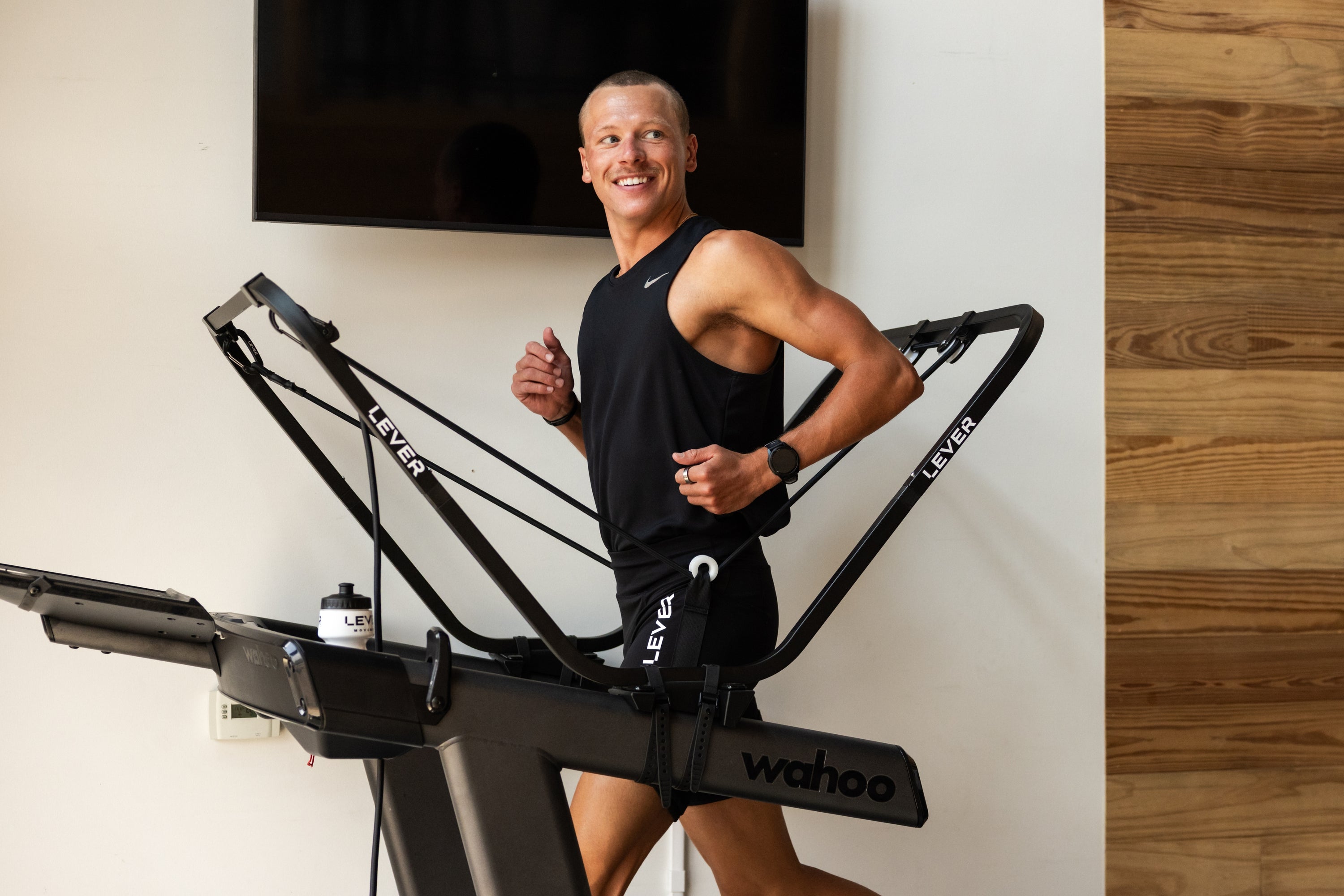
“I did all my runs on the LEVER system up to the week before Kona,” Livia says. “Long runs, speed sessions everything.”
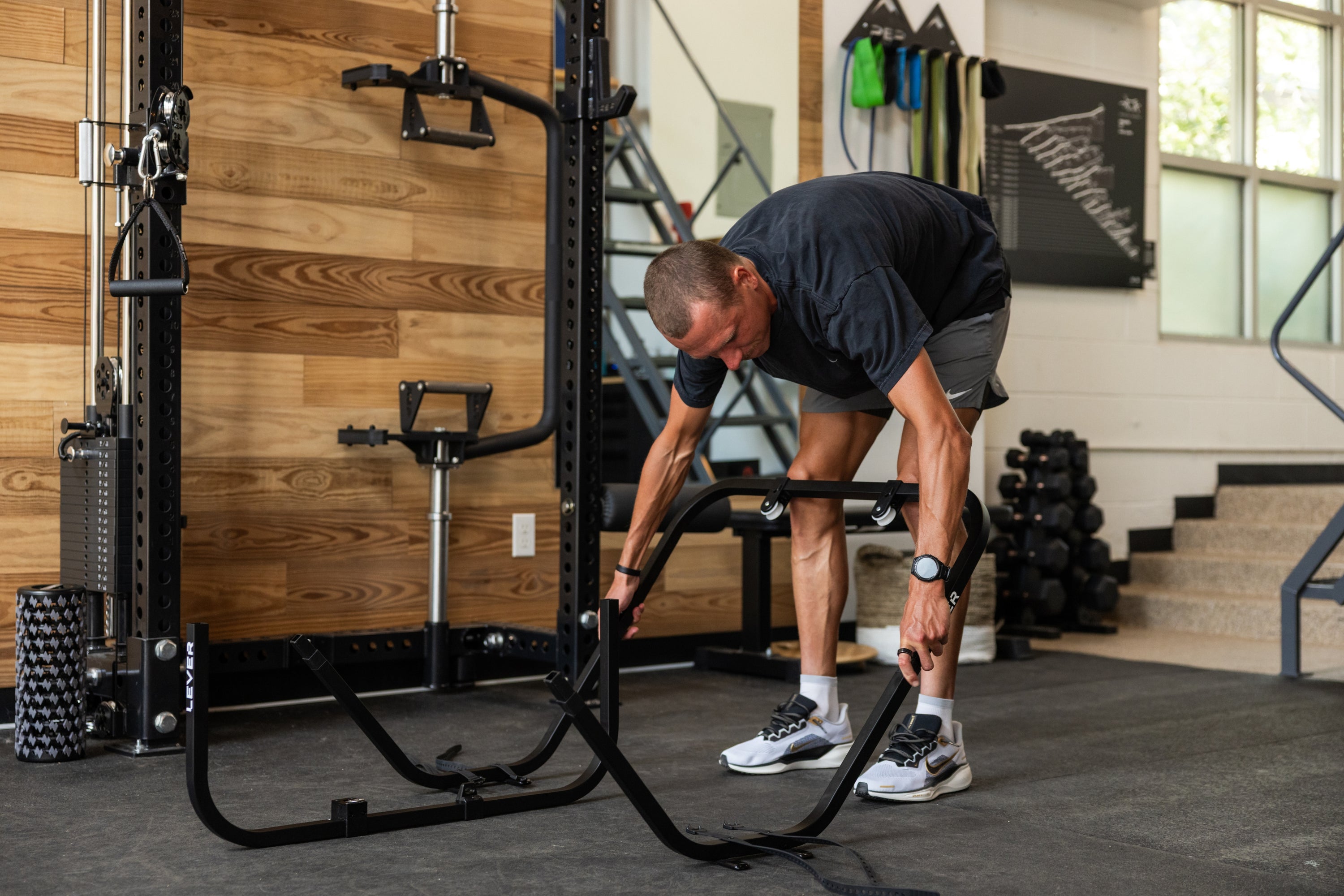
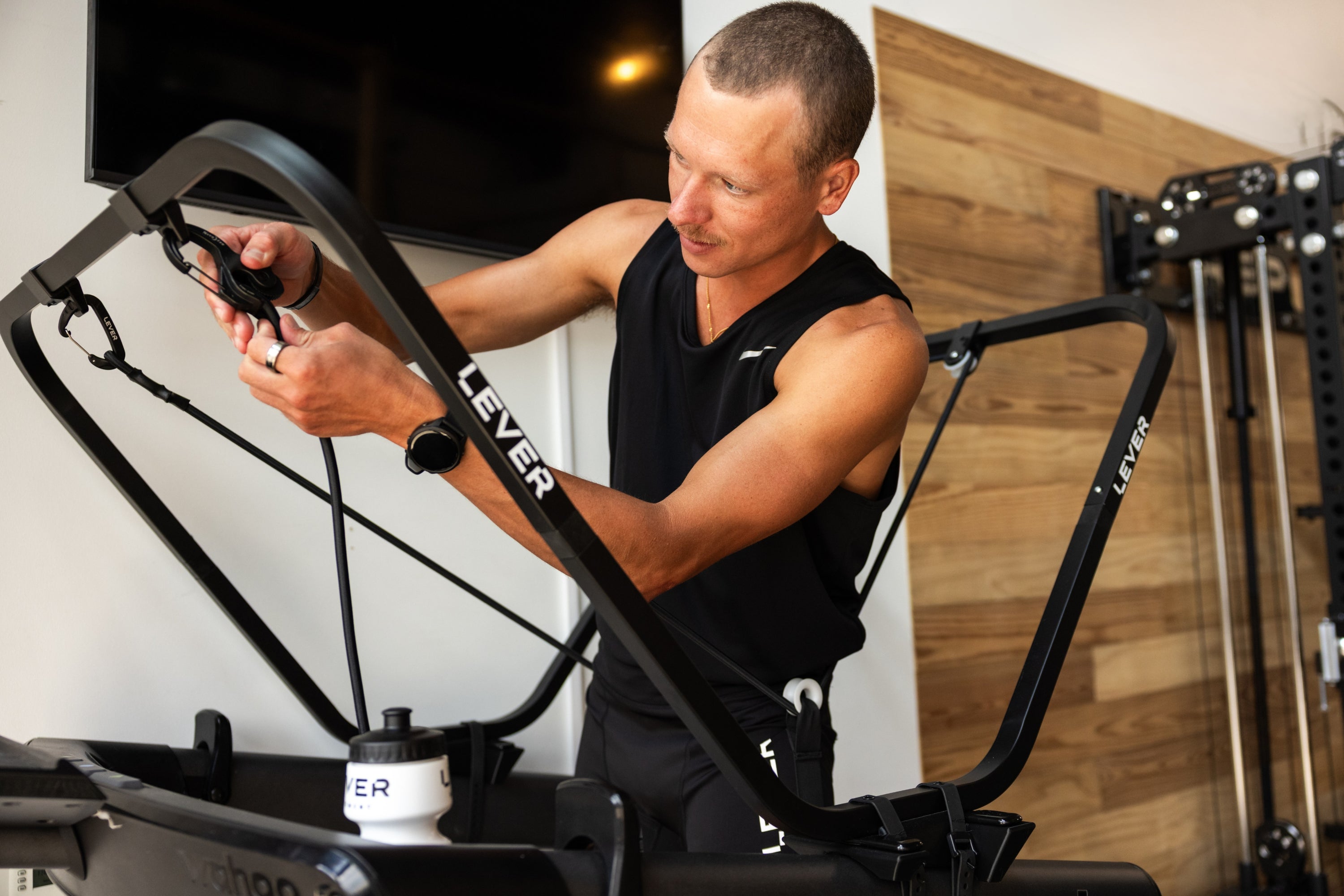
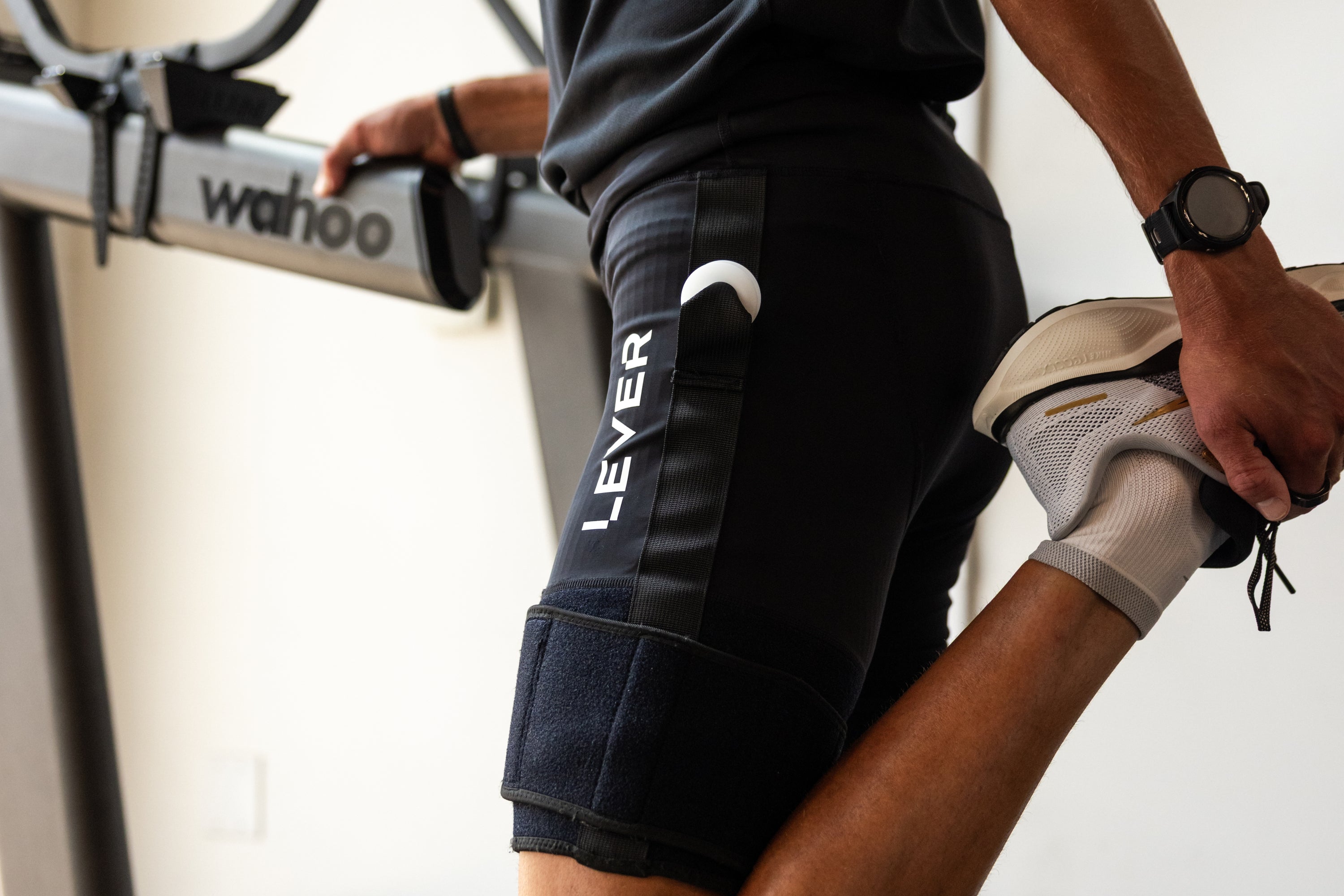
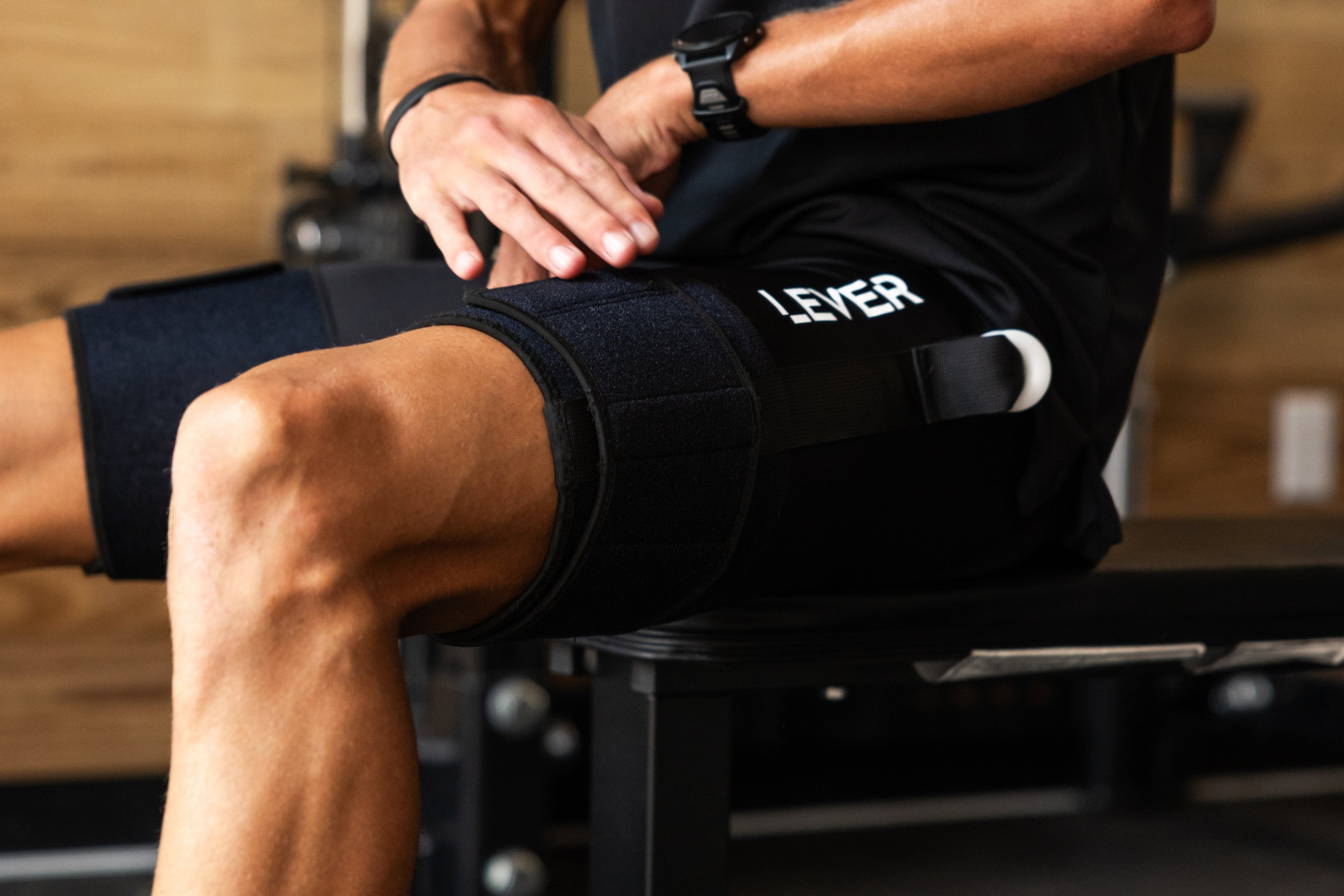
She borrowed a LEVER from a friend at first, then bought her own. With body-weight support, she could keep the mileage and intensity her coach prescribed, without the same level of impact through the bone.
The mental side might have been the biggest win:
-
She didn’t have to constantly wonder, Am I making this worse?
-
She knew she could hit long runs (up to two hours) and speed sessions while respecting her injury risk.
-
She arrived in Kona with real confidence in her run, despite very little outdoor running.
The result?
A 3:09 marathon in Kona one of the fastest age-group female runs on the day.
2024: New Injury, Same Island, Even Less Running
If 2023 was about her foot, 2024 was about her hip and back.
Just as her Kona build was about to start, Livia finished a treadmill session of 1k reps with a bit of hip tightness. She backed off early to be safe. Walking down the stairs afterward, a sharp pain hit her hip so hard she could barely stand.
Fearing another bone injury, she went in for imaging. This time, the scans showed osteitis pubis inflammation at the pubic symphysis commonly seen in footballers and a small area of irritation near the adductors.
The big risk? If mishandled, this kind of issue can linger for months or even years.
So once again, it was an immediate stop running call.
They started back cautiously:
-
Time on an AlterG, running at reduced body weight.
-
Then short run/walk intervals on LEVER: 1 minute run / 1 minute walk, then 2/1, and slowly building from there.
-
Gradually extending continuous running on LEVER before occasionally testing short runs outside.
Each time she tried to fully “return” to outdoor running, the same pattern returned: pain in the hip, then her SI joint locking up around 40 minutes into a run, radiating up into her back.
By then, Kona was only six to seven weeks away.
Stopping completely again might’ve meant not starting at all. But they discovered something important:
“With LEVER, I only had to take off around 2 kg and I could run almost without pain.”
That tiny adjustment changed everything.
Building a Kona Marathon on 20 km Per Week

From that point on, Livia averaged about 20 km of running per week roughly 12–15 miles.
Most of it was:
-
Shorter sessions on LEVER with light offload
-
A few carefully monitored long runs still on LEVER creeping up to around 1:30–1:45
-
Physio four times a week
-
Around 10 hours of stability and strength work, focused on fixing underlying imbalances
In total, she did only five runs longer than one hour before Kona and just three of those were true long runs.
Still, she kept showing up. She traveled to Florida and then Kona, hoping that warmth and less desk time would help loosen everything up. The pain didn’t disappear.
At one point on a run in Florida, she called her boyfriend in tears, unsure if she’d even be able to run in Kona.
The turning point wasn’t physical it was mental.
She stopped hoping the pain would magically vanish and started planning for it instead:
-
If it locks at 40 minutes, how do I move?
-
How do I position my body so I can still run?
-
What do I tell myself when it hits?
That mindset shift, plus the hours she’d already banked with LEVER, helped her line up on Ali’i Drive with a quiet confidence:
She might not have had the perfect build, but she’d done everything she could.
And again, the marathon ended up being her best discipline on the day.

How Livia Actually Uses LEVER
Livia is the kind of athlete who would love to run more. Her body just doesn’t always agree. LEVER has become the tool that lets her respect that reality without giving up her identity as a strong runner.
Here’s how she uses it:
1. As a safety net for early niggles
If something feels “off” but not catastrophic, she doesn’t push through it on the road.
“When I feel a little niggle, I just go on the treadmill with LEVER. It feels safer. I can still get the miles in, but with less impact.”
2. To return to running after time off
Post-off-season or post-injury, LEVER is her transition back to full loading:
-
Short run/walk intervals
-
Gradual build to continuous running
-
Only then testing outdoors
3. To increase run volume without increasing stress
She knows she can’t handle the high weekly mileage some athletes do, even though she loves running.
LEVER lets her safely bump her mileage when needed especially in key blocks before Kona without overloading her bones or irritated tissues.

Lessons from Livia: Less Can Be More
What makes Livia’s story powerful isn’t just the times on the clock. It’s what she’s learned about herself:
-
Green TrainingPeaks doesn’t guarantee a perfect race.
She’s had “perfect” builds that led to good—not incredible—performances, and chaotic builds that led to some of her best runs. -
Listening to your body beats forcing the plan.
She’s become the athlete who stops at the first sign of real pain, knowing two days off now can save three weeks later. -
Your brain can amplify pain or help you move past it.
She’s seen how hearing a diagnosis can suddenly make something “hurt”… and how positive self-talk and affirmations can carry you through hard sessions and races. -
You don’t need perfection to perform on the biggest stage.
Twice now, her Kona build has been marked by major setbacks. Twice, she’s run herself into the very top of the age-group field.
Her Advice to Athletes on the Fence About LEVER
For athletes wondering if tools like LEVER are “worth it,” Livia doesn’t overcomplicate it.
She sees LEVER as a way to:
-
Keep running when a full stop isn’t necessary
-
Protect long-term health by reducing impact
-
Add mileage where the body might otherwise say “no”
And maybe the most important piece to give athletes confidence in imperfect seasons.
Because most big goals aren’t achieved off a perfect training log. They’re built in the messy in-between—adjusting, adapting, and finding ways to keep moving forward.
For Livia, LEVER has been one of those ways.
And as long as the marathon in Kona keeps being her greatest weapon, it’s going to stay a central part of her story.