Achilles pain is the injury runners try to ignore. It's stiff for the first few steps in the morning, it loosens up once you're warm, and then it's worse that night. So you keep running, and it keeps coming back.
The good news: Achilles tendinopathy usually doesn't need complete rest. Tendons respond to the right kind of load. This guide covers what's going on in the tendon, how long it really takes, the pain rules that let you keep running, and how running with less body weight can help along the way.
40-52%Of runners hurt their AchillesAt some point in their running life
~12xBody weight through the tendonAt peak, in a running step
6xHigher odds if you had it last yearThe biggest risk factor
1 in 3Still has symptoms a year laterOf runners with new Achilles pain
1What Achilles Tendinopathy Actually Is
Your Achilles connects your calf to your heel bone and works like a spring. Every running step stretches it and snaps it back. At peak, it can carry up to about 12 times your body weight.
Tendinopathy happens when the tendon gets more load than it can adapt to. It's not mainly inflammation, which is why rest and anti-inflammatories alone rarely fix it. The tendon gets irritated and loses some of its capacity to handle load. The fix is rebuilding that capacity.
MOST COMMONMidportion2 to 6 cm above the heelThe middle of the tendon gets sore and often thicker. This is the type most running research is about.
NEEDS TWEAKSInsertionalWhere the tendon meets the heel bonePain right at the back of the heel. Usually needs gentler ankle positions, like skipping deep heel drops off a step.
Learn moreWhy rest alone doesn't fix itTendons adapt to load. When you stop completely, the pain usually settles, but the tendon also gets weaker. Then you start running again and it flares right back up.Current physical therapy guidelines say complete rest isn't the answer. The better plan is to keep moving within your pain limits while you strengthen the tendon.
2Who Gets It
Achilles tendinopathy is one of the most common running injuries. In a study of almost 2,000 recreational runners training for an event, about 5% developed it, rising to over 7% in marathon runners.
Biggest risk
Having it before
Runners with Achilles pain in the past 12 months had about 6 times higher odds of it coming back.
Training
Sudden changes
Jumps in mileage, more hills or speed work, or a new surface or shoe can all tip the tendon over its limit.
Strength
Weak calves
If your calves can't handle the work, the tendon takes more of the load.
3Warning Signs
Catch it early and it's much easier to manage. Watch for:
!Stiffness in the first steps out of bed or after sitting
!Pain at the start of a run that eases as you warm up, then comes back worse later
!A sore or thickened spot when you pinch the tendon
!Pain when you hop or push off, especially uphill
!Pain that's building week to week
See a doctor right away if you felt a sudden snap or pop, had sharp pain like being kicked in the heel, or can't push up onto your toes. That can be a tendon rupture, which is a different injury.
4How Long Recovery Really Takes
Tendons are slow. Here's what recovery usually looks like when you're doing the right work:
FIRST 2 WEEKSPain starts to settleSome runners feel a difference within a couple of weeks of starting a loading program.
AROUND 12 WEEKSReal improvement for mostMost loading studies run about 12 weeks, and most runners see clear gains by then.
3 TO 12 MONTHSBack to full strengthFunction keeps improving for up to a year as long as you keep loading.
1 YEAR1 in 3 still has symptomsTendons can be stubborn, which is why it pays to keep up the strength work even once it feels better.
Based on Beyer et al. 2015, Lagas et al. 2020 and the 2024 Achilles clinical practice guideline.
5The Pain Rules That Let You Keep Running
In a 2007 study, runners with Achilles tendinopathy who kept running did just as well as runners who rested, as long as they followed simple pain rules. Here's the version most physios use:
The pain dialRate your Achilles pain 0 to 10 during and after each run.
3-5AcceptableOK if it settles by the next morning
6-10Too muchBack off. Cut the load next session
✓Pain stays at 5 or below during the run
✓Any pain after is gone by the next morning
✓Pain and morning stiffness aren't creeping up week to week
Based on the pain-monitoring model in Silbernagel et al. 2007.
6Can Running With Less Body Weight Help?
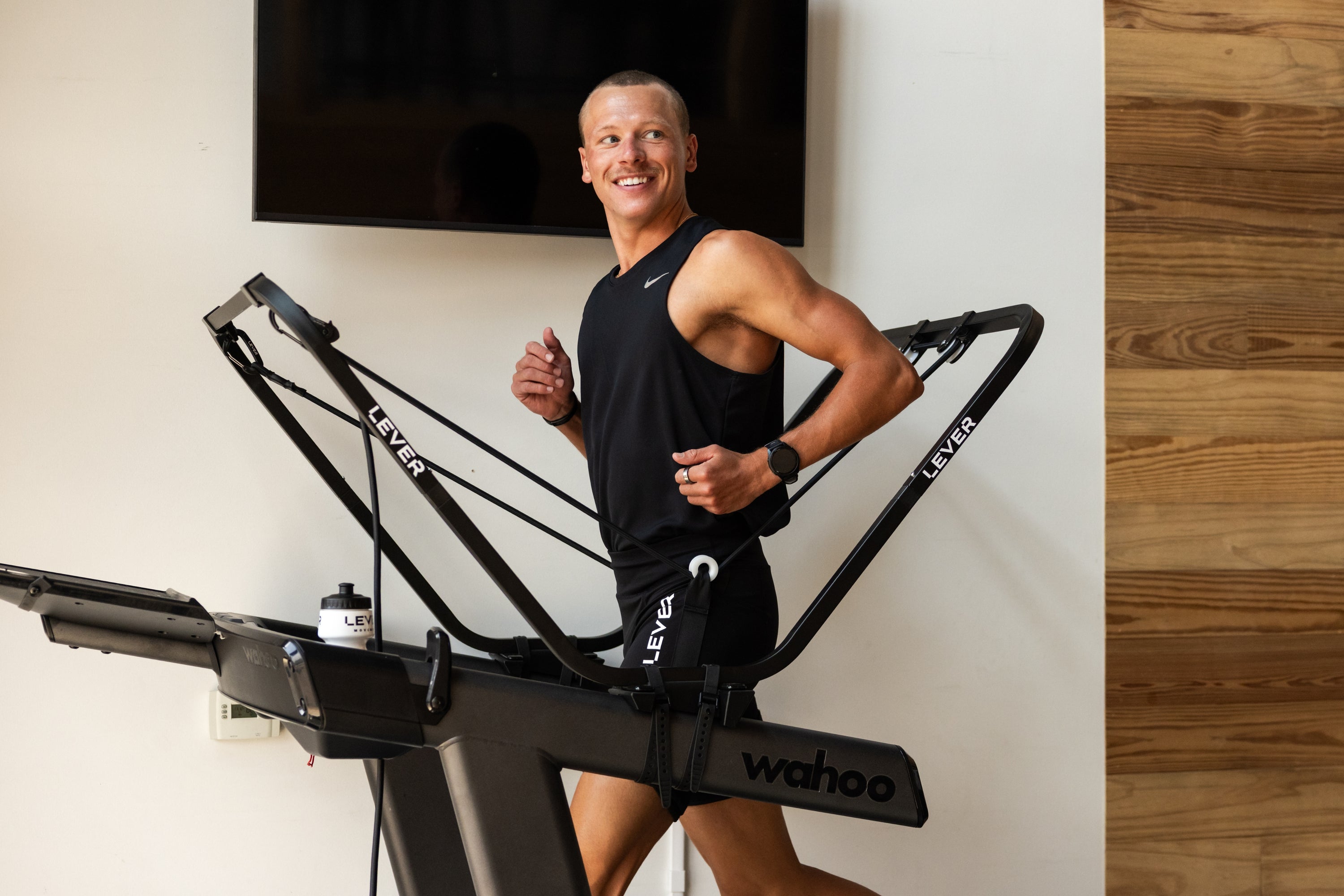
The hard part with Achilles pain is that running is the thing that hurts, but stopping makes the tendon weaker. Running with part of your body weight taken off can help you keep running inside the pain rules while your strength work does the healing.
What the research shows
Less load on the tendon
In a 2023 study, runners using a harness-style support system had about 9.5% less load on their Achilles and 9% less impact. Pohlman et al. 2023.
After surgery
A bridge back to running
After Achilles surgery, runners used an anti-gravity treadmill at 85% of body weight as a step before running outside. Saxena et al. 2011.
The catch
Keep your form
With support, runners tend to take fewer, longer steps. Keep your cadence close to normal. Fohrmann et al. 2025.
Be honest
It's not the treatment
Calf strength work is what rebuilds the tendon. Support helps you keep running while that happens.
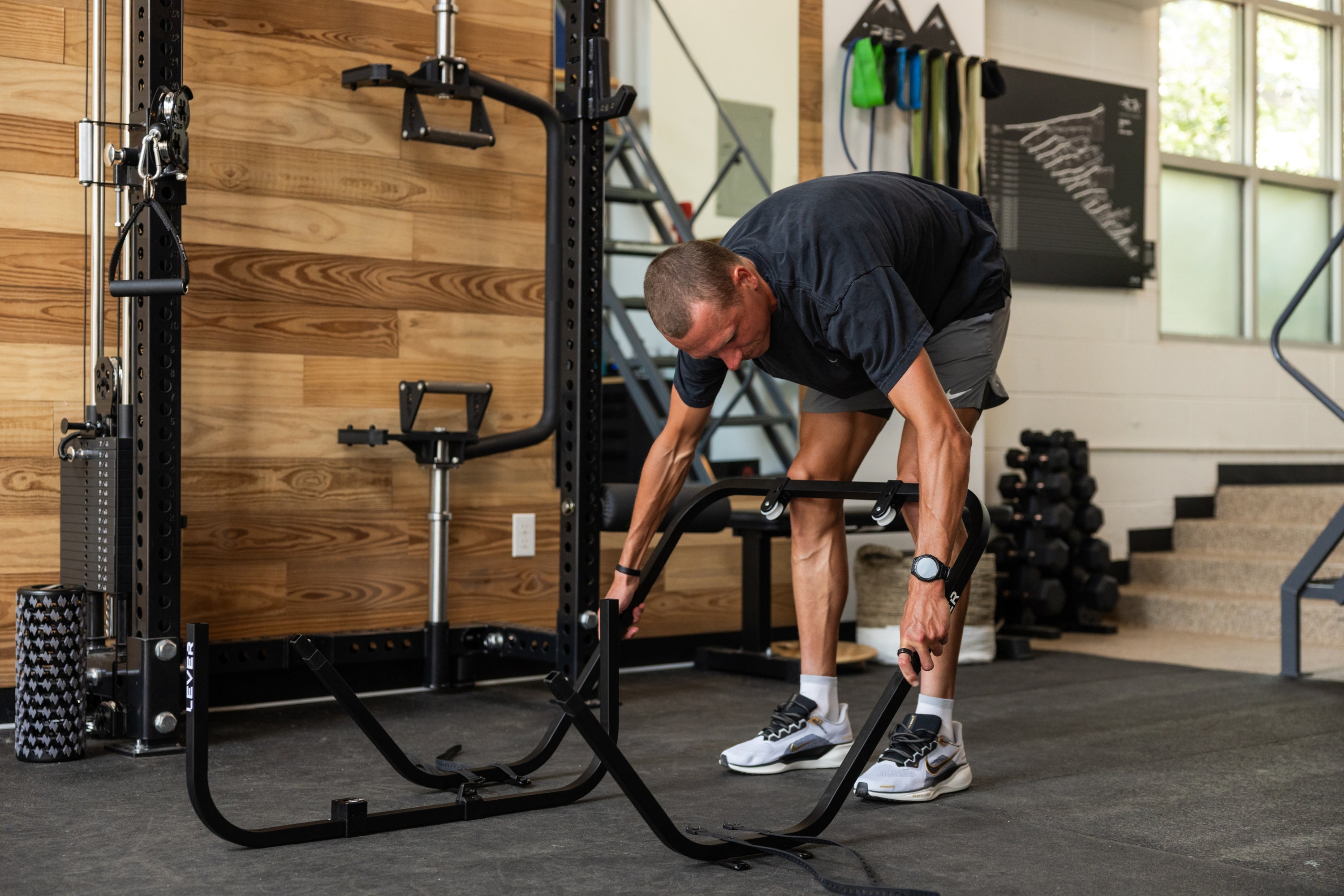
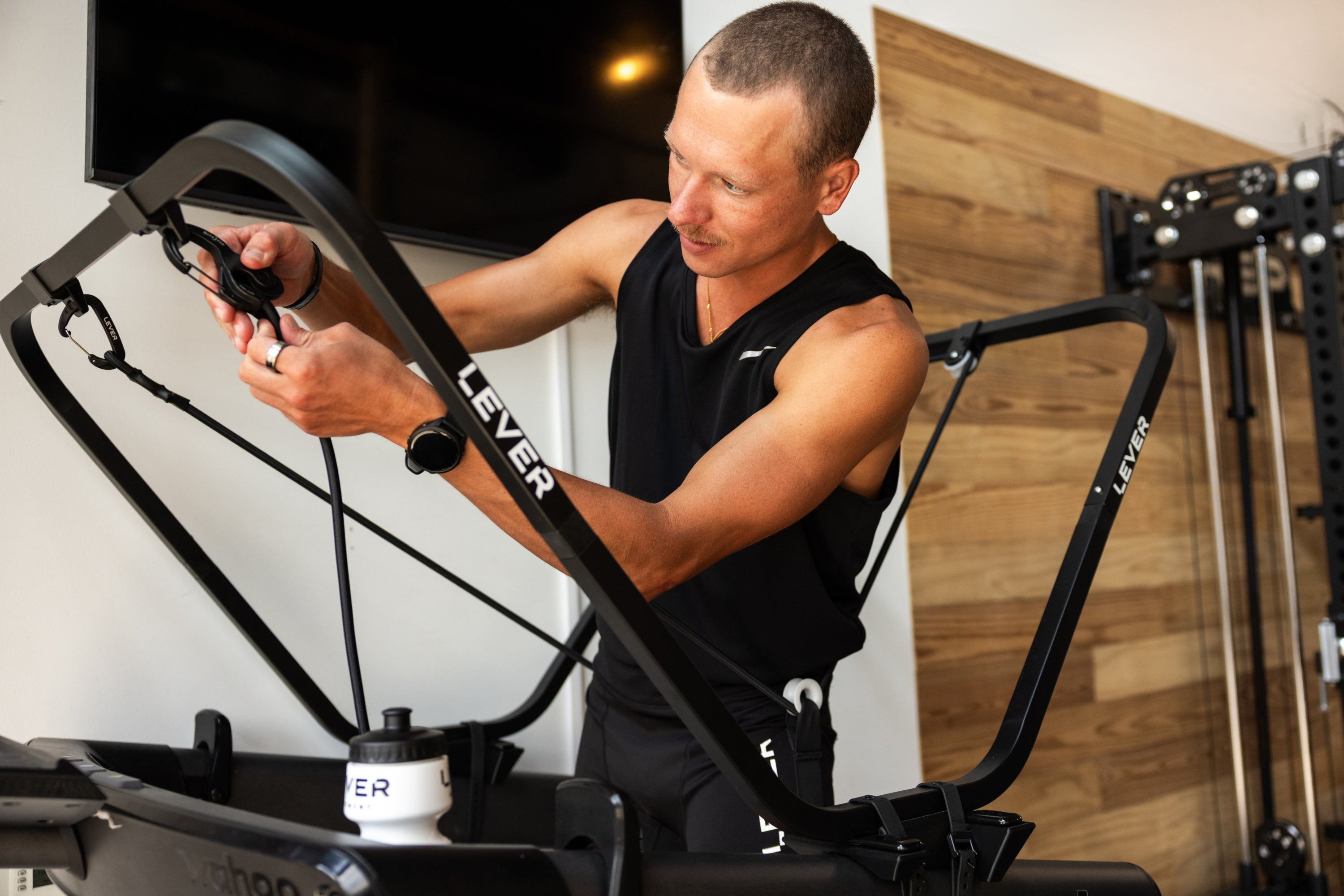
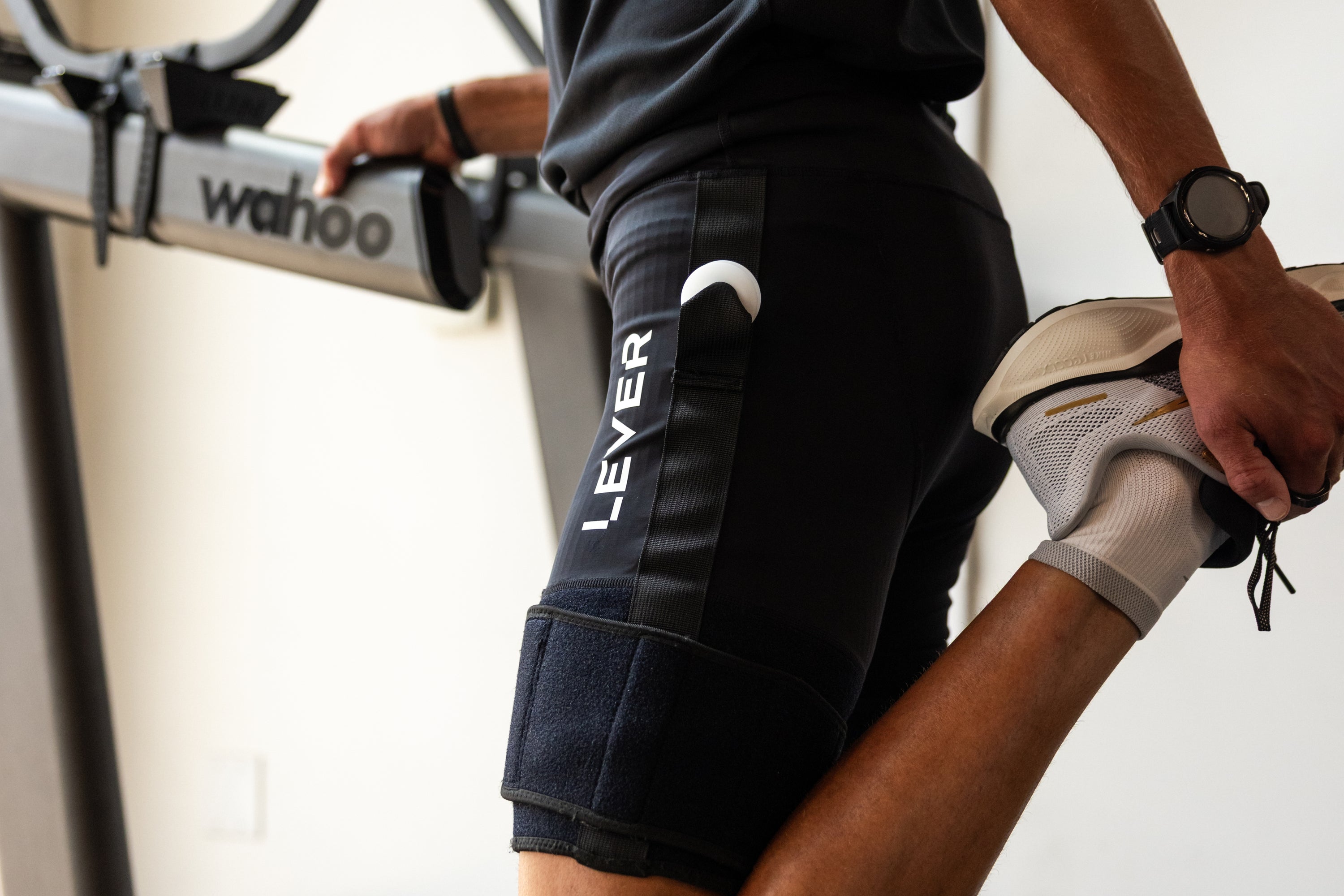
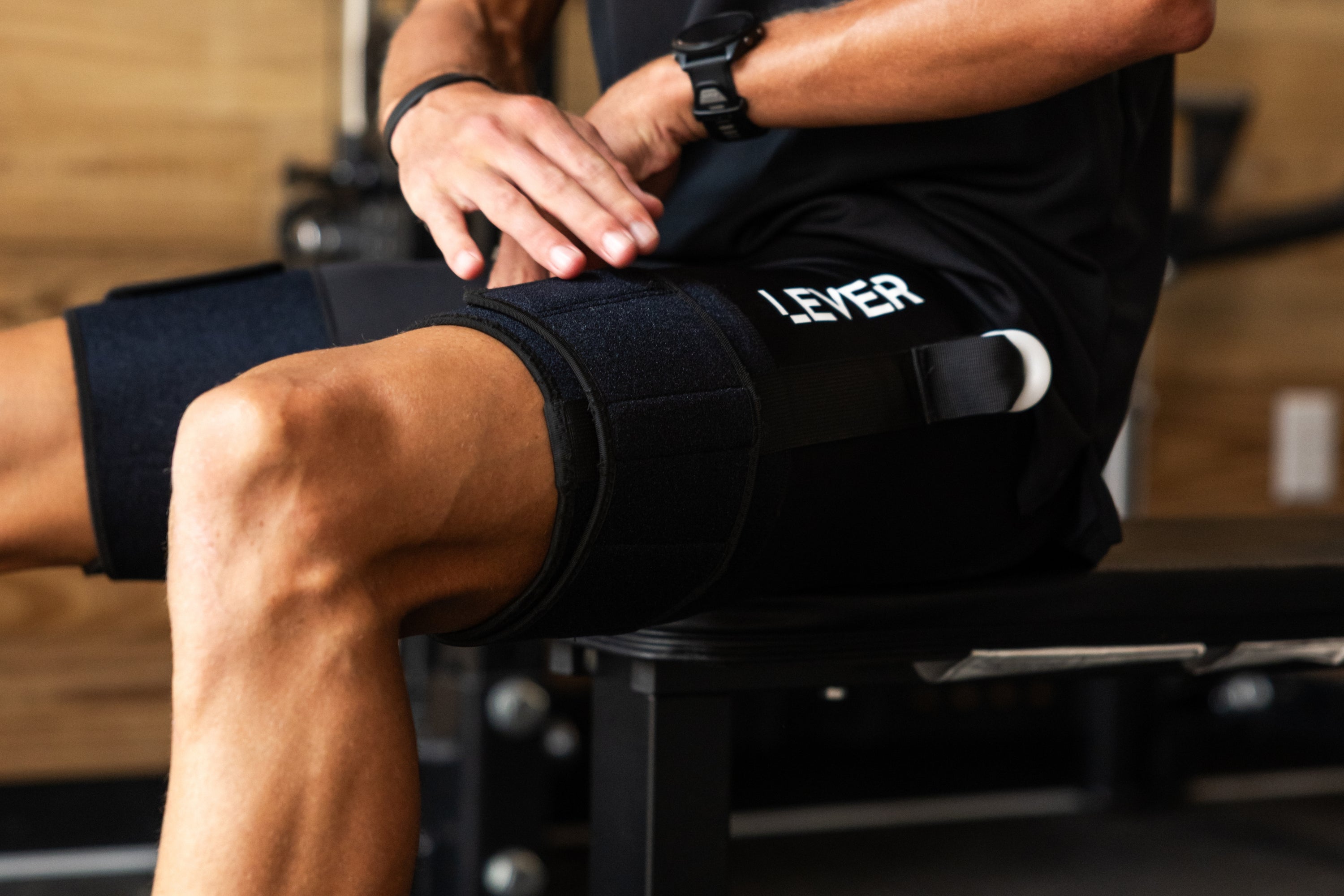
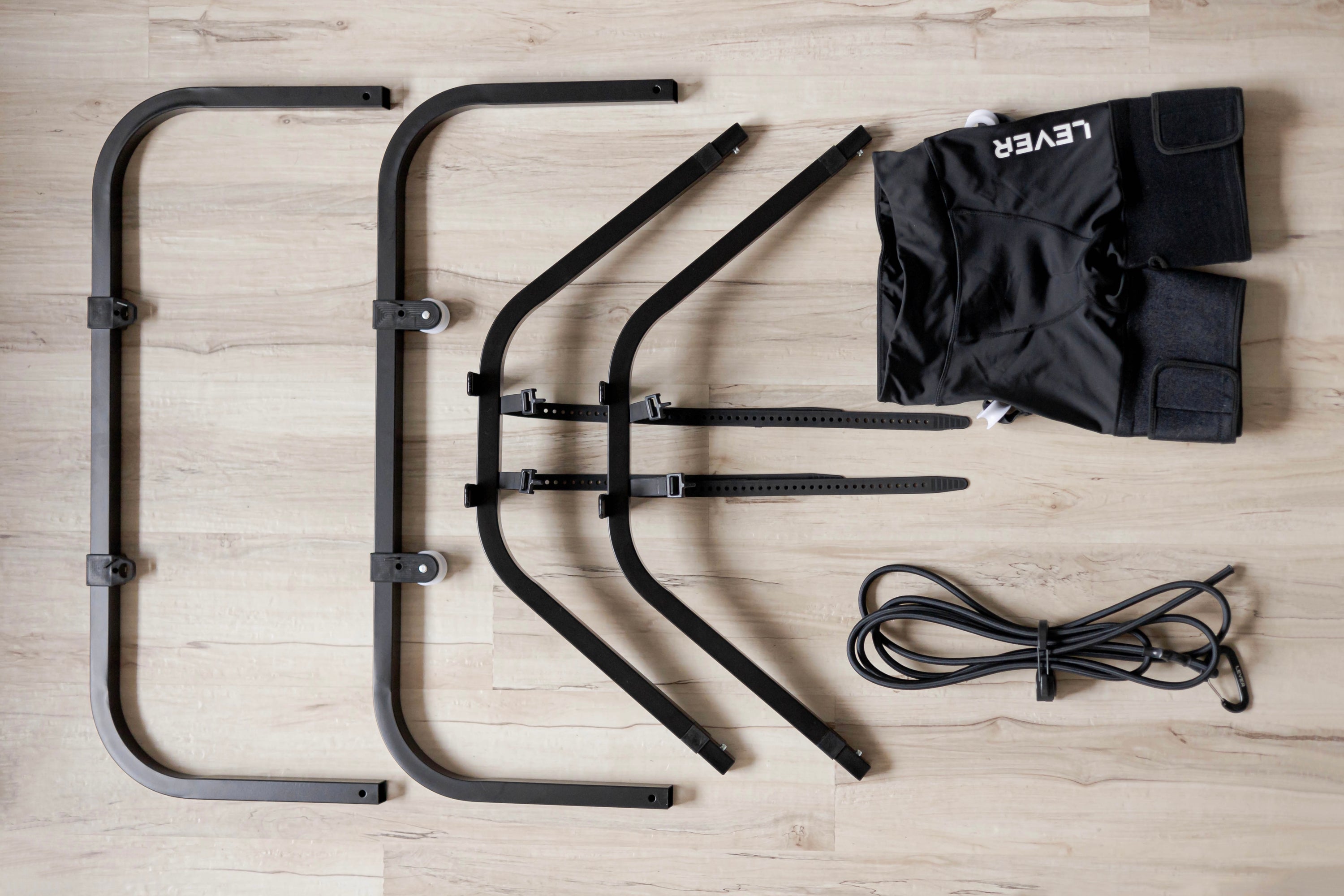
Good to knowHow LEVER fits inLEVER is a harness on a frame that attaches to a regular treadmill and lifts part of your body weight, the same idea as the harness system in the 2023 study.LEVER itself hasn't been tested in an Achilles study. Use it alongside your strength work and the pain rules, not instead of them.
7The Protocol: 4 Phases Back
Every runner is different, and a physio can tailor this to you. But most Achilles comebacks follow these phases:
PHASE 1Calm it downBring the pain under control without stopping completely• Cut running back until you're inside the pain rules• Skip hills, speed work and spikes for now• Calf holds: push into a wall or a heavy weight and hold 30 to 45 seconds• A heel lift in your shoe can ease pain short termWHERE BODY-WEIGHT SUPPORT FITSKeep some easy runs on support so you can run without breaking the pain rules.MOVE ON WHEN✓ Morning stiffness is settling✓ Easy runs stay at 5/10 or less
PHASE 2Load the tendonRebuild the tendon's capacity. This is the real treatment.• Heavy, slow calf raises 3 times a week• Both straight-knee and bent-knee versions• Start around 3 x 15 and get heavier as reps drop toward 6• 3 seconds up, 3 seconds downWHERE BODY-WEIGHT SUPPORT FITSEasy runs on support between strength days keep your running going.MOVE ON WHEN✓ Calf raises feel strong and steady✓ Pain isn't creeping up week to week
PHASE 3Rebuild runningGet back to your normal mileage• Add running volume first• Then bring back hills, then speed• Keep the strength work goingWHERE BODY-WEIGHT SUPPORT FITSGive body weight back gradually, then move more runs outside.MOVE ON WHEN✓ Normal easy mileage within the pain rules✓ No morning stiffness
PHASE 4Spring and speedGet the tendon ready for fast running and racing• Add hops and skips• Strides, then workouts• Keep calf strength work at least twice a week for goodWHERE BODY-WEIGHT SUPPORT FITS1 to 2 easy runs a week with support in big training weeks.MOVE ON WHEN✓ Single-leg hops are pain-free✓ Workouts don't cause a flare the next day
Sample weekWhat a phase 2 week can look like
Strength and running on alternate days, with support on the runs that need it:
MONCalf strengthHeavy, slow
WEDCalf strengthHeavy, slow
THUEasy runFull weight if pain-free
FRICalf strengthHeavy, slow
SATLonger easy runWith support
SUNRestCheck morning stiffness
Easy run with support Run at full weight Calf strength
Daily check-inUse this before and after every run · tap to open
MorningStiffness no worse than the day before?
DuringPain at 5/10 or less
Next dayAny pain gone by morning
If notAdd support or cut time next run
CadenceKeep your step rate close to normal on support
Example only, not a prescription. Strength program based on the heavy slow resistance protocol in Beyer et al. 2015.
8How Pros Use It to Manage Load
Gregory Barnaby ran 2:44 off the bike to finish 4th at the IRONMAN World Championship in Kona. He isn't injured. He uses LEVER to keep big mileage from breaking him down, putting easy runs right where his body is most tired.
4TH AT IRONMAN KONAGregory Barnaby
Mileage80 to 110 km a week
WhenThe day after workouts, and strides the day before
SupportStarted at 15-20 kg off, now about 10 kg
“...when you're tired it's just a lot less risky, so it's a big injury prevention.”GREGORY BARNABY
ACHILLES FLARING UP?
Keep running while your tendon gets stronger.
LEVER attaches to the treadmill you already own and takes part of your body weight off, so you can stay inside the pain rules and keep your miles.
Shop LEVER →
9Quick Answers
Should I stop running?
Usually not completely. Most runners can keep running if they stay inside the pain rules: 5/10 or less during, settled by the next morning, and not getting worse week to week. If you can't run without breaking those rules, cut back more and see a physio.
Should I stretch it?
Gentle calf stretching is fine for most people, but stretching doesn't fix tendinopathy. If your pain is right at the heel bone, avoid deep stretches that drop your heel below the step.
Are eccentric heel drops still the answer?
They work, but they're not the only option. Heavy, slow calf raises 3 times a week worked as well in studies and people stuck with them better.
Do I need body-weight support?
No. Many runners recover with strength work and smart running alone. Support is a tool to help you keep running at a load your tendon can handle.
How do I keep it from coming back?
Keep calf strength work in your week for good, build mileage gradually, and be careful with sudden jumps in hills, speed or new shoes.
General information, not medical advice. Achilles pain needs a proper assessment. Work with your doctor or physio on your own plan.
References
1. Chimenti RL, Neville C, Houck J, Cuddeford T, Carreira D, Martin RL. Achilles pain, stiffness, and muscle power deficits: midportion Achilles tendinopathy revision 2024. J Orthop Sports Phys Ther. 2024;54(12):CPG1-CPG32. doi:10.2519/jospt.2024.0302
2. Silbernagel KG, Thomee R, Eriksson BI, Karlsson J. Continued sports activity, using a pain-monitoring model, during rehabilitation in patients with Achilles tendinopathy: a randomized controlled study. Am J Sports Med. 2007;35(6):897-906. doi:10.1177/0363546506298279
3. Beyer R, Kongsgaard M, Hougs Kjaer B, et al. Heavy slow resistance versus eccentric training as treatment for Achilles tendinopathy: a randomized controlled trial. Am J Sports Med. 2015;43(7):1704-1711. doi:10.1177/0363546515584760
4. Lagas IF, Fokkema T, Verhaar JAN, et al. Incidence of Achilles tendinopathy and associated risk factors in recreational runners: a large prospective cohort study. J Sci Med Sport. 2020. doi:10.1016/j.jsams.2019.12.013
5. Lagas IF, Fokkema T, Bierma-Zeinstra SMA, et al. How many runners with new-onset Achilles tendinopathy develop persisting symptoms? A large prospective cohort study. Scand J Med Sci Sports. 2020. doi:10.1111/sms.13760
6. Pohlman C, Pardee A, Friedman M, Rutherford AD, Vannatta CN, Kernozek TW. Effects of body weight support in running on Achilles tendon loading. Int J Sports Med. 2023;44(12):913-918. doi:10.1055/a-2113-1026
7. Saxena A, Granot A. Use of an anti-gravity treadmill in the rehabilitation of the operated Achilles tendon: a pilot study. J Foot Ankle Surg. 2011.
8. Fohrmann D, Winter I, Simon A, et al. Biomechanical changes during running on a lower body positive pressure treadmill in competitive runners. Scand J Med Sci Sports. 2025;35:e70063. doi:10.1111/sms.70063
9. Komi PV. Relevance of in vivo force measurements to human biomechanics. J Biomech. 1990;23(Suppl 1):23-34.