Every injured runner asks the same question: when can I run again? Not whether they'll get back, most people do, but how to get there without re-injuring the same tissue, and without losing months of fitness on a bike. Body-weight support training is one of the better-studied answers. Here is what the research actually shows, and where LEVER fits into it.

|
1
|
Running Is Hard on Tissue That's Already Hurt |
Every stride generates ground-reaction forces of roughly 2 to 4 times body weight. Healthy tendon, bone, and cartilage handle that fine, it's part of what makes them stronger. Injured tissue can't always keep up, and running through it at full load is a common way small injuries turn into setbacks.
Body-weight support (BWS) training reduces the percentage of body weight loaded through each stride, so runners can keep the movement pattern and the cardio work without asking hurt tissue to absorb full impact.
|
2
|
What the Research Actually Shows |
Ground-reaction forces scale down with support.
The foundational study here is Grabowski and Kram (2008), which measured how reducing body weight on a treadmill lowers both ground-reaction forces and metabolic cost during running, at every speed tested. Nearly everything else in this space builds on it.
Running mechanics change in a predictable way.
Neal and colleagues (2016, JOSPT) had 14 runners run at five different support levels and found that higher support significantly increased stride duration, reduced stride frequency, shortened ground contact time, and reduced knee and ankle range of motion during stance. That last part matters: at very high support levels, gait starts to look noticeably different from normal running, which is a reason to keep support moderate once the acute pain has settled, not just "more support is always better."
Impact forces drop in a close-to-straight line.
Fohrmann and colleagues (2025) ran 26 competitive runners across nine support levels and found that for every 10% increase in body-weight support, peak plantar force dropped by roughly 0.1x body weight and peak tibial shock dropped by about 0.3g, with no meaningful difference in how that scaled between men and women.
Clinically, it works, and there's a real threshold for "ready."
Vincent, Madsen and Vincent (2022, Arthroscopy, Sports Medicine, and Rehabilitation) pulled together lab data and real rehab case studies. Their guidance: once a runner can run pain-free, sustained or in intervals, at more than 95% body weight for more than 30 minutes, they're generally ready to transition to full ground running. Across the cases they reviewed, runners using BWS training returned to running about two weeks faster on average than those on traditional rehab alone.
|
3
|
The Three-Phase Return-to-Run Plan |
Most physical therapists who use body-weight support structure it in three phases:
1. Protected loading Light jogging at reduced body weight, focused on pain-free movement, not pace.
2. Progressive reloading Gradually increasing the percentage of body weight carried, week over week, as symptoms allow.
3. Full transition Moving to unsupported ground running once a runner can sustain running at 95%+ body weight, pain-free, for 30+ minutes.
|
4
|
Where This Applies, Injury by Injury |
| Injury | Why load reduction helps | What the evidence shows |
| Bone stress injuries | Bone needs repeated loading to remodel, but too much too soon reopens the injury | Vincent et al. (2022) documented a tibial stress reaction case progressed from 70% to 85% body weight over several weeks before transitioning to a walk/run program outside |
| Achilles / patellar tendinopathy | Tendon needs progressive tensile load to remodel, but full ground-force running often reproduces pain early on | Reduced-load running lets runners stay in a sub-symptomatic range while maintaining rhythm and aerobic work |
| Post-surgical / ACL, meniscus | Early gait retraining and aerobic conditioning matter, without overloading the healing limb | BWS running supports more symmetrical gait patterns during early-stage rehab, when compensations are most likely to form |
| Pelvic / femoral stress reactions | High-risk, slow-healing bone injuries where impact needs to stay very low early on | Documented case: an elite collegiate runner returned to full training and competed within 10 weeks of diagnosis (Vincent et al., 2022) |
How LEVER Fits In
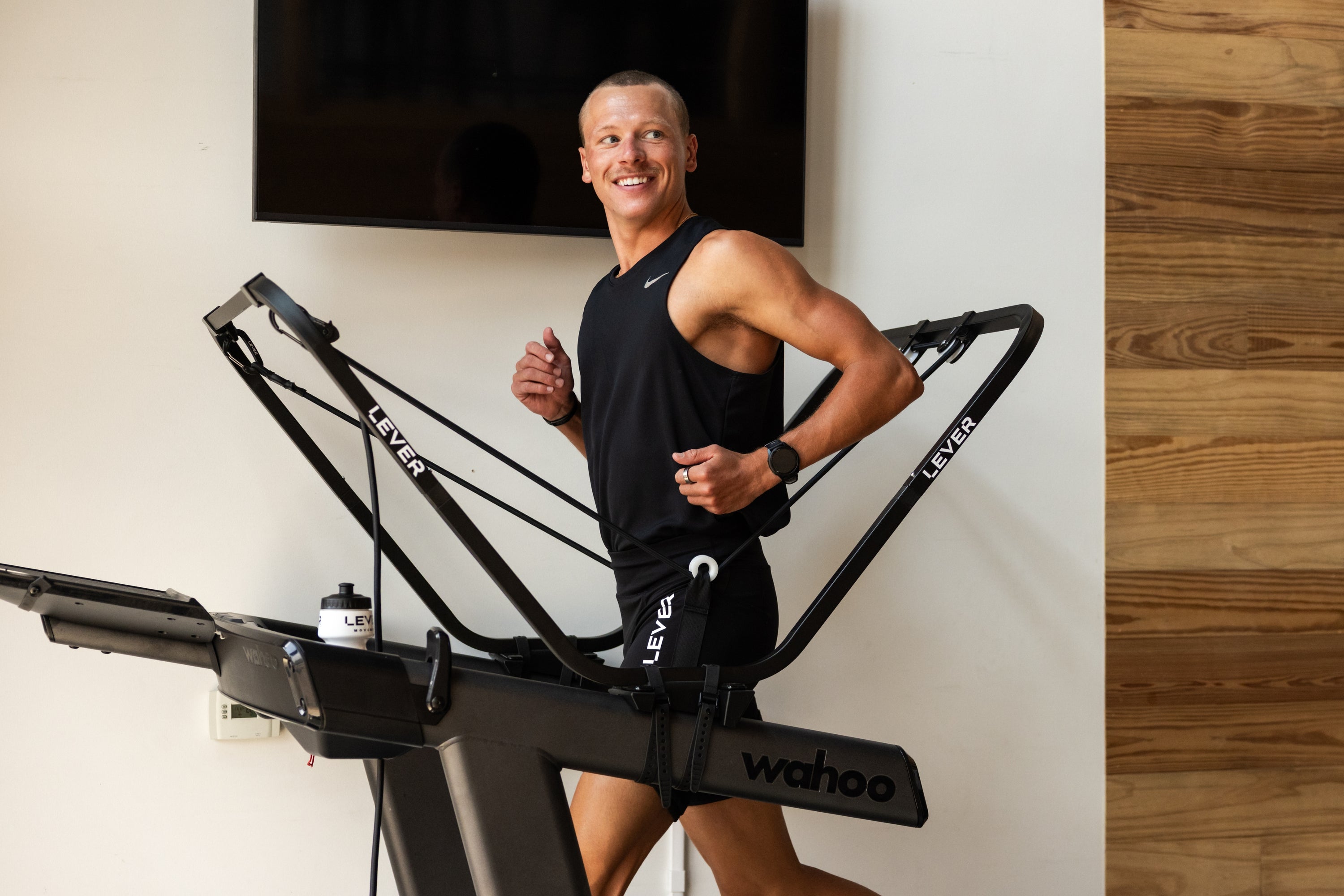
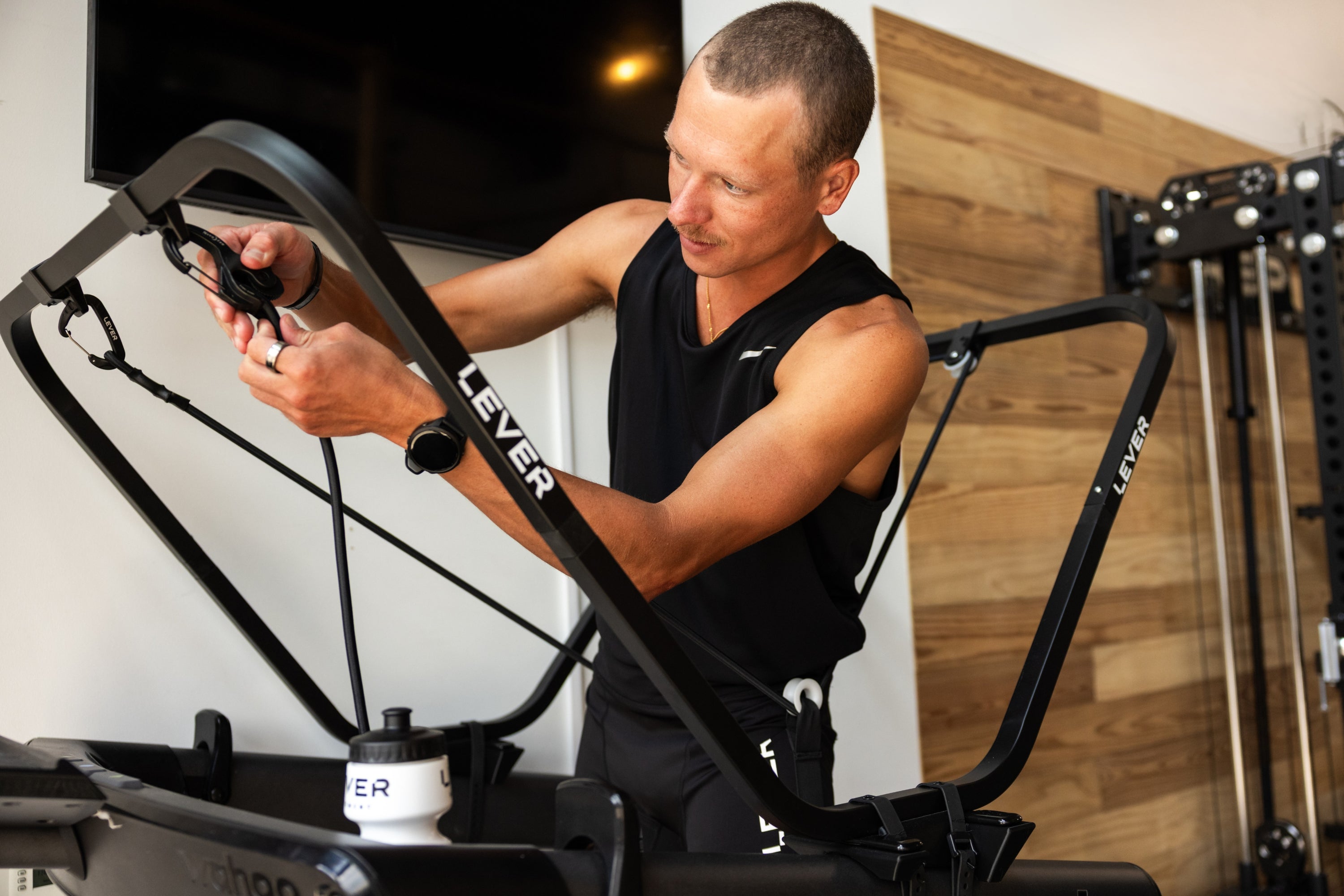
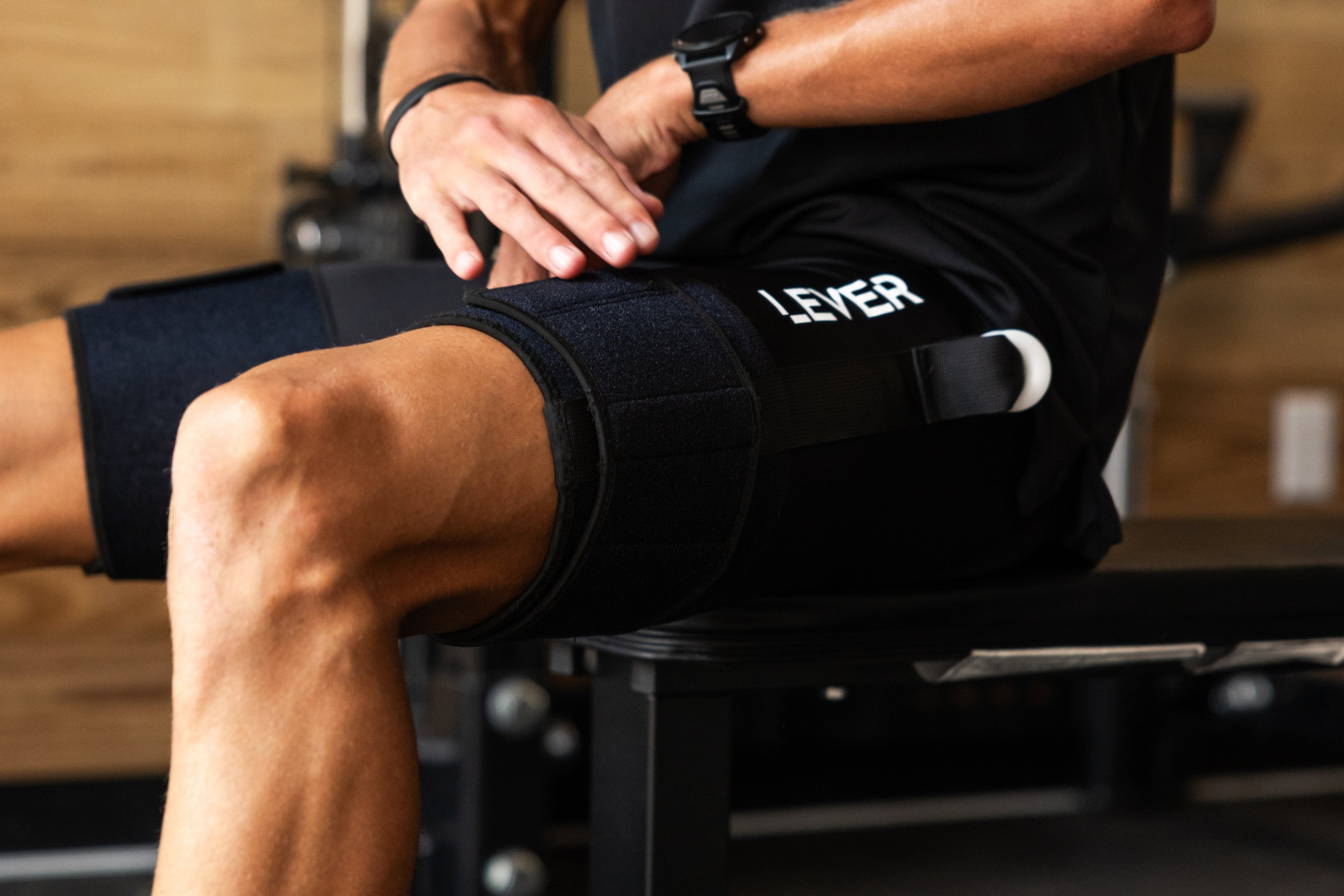
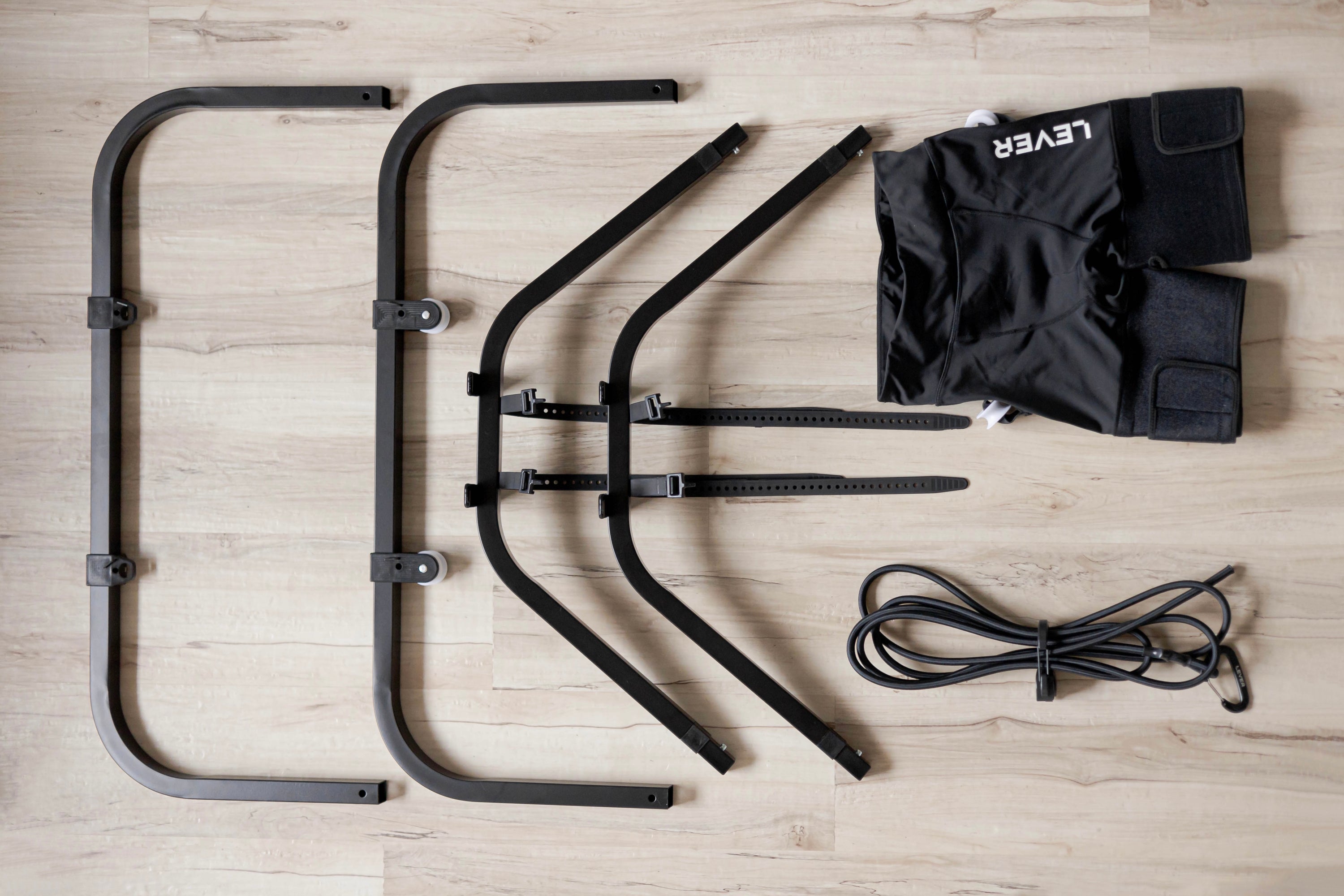
The principle, on your own treadmill
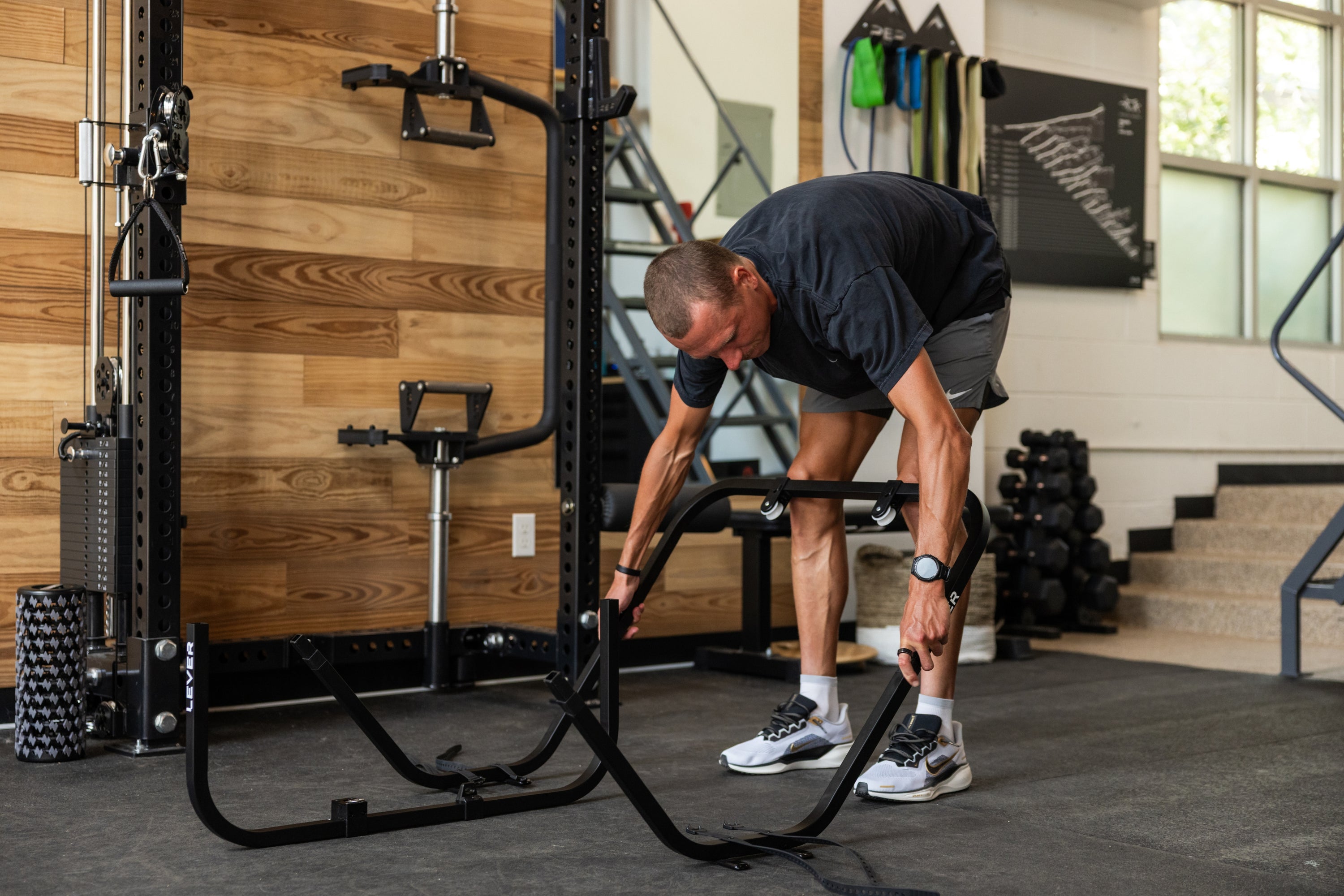
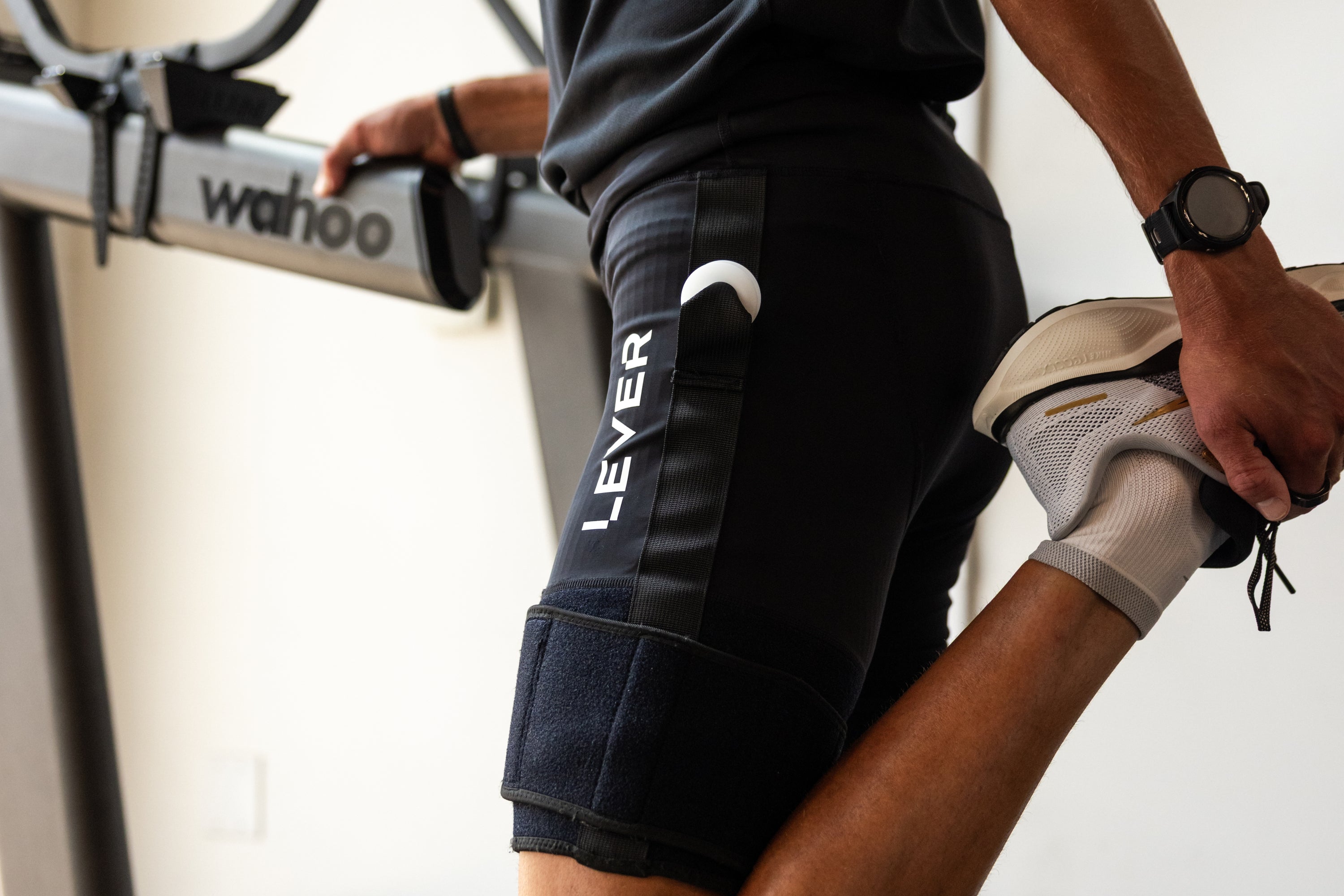
Everything above is true regardless of the equipment: reducing load, in a controlled and progressive way, is one of the more evidence-backed tools in return-to-run rehab. LEVER puts that principle to work on the treadmill you already own instead of requiring a clinic visit to an air-pressure chamber. That accessibility, being able to run this protocol at home, on your own schedule, with a PT's guidance, is the real value. It's not a claim that LEVER has been tested to produce identical force-reduction numbers to the lab studies above, because it hasn't been, yet.
|
5
|
A Real Return-to-Run Case |
Vincent and colleagues (2022) documented a 21-year-old collegiate runner diagnosed with a pelvic stress injury. She progressed through body-weight-support training, 70% body weight in week four, up to 95% by week eight, and returned to pain-free ground running at week eight. She competed at her conference championship two weeks later and qualified for NCAA Championships the week after that, with no recurrence of pain.
This is one documented case, not a guarantee of any specific timeline. Every injury and every runner is different, which is exactly why a PT should be guiding the progression.
|
6
|
Beyond Injury |
Body-weight support isn't only a rehab tool. Runners at every level use unloaded running to add volume without adding impact cost, run recovery days at lower stress, or work through a lighter-impact training block.

Key Takeaways
2 to 4x body weight hits your legs with every stride while running.
Load reduction lowers impact close to linearly as support increases.
95% body weight for 30+ minutes, pain-free, is a real, usable readiness threshold.
BWS runners returned to running about 2 weeks faster on average than standard rehab alone.
Very high support levels change gait mechanics, so moderate, progressive support beats maxing it out.
LEVER applies the same principle on your own treadmill, guided by your PT.
Train smarter. Recover stronger. Run again safely.
This article is for informational purposes and isn't a substitute for individualized guidance from a physical therapist or physician. Return-to-run timelines vary significantly by injury type, severity, and individual healing response.
Grabowski AM, Kram R (2008). Effects of velocity and weight support on ground reaction forces and metabolic power during running. J Appl Biomech. doi:10.1123/jab.24.3.288
Neal M, Fleming N, Eberman L, Games K, Vaughan J (2016). Effect of body-weight-support running on lower-limb biomechanics. J Orthop Sports Phys Ther. doi:10.2519/jospt.2016.6503
Fohrmann D, Winter I, Simon A, Dalos D, Gronwald T, Hoenig T, Rolvien T, Hollander K (2025). Biomechanical changes during running on a lower body positive pressure treadmill in competitive runners. Scand J Med Sci Sports. doi:10.1111/sms.70063
Vincent HK, Madsen A, Vincent KR (2022). Role of antigravity training in rehabilitation and return to sport after running injuries. Arthrosc Sports Med Rehabil. doi:10.1016/j.asmr.2021.09.031