The Work Behind the Work · Kona 2026
Before Kona, Gregory Barnaby told us how he runs 80 to 110 km a week without getting hurt. Then he went out and rode the fastest bike split of the day at the IRONMAN World Championship, ran a 2:44 marathon off it, and finished 4th in the world.
Two places better than his 6th in 2024. We caught up with him after the race to hear how it unfolded, and how he used LEVER to keep his running volume up on the way there.
4th
IRONMAN World Championship
up from 6th in 2024
4:11:22
Fastest bike split
of the whole race
2:44:43
Marathon
off the fastest bike
7:51:01
Finish time
3:34 off the win
1How His Race Unfolded
Gregory's day didn't start perfectly. He came out of the water about 2 minutes behind the group he wanted to be in.
"I knew my swim was a bit down but was hoping to manage to stay in the front group so coming out 2 min back wasn't great but I knew that could be a possibility."GREGORY BARNABY
So he went to work on the bike, hard and early.
"On the bike pushed really hard at the start to try and bridge the gap with the back of the group as quick as possible. Bike was good and felt strong and kept on with the pace. Well above my race power plan so didn't pace much there but worked out!"GREGORY BARNABY
Nobody rode the Queen K faster. His 4:11:22 was the fastest bike split of the day, 5 seconds quicker than Matthew Marquardt, even with the headwind on the way back into town.
2His Race by the Numbers
Swim50:09~2 min off the front group
Bike4:11:22Fastest of the day
Run2:44:43Off the fastest bike
Here's how the top 4 men put their races together:
1st · Vincent LuisSWIM48:30BIKE4:15:41RUN2:38:35TOTAL7:47:27
2nd · Gustav IdenSWIM50:09BIKE4:17:09RUN2:36:57TOTAL7:49:02
3rd · Matthew MarquardtSWIM48:24BIKE4:11:27RUN2:43:57TOTAL7:49:58
4th · Gregory BarnabySWIM50:09BIKE4:11:22RUN2:44:43TOTAL7:51:01
Splits from TRI247's official finishing order. Totals include transitions.
Riding the fastest bike of the day usually comes at a cost on the run. Gregory still ran 2:44:43, the 8th fastest marathon among the top 15 men, and held on for 4th.
3Ride Hard, Then Run Smart
After going well over his power plan on the bike, Gregory did the opposite on the run. He held back early on purpose.
"On the run tried to pace myself a bit more to avoid my temperature and heart beat to go up straight away. Felt a bit fatigued but with good energy still."GREGORY BARNABY
It wasn't easy. The tough part came on the long, exposed stretch back into town.
"Toughest moments were for sure on the run in different moments. Especially coming back on the Queen K a few km's where I was suffering and overheating a bit but managed to turn it around and continue pretty well."GREGORY BARNABY
Before the race, he told us his biggest tip was to "be consistent throughout the race, not like overdo it in the beginning because you pay for it at the end." After the race, he said he thinks he did exactly that.
Learn moreWhy heat makes pacing the run so importantIn hot conditions, your body has to send blood two places at once: to your working muscles, and to your skin to get rid of heat. That means your heart rate climbs higher than normal at the same pace, and keeps creeping up the longer you run.If you start too fast, your core temperature and heart rate rise quickly and there's no easy way to bring them back down. That's why Gregory eased into the run instead of chasing.•Start slower than you want to, especially in the first 5-10 km•Watch effort, not just pace. In heat, the same pace costs more•Cool early: ice, sponges and water at every aid station•Have a plan for bad patches. Like Gregory on the Queen K, slow a little, cool down, and let it pass
Train like Gregory
Keep the volume. Lose the pounding.
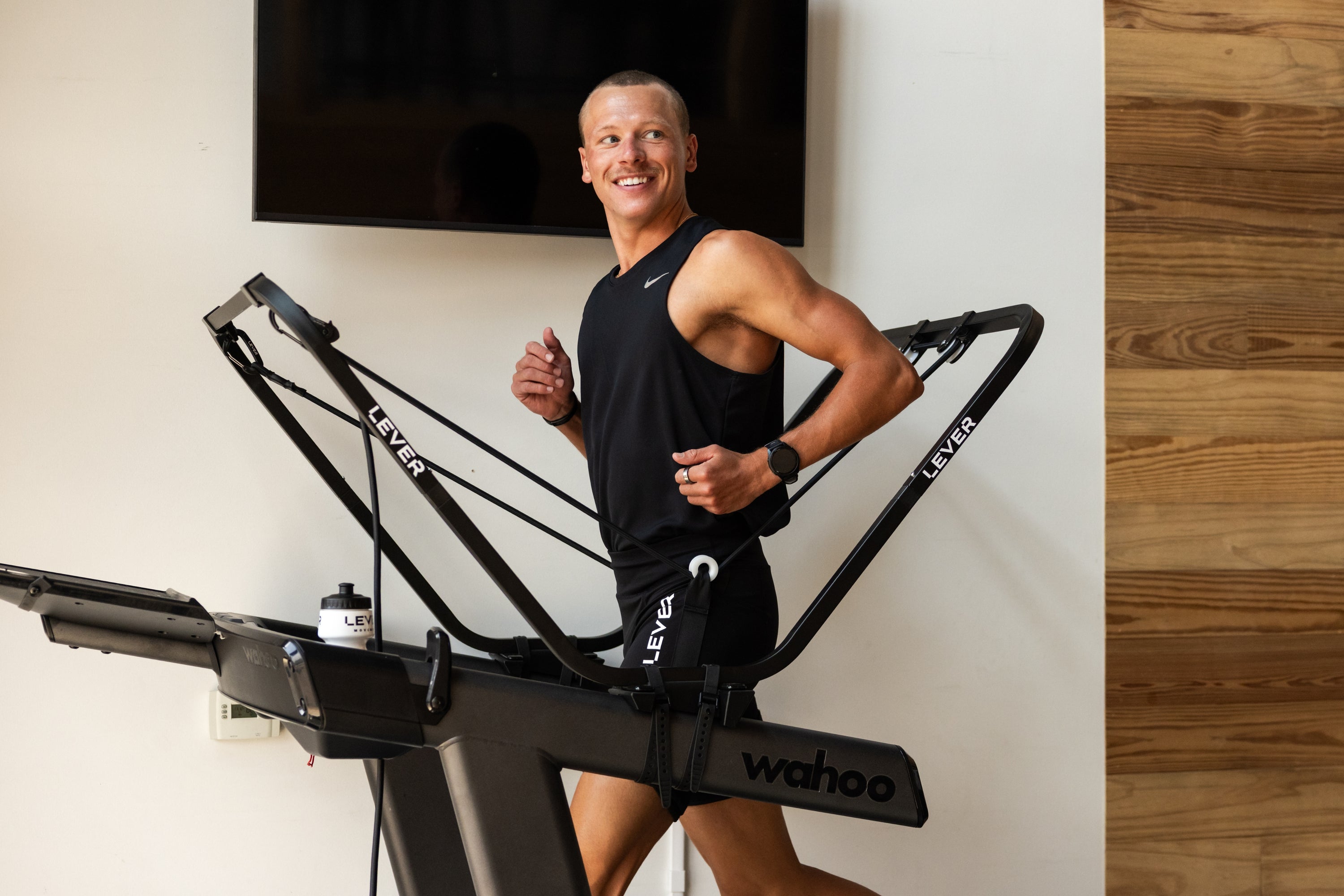
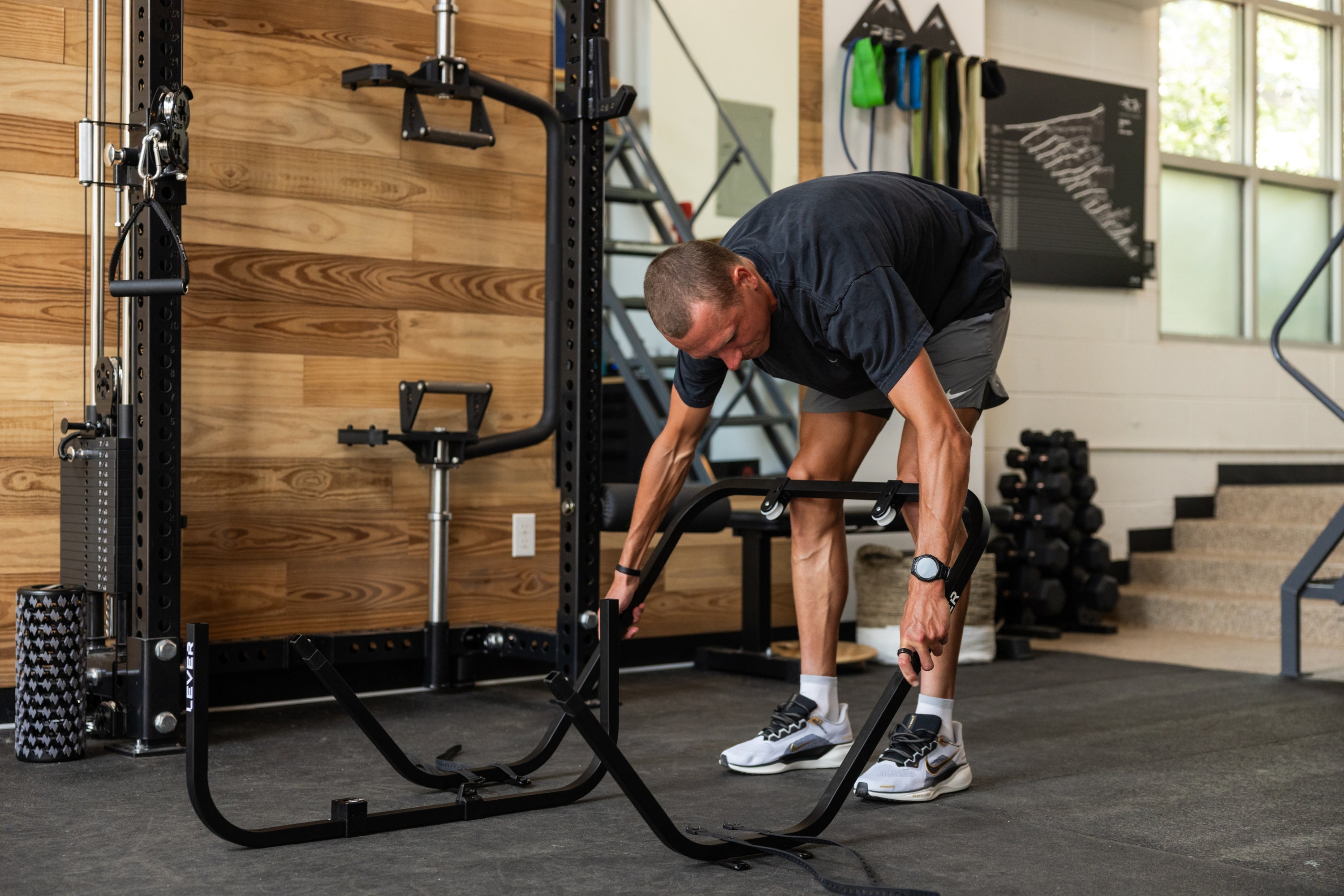
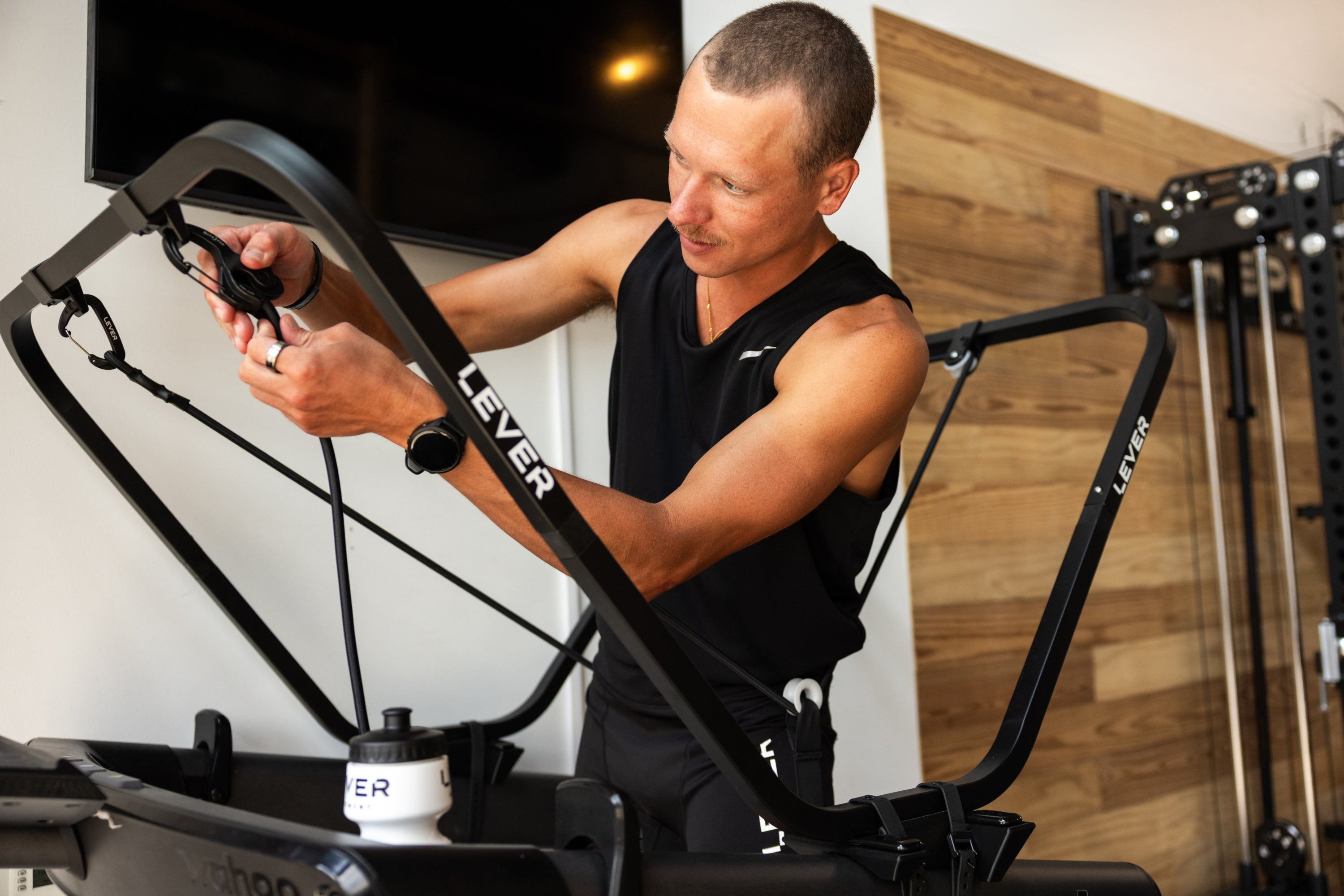
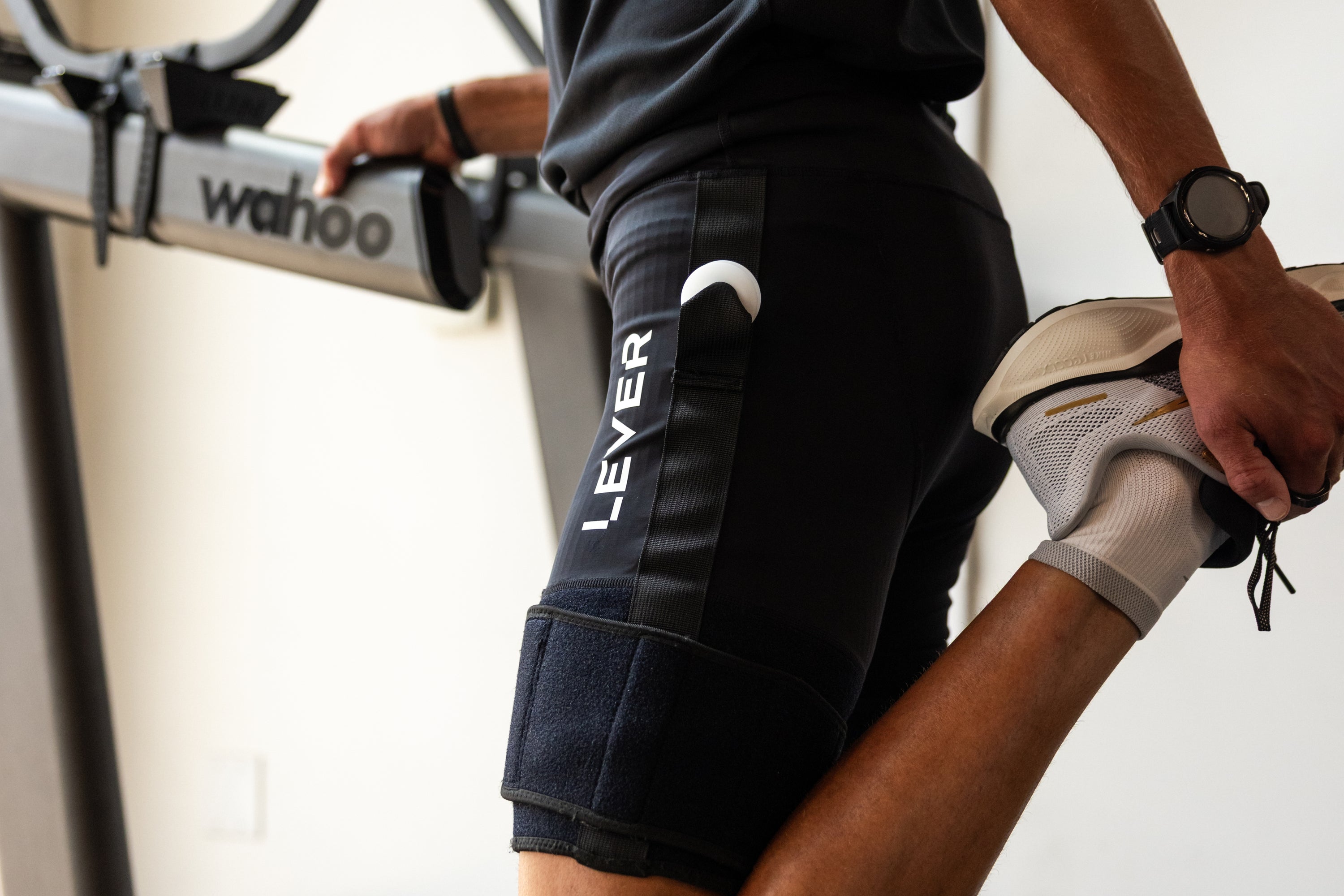
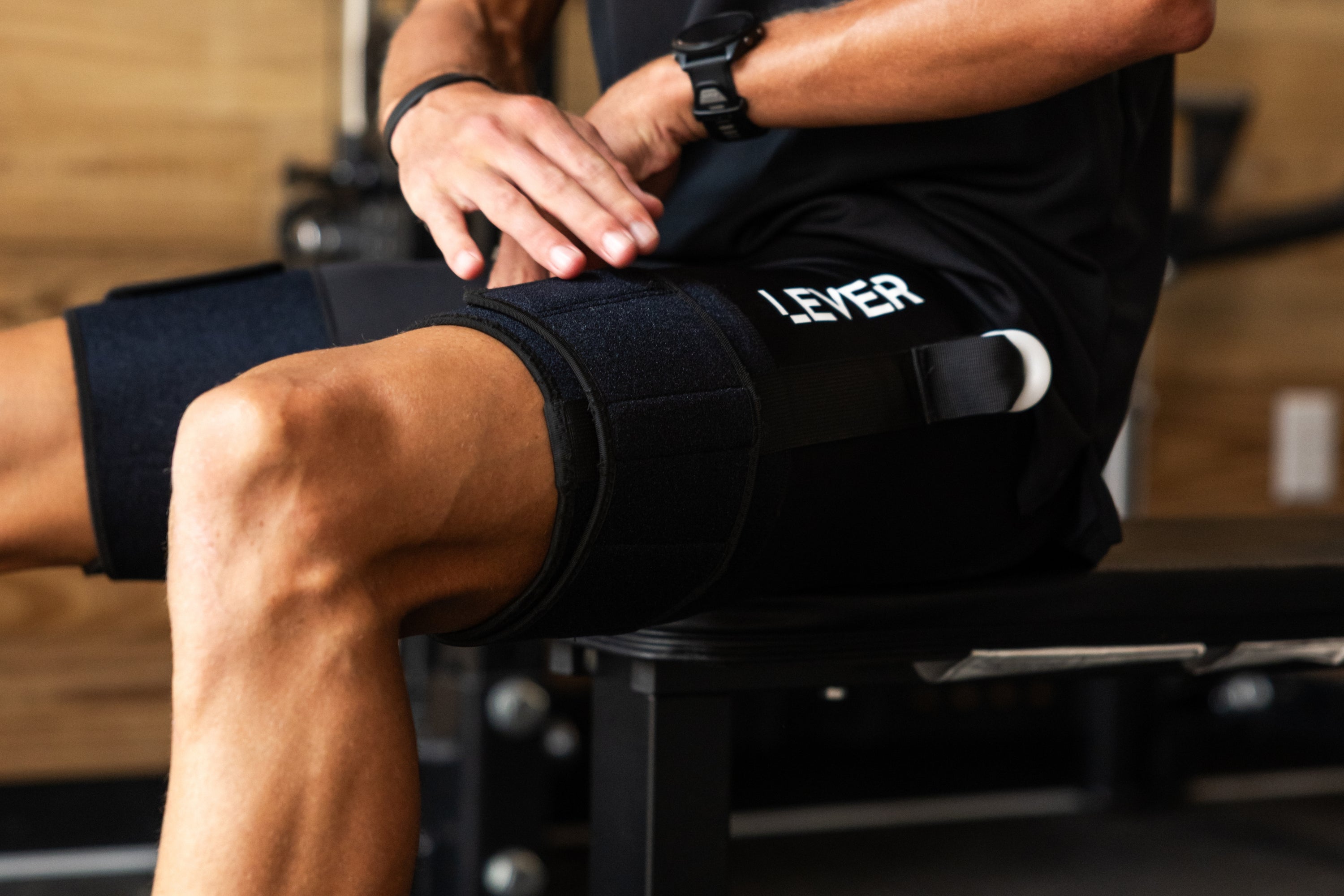
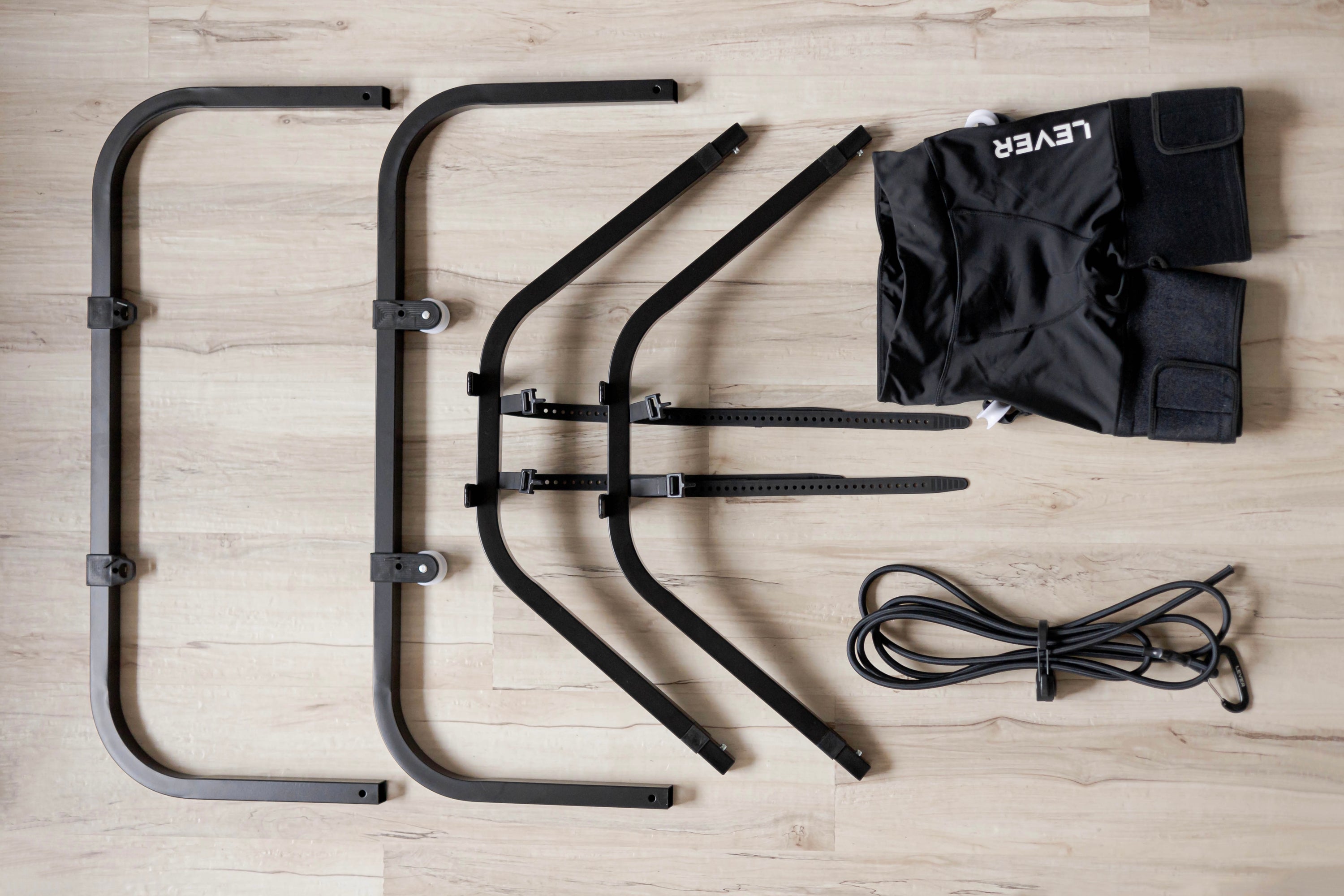
LEVER turns your treadmill into a body-weight support system, the same tool Gregory used to keep his running volume up all the way to Kona.
Shop LEVER
4The Volume Behind the Run
A 2:44 marathon off the fastest bike doesn't happen without big running weeks. Before the race, Gregory told us what his training looks like:
"I'm running around 80 to 110 km a week, so that's probably running nearly every day."GREGORY BARNABY, BEFORE KONA
"I think it would benefit everyone because... when you're tired it's just a lot less risky, so it's a big injury prevention."GREGORY BARNABY, BEFORE KONA
Before Kona: his big-build routine. In our pre-race interview, Gregory explained when LEVER comes into his training and exactly where it goes in his week:
"When I got the big build season, I introduced it there and I do it once or twice a week."GREGORY BARNABY, BEFORE KONA
"I normally put it maybe the day after I do a workout, just for an easy run, and also the day before the workout just to do strides and get my legs turning a bit more."GREGORY BARNABY, BEFORE KONA
"I started like 15-20 kilos and probably the last period like 10 kilos off."GREGORY BARNABY, BEFORE KONA
Here's what that looks like in a training week. This is an example built from what he told us, not his exact schedule:
Example big-build week
LEVER goes around the key sessions
MONEasy runFull body weight
TUERun workoutHard, full weightKEY SESSION
WEDEasy runThe day after the workoutON LEVER
THUEasy + stridesThe day before the workoutON LEVER
FRIRun workoutHard, full weightKEY SESSION
SATEasy runFull body weight
Plus his swimming and riding. 1-2 LEVER runs a week in big builds, with the hard workouts kept at full body weight.
The idea is simple: keep the hard sessions hard, and take some load off the easy running around them. The day after a workout his legs recover while the miles still count. The day before, strides get his legs turning over without adding pounding before the work that matters.
After the race, he walked us through exactly how he used LEVER between qualifying and Kona:

Gregory's LEVER playbook
From qualifying to Kona: keep the volume up
1The week after KalmarRecovery volume, 12-14 kg offAfter qualifying at IRONMAN Kalmar, he used LEVER to get running volume back in while his body recovered from the race, and for his first workouts after that."Used it after qualifying in Kalmar to get a bit of volume in while recovering from the race. And for the first workouts after that."
2The Kona buildOnce a week, 8-10 kg offFor the rest of the build, he used it mainly once a week, right after his longer hard run workout, to keep his volume up and add a few strides."Then mainly 1 time a week after the longer hard run workout to keep the volume up and putting in the run a few strides."
3After KonaGetting back into runningNow in recovery, LEVER is how he'll start running again and ease into his first workouts."...recovery is going well and will use it for sure to get back into running and for some first workouts to start building up again."
His year on LEVER, at a glance:
Big build season1-2 runs a weekAn easy run the day after a workout, strides the day before one.Started at 15-20 kg off, down to ~10 kg
The week after KalmarRecovery volumeRunning again while recovering from qualifying, plus his first workouts back.12-14 kg off
The Kona buildOnce a weekAfter his longer hard run workout, with a few strides.8-10 kg off
Race day4th at the World ChampionshipFastest bike split of the day, then a 2:44:43 marathon.Full body weight
After KonaBack into runningLEVER for his first runs and first workouts back.More support again to start
The pattern: more support when his body is under the most stress (right after a race, early in a big build), and less as he adapts. LEVER isn't one setting. It changes with the phase of training.
Learn moreWhy volume needs load managementRunning more is one of the most reliable ways to get faster. But your heart and lungs adapt faster than your bones, tendons and joints. Add volume too quickly, and your body can't keep up with the impact.That's the problem Gregory solves with LEVER. Taking some body weight off on a few runs a week lets him keep the miles, and the aerobic fitness that comes with them, while lowering the impact of those runs. His hard sessions stay hard. The extra volume around them gets easier on his legs.•Right after a race: more support, so you can run while you recover•During a build: a little support on the run after your hardest session•As you adapt: reduce the support over time, like Gregory went from 15-20 kg to about 10 kg
5Working on His Cadence
Gregory calls himself "a pretty low cadence runner," and before Kona he told us LEVER helps him run more upright and get his cadence up. So did it help on race day?
"...in general I think it really helps my running economy so in general helps me in the marathon of a race."GREGORY BARNABY
"Late on in the marathon maybe less because I was fatigued and it gets difficult for me to keep the cadence up."GREGORY BARNABY
Learn moreWhat cadence is, and how to work on itCadence is how many steps you take per minute. Low-cadence runners often take longer strides, which can mean landing further in front of the body and more braking with every step. A slightly quicker cadence can make running more economical.It's also one of the first things to slip when you're tired, which is exactly what Gregory noticed late in the marathon.•Find your number: most running watches show your cadence•Change it slowly: aim for about 5% more steps per minute, not a big jump•Practice with support: a little body weight off on LEVER makes quick, light steps easier to practice•Use strides: 4-6 x 20 seconds focusing on quick feet, like Gregory adds after his workouts
6Find Your LEVER Starting Point
Pick the one that sounds most like you. Each starting point is based on how Gregory uses LEVER, scaled for everyday runners.
I just finished a raceLike Gregory after Kalmar · tap to open
SupportMore to start. Gregory used 12-14 kg (about 15-20% for most runners)
SessionEasy runs, 20-40 minutes
WhenOnce you feel ready to run again, for the first week or two
ThenReduce the support as your legs come back
I'm building mileageLike Gregory in a big build · tap to open
Support10-15% of your body weight off
SessionAn easy run the day after your workout, or easy + strides the day before
When1-2 times a week
KeepHard workouts at full body weight
I want to run with better form or a quicker cadenceLike Gregory's cadence work · tap to open
SupportSmall, just enough to feel lighter
Session4-6 x 20 seconds of strides with quick, light steps
WhenAt the end of an easy run
FocusRun tall, land under your body, turn your legs over quickly
I've got a niggle that won't settleReduce the load instead of stopping · tap to open
FirstGet it checked by a physio or doctor
SupportEnough that the run feels pain-free
SessionShort, easy runs instead of a skipped run
ThenReduce the support as it settles
Gregory talks in kg. Here's what his numbers mean for your body weight:
YOUR WEIGHT8 KG OFF10 KG OFF14 KG OFF
55 kg121 lb15%18%25%
65 kg143 lb12%15%22%
75 kg165 lb11%13%19%
85 kg187 lb9%12%16%
Percent of body weight taken off. 8-10 kg is what Gregory used in his Kona build, 14 kg the week after a race.
Common questions
How much body weight should I take off?
Most runners start around 10-15% off for easy runs and strides. Go higher (15-20%) right after a race or when coming back from a niggle. If the run stops feeling like running, it's too much.
Should I do my hard workouts on LEVER?
Gregory keeps his key sessions at full body weight and uses LEVER for the easy running around them. That's a good default. Small amounts of support can also be used for short, fast reps and strides.
How often should I use it?
In big training blocks, Gregory used it 1-2 times a week. After a race, he used it more for a week or so to get volume back in while recovering.
Will it make me lose fitness?
No. You're still running, so your heart and lungs keep working. You're just reducing the impact on your legs for those runs, which is what lets you keep the volume up.
Do I reduce the support over time?
Yes. Gregory started at 15-20 kg and worked down to about 10 kg as his legs adapted. Treat support like training wheels: less as you get stronger.
7Steal His "I'm Fit" Session
Before Kona, Gregory told us about the workout that tells him he's ready:
"...I do like 15 kilometers doing two kilometers at race pace so for me around 3:40 and then 500 meters quicker so like 3:15, 3:20 and I do that continuous in the 15 kilometers..."GREGORY BARNABY, BEFORE KONA
1Race-pace changeupsmarathon and Ironman runners
Session15 km continuous (or 8-10 km if you're newer)
Pattern2 km at race pace, then 500 m quicker, repeat
QuickerAbout 15-25 seconds per km faster than race pace
FocusSettle straight back into race pace after each surge
It teaches you to change pace and recover without stopping, exactly what a long race demands. Gregory keeps sessions like this hard, and uses LEVER for the easier running around them.
8What Every Runner Can Learn From Gregory
Volume builds runners
His 80-110 km weeks are the base behind a 2:44 marathon off the fastest bike.
Manage the load
More support right after a race, less during a build. Volume without the extra pounding.
Pace the run in the heat
Hold back early to keep your temperature and heart rate in check.
Ride out the bad patches
Even the best suffer. Slow a little, cool down, and turn it around.
Read Gregory's pre-race story →
More miles. Faster recovery. Fewer setbacks.